Photographic record
The work, as photographed.
Cargo discharged, cleared, hauled and set down — grouped by the capability each frame evidences.
Air charter and air freight
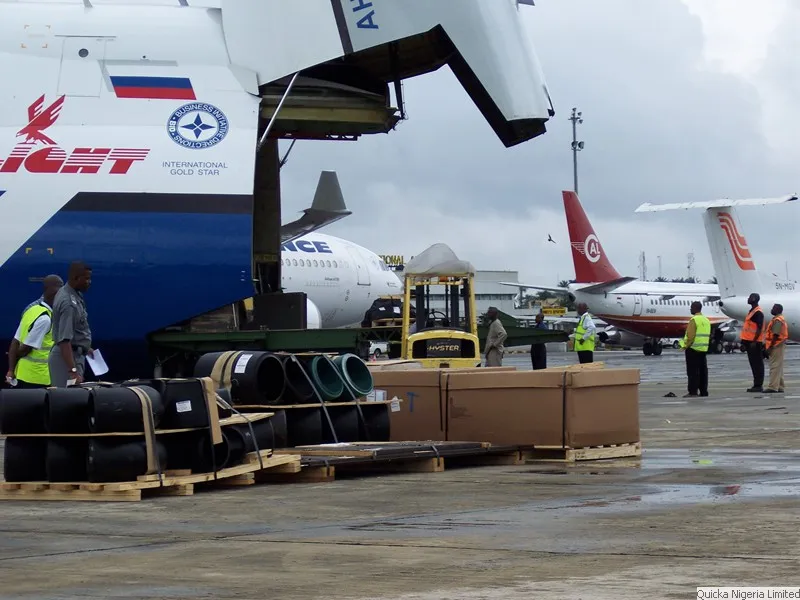
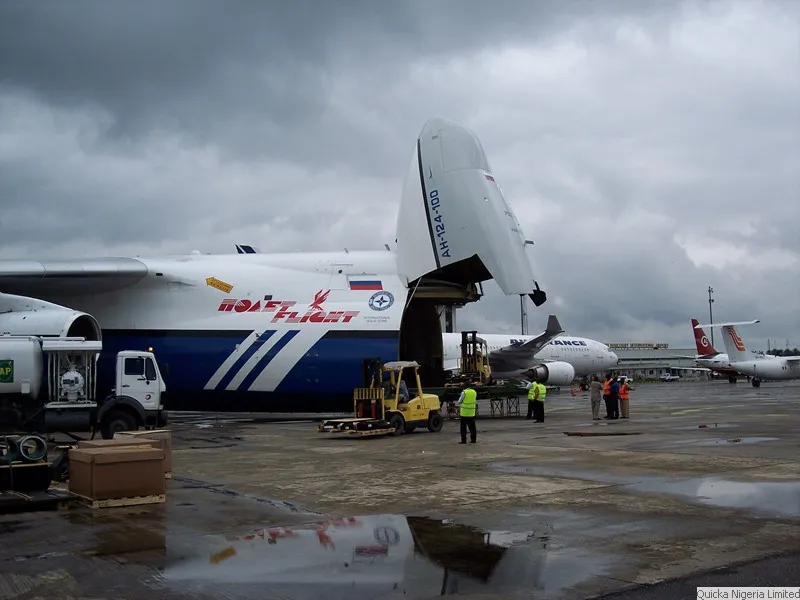
Cargo that will not wait for a sailing. Main-deck loading and restraint at origin, and the airside handover at Port Harcourt.
-
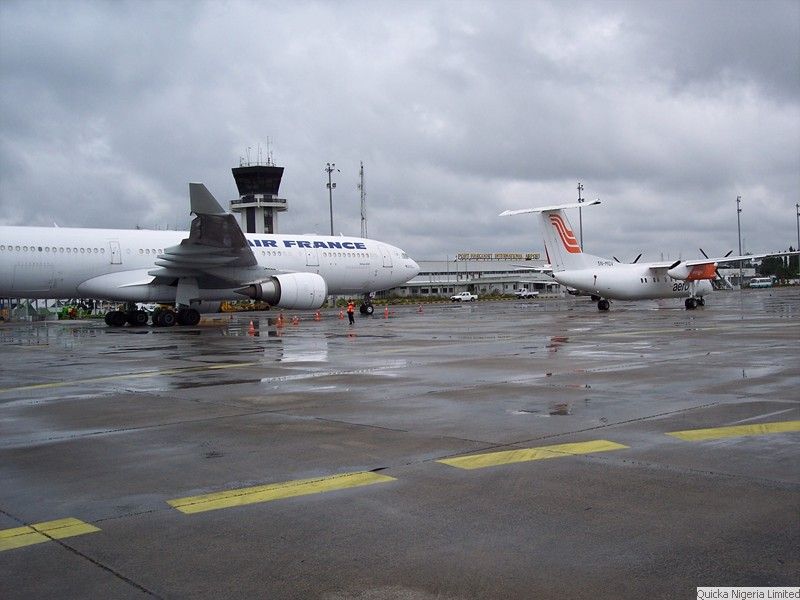
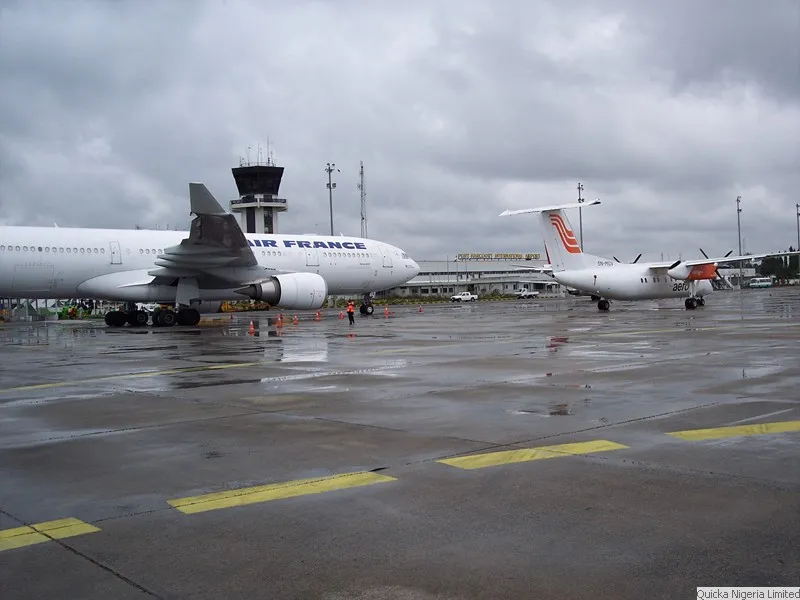
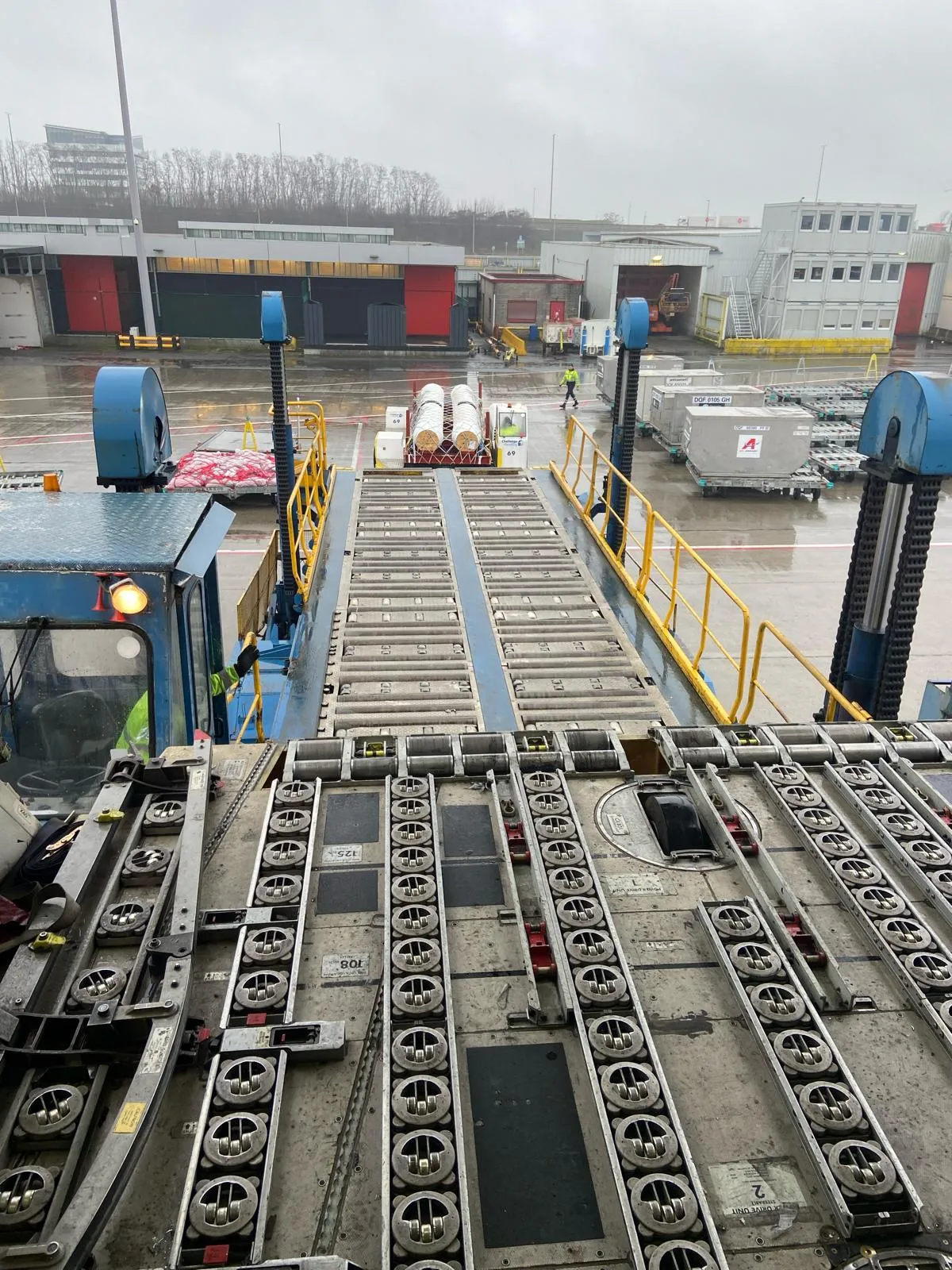
Port Harcourt International — the airside apron where our air freight consignments are received and released. -
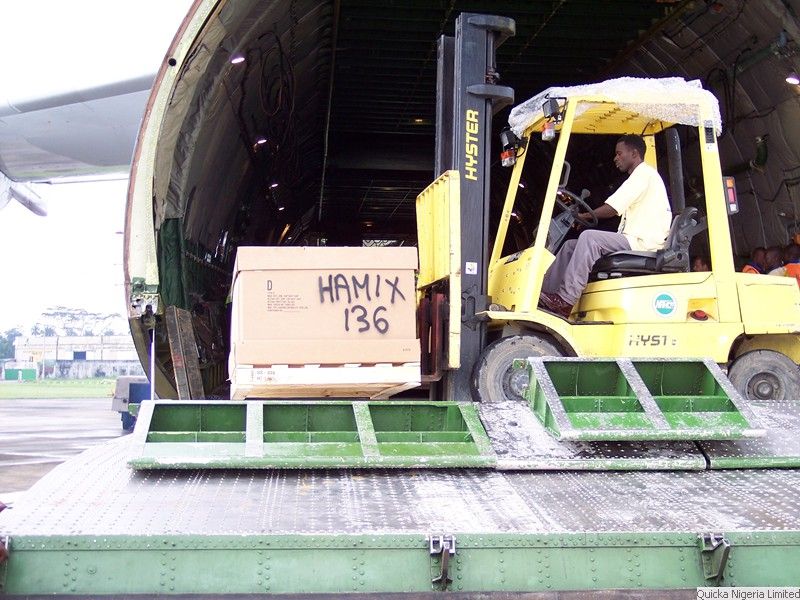
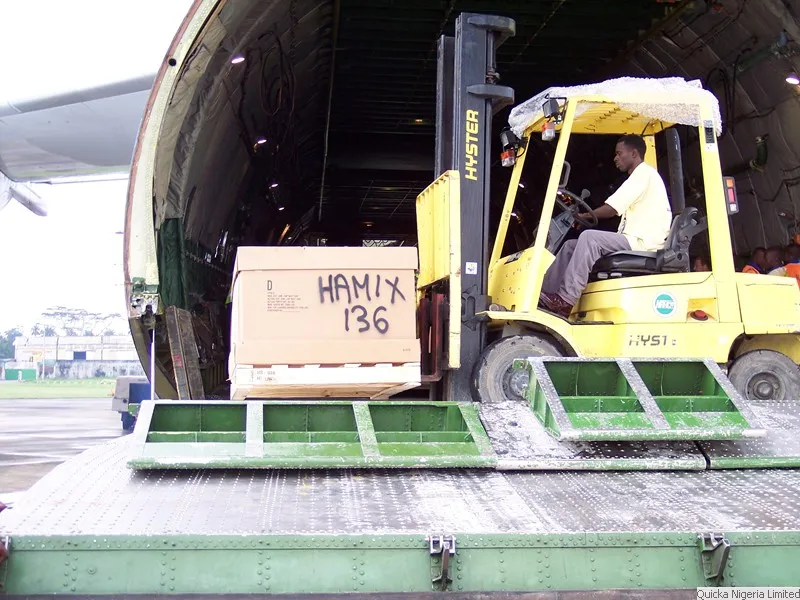
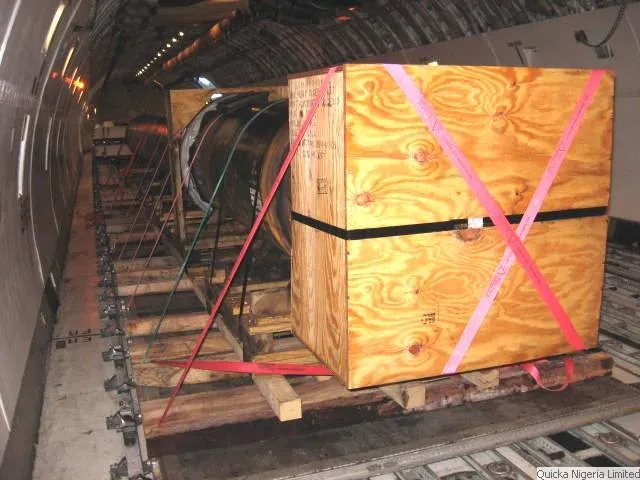
Loading a cased consignment through the nose door of a freighter. Main-deck loading is what makes oversized air cargo possible at all. -
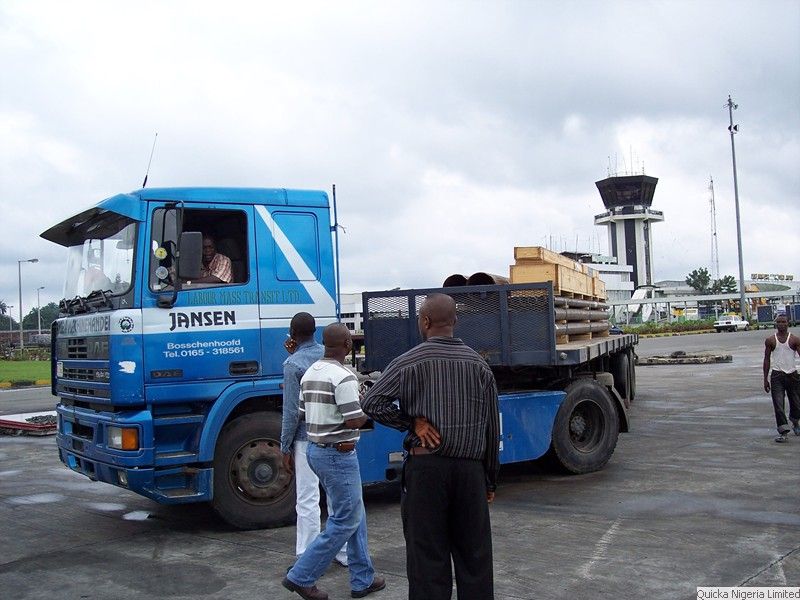
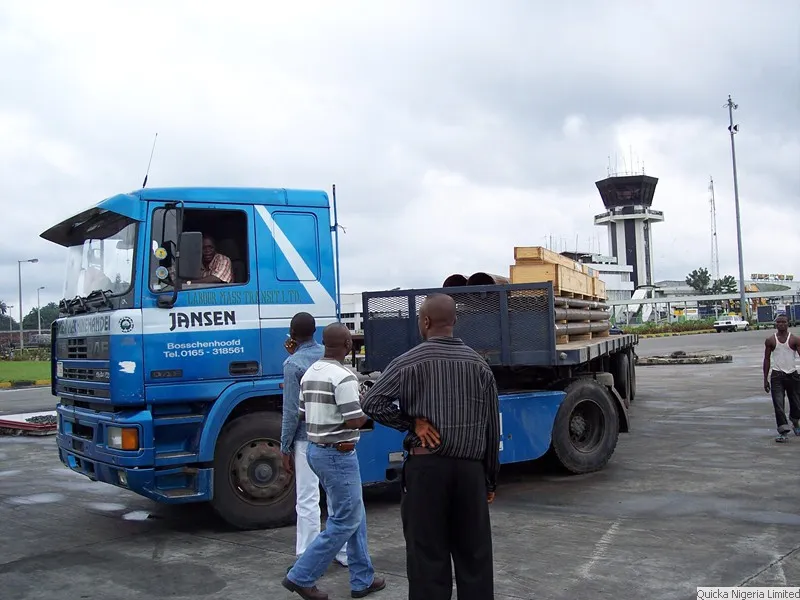
Airside transfer between aircraft and truck, under airport supervision. -
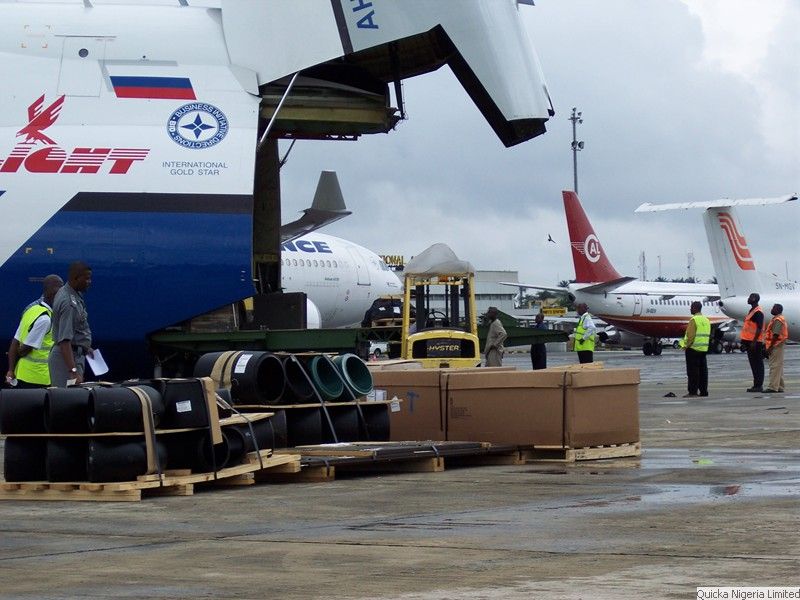
A heavy-lift charter with the nose door raised. Cargo that will not fit a scheduled service goes this way. -
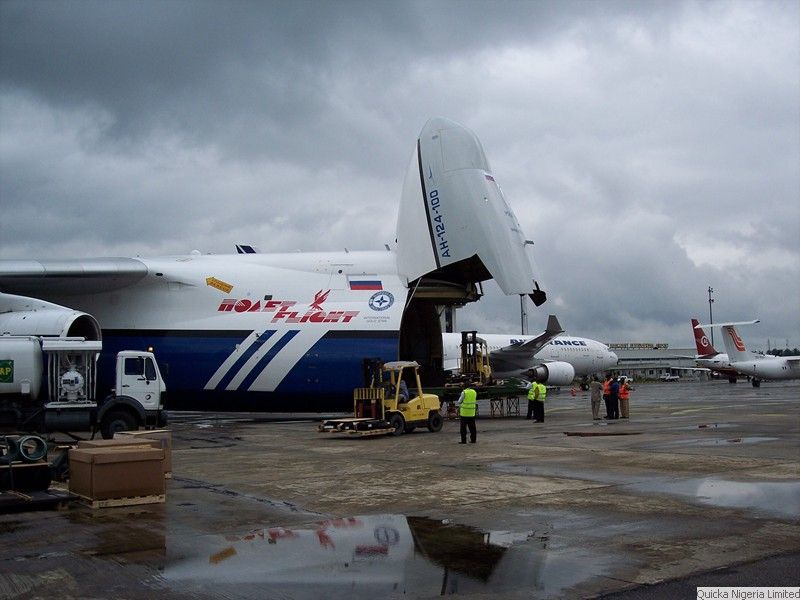
Charter loading in progress at Port Harcourt. -
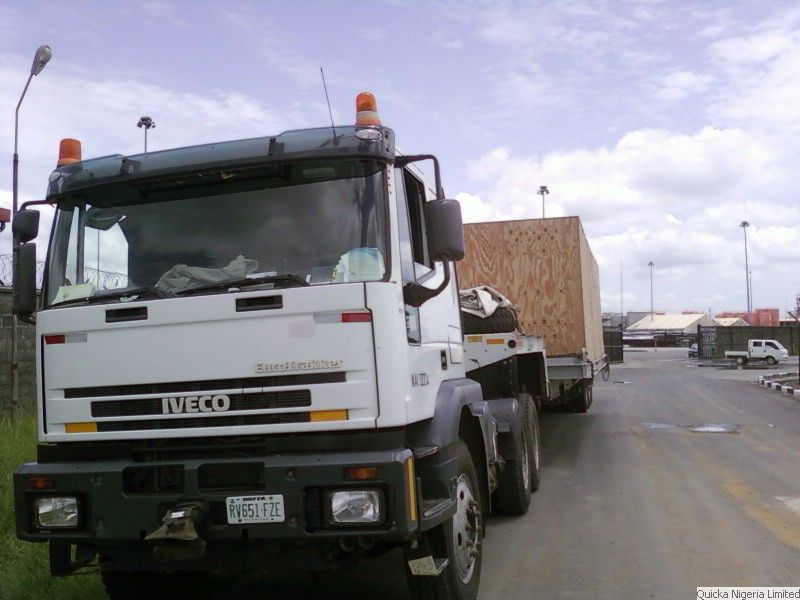
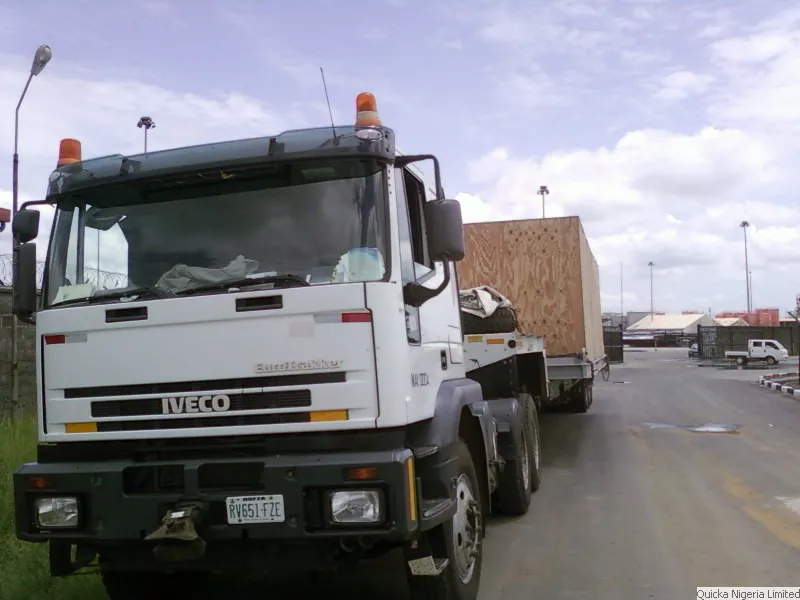
A cased consignment leaving the airport under our control. -
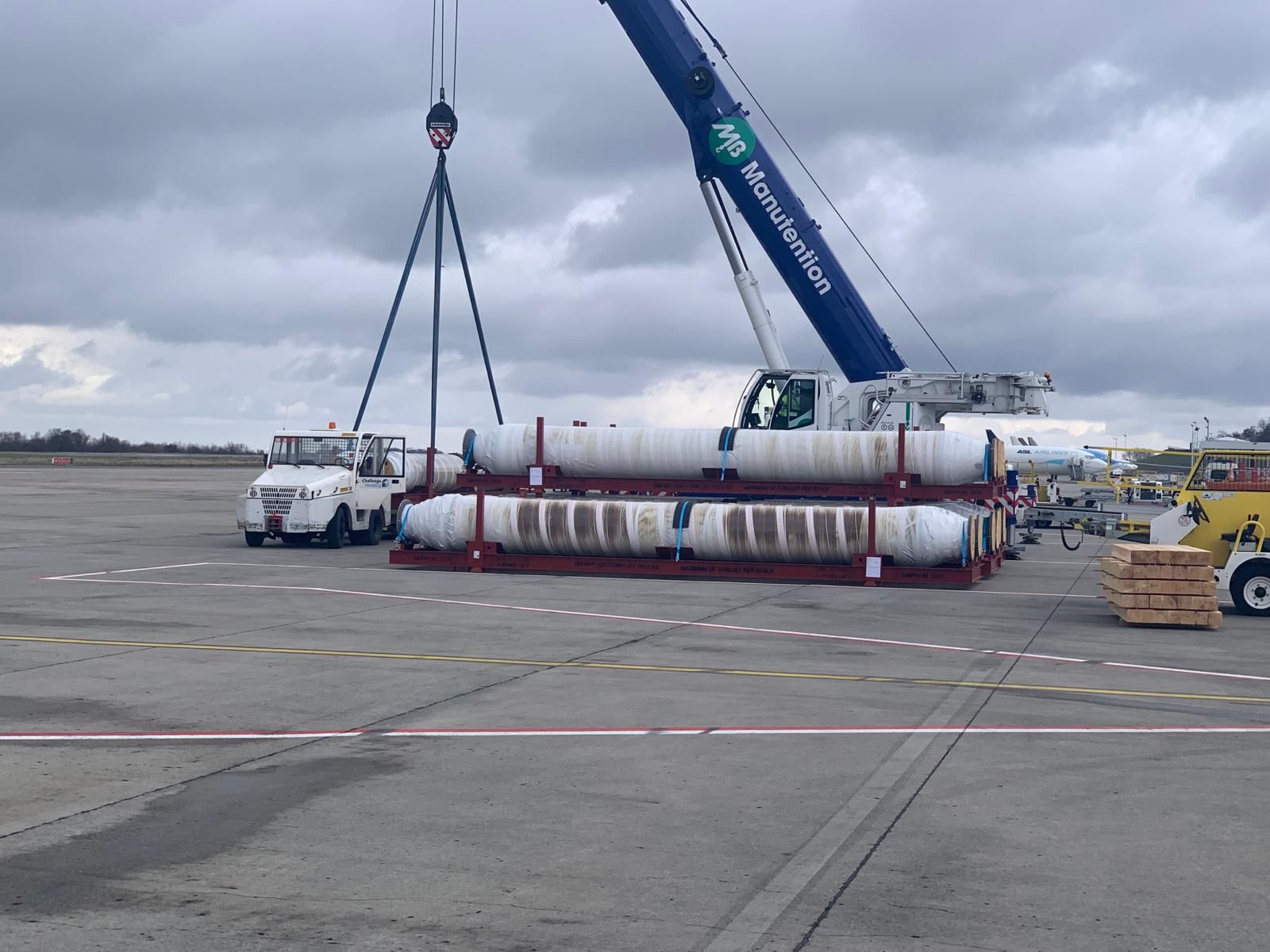
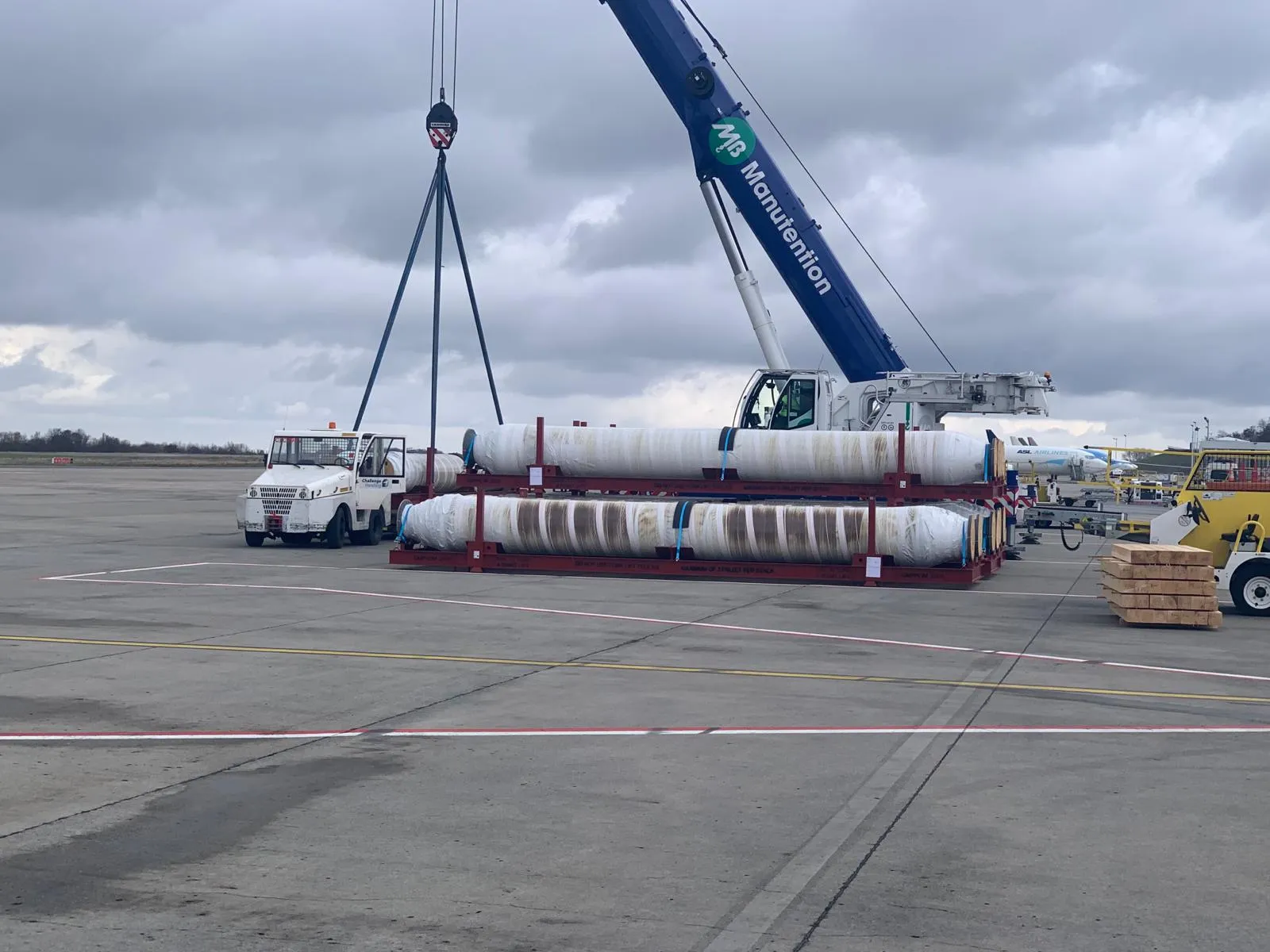
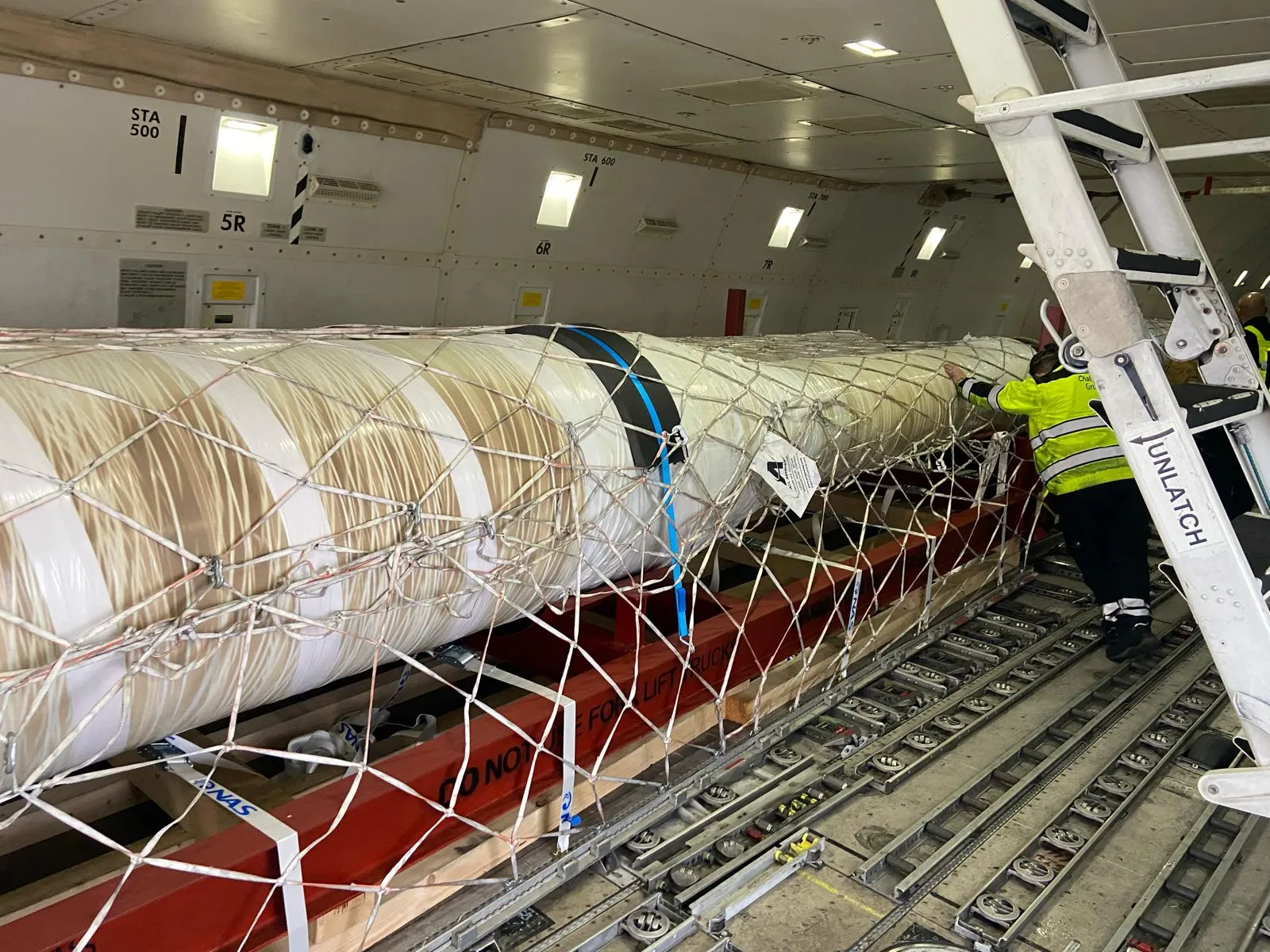
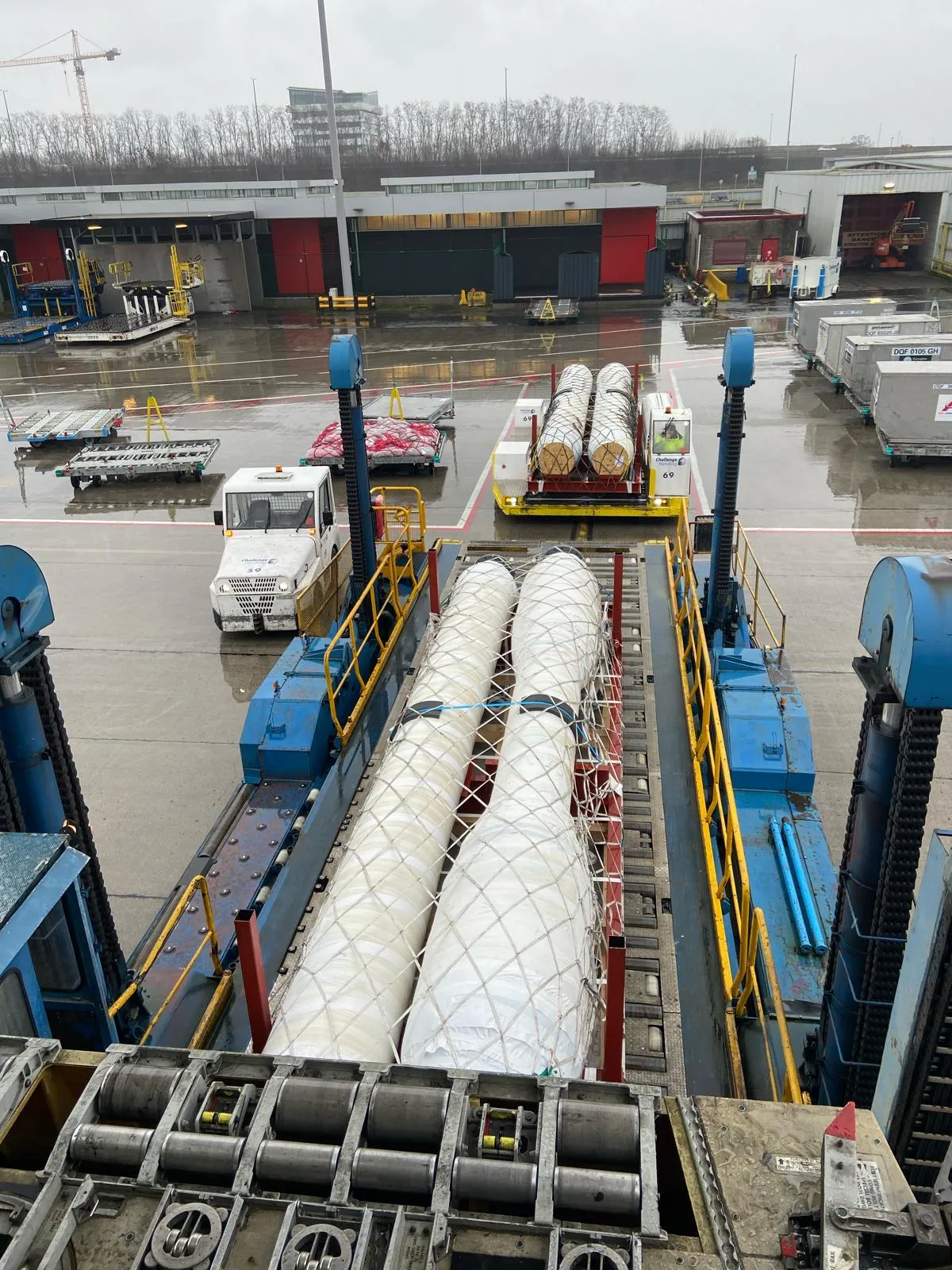
Origin loading for an air charter to Nigeria — long tubing bundles going onto the main deck. February 2024. -
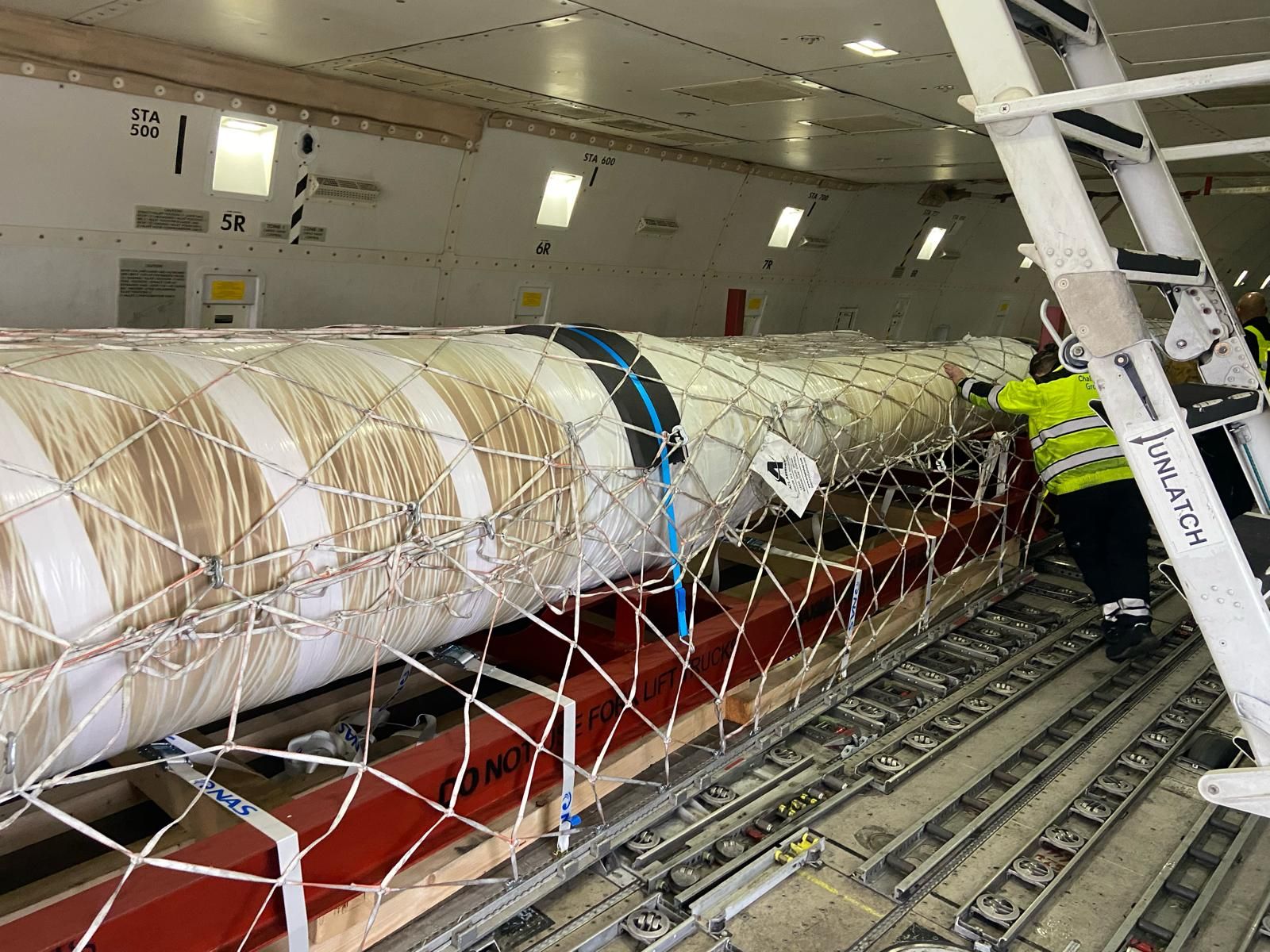
The same bundle netted and locked to the main-deck rails. -
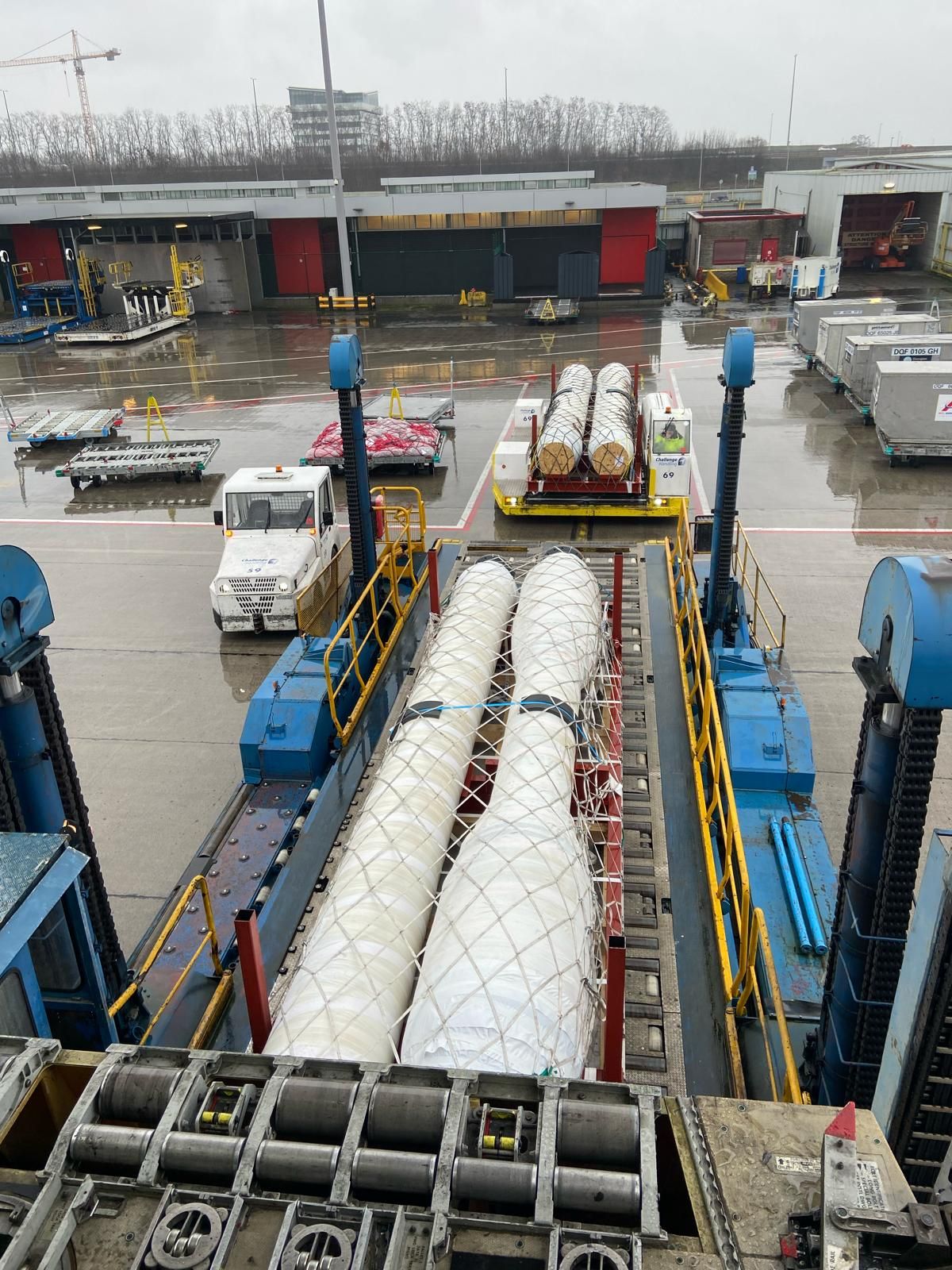
Staged at the freight terminal before transfer to the aircraft. -
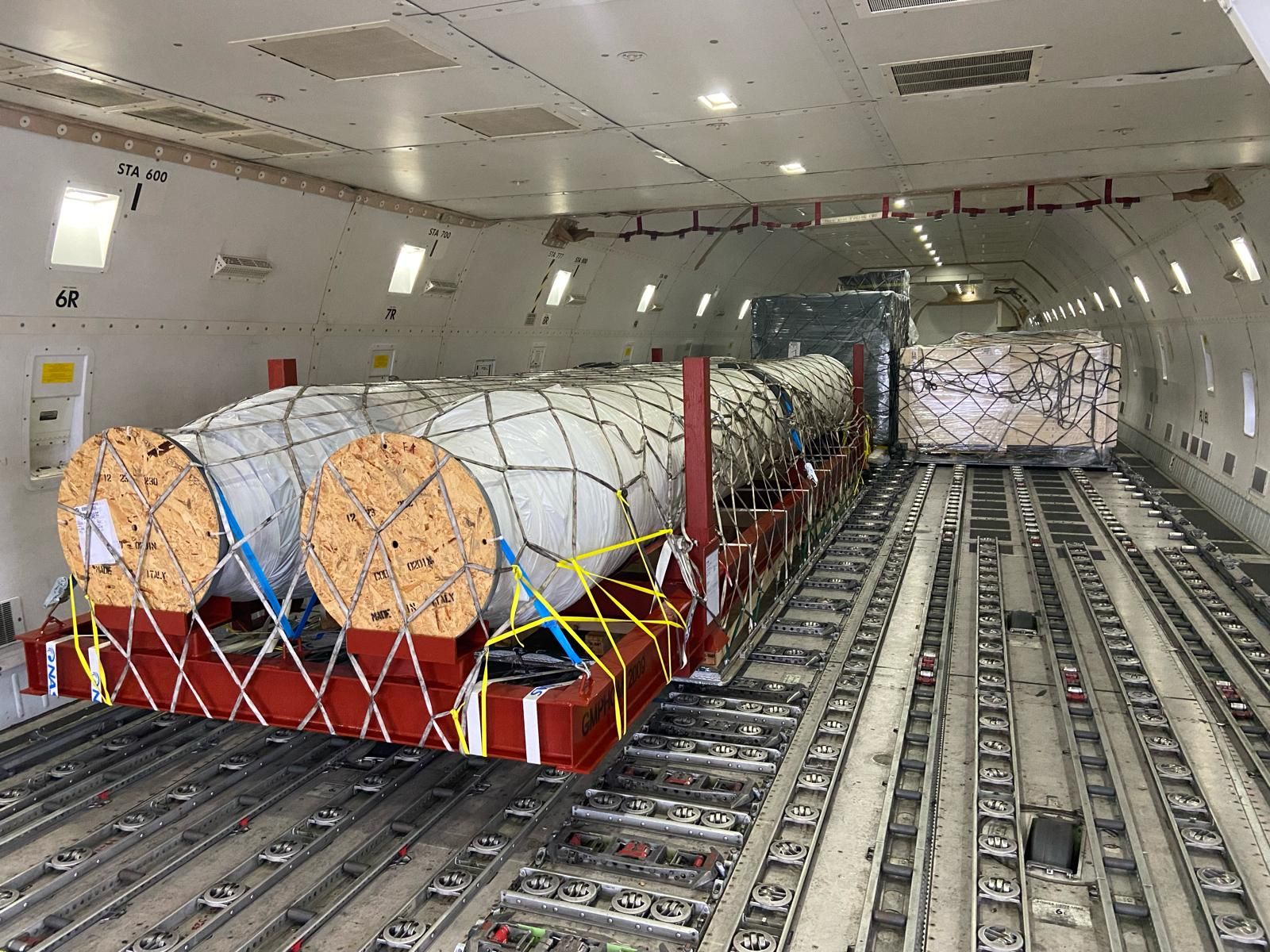
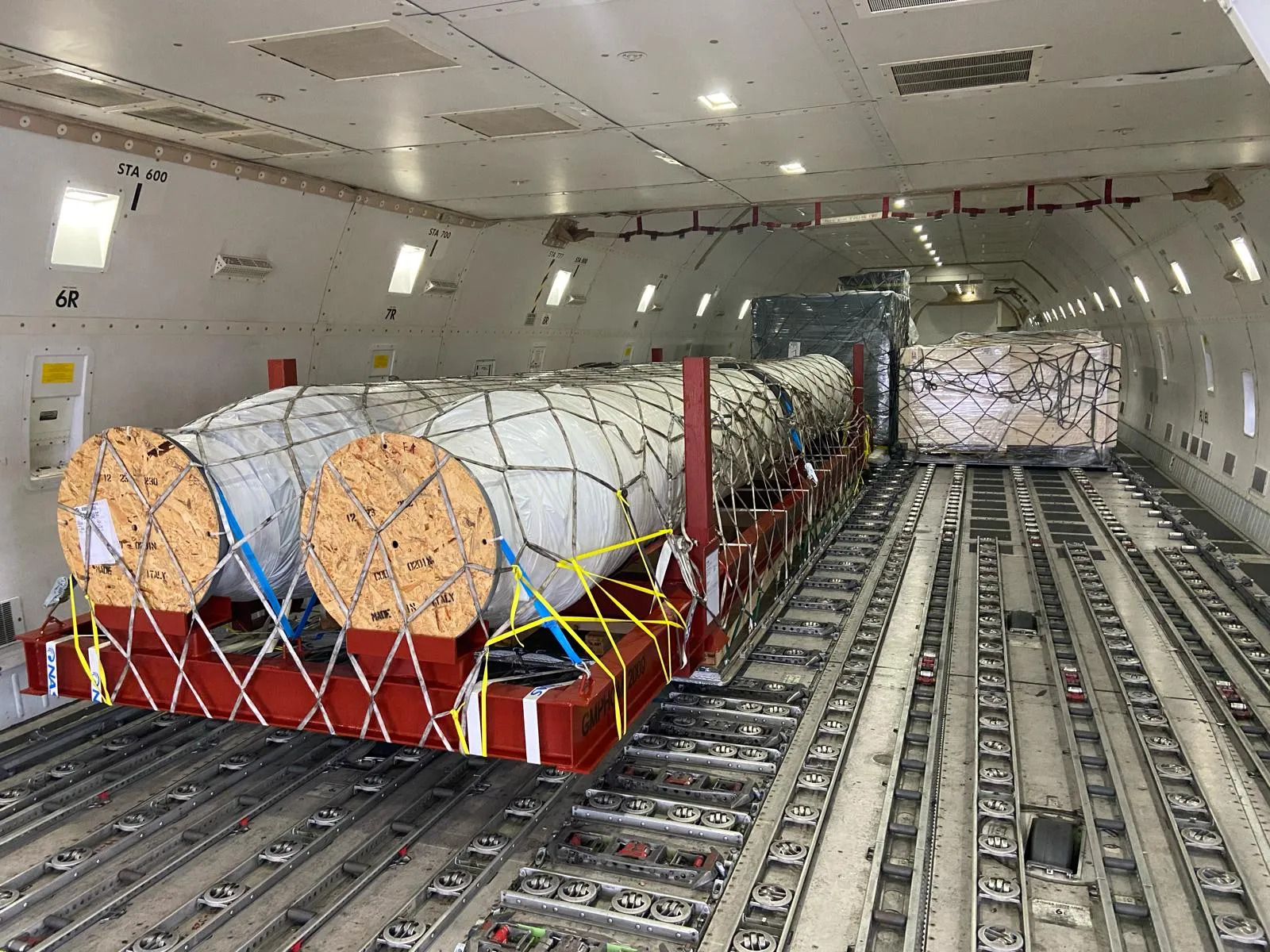
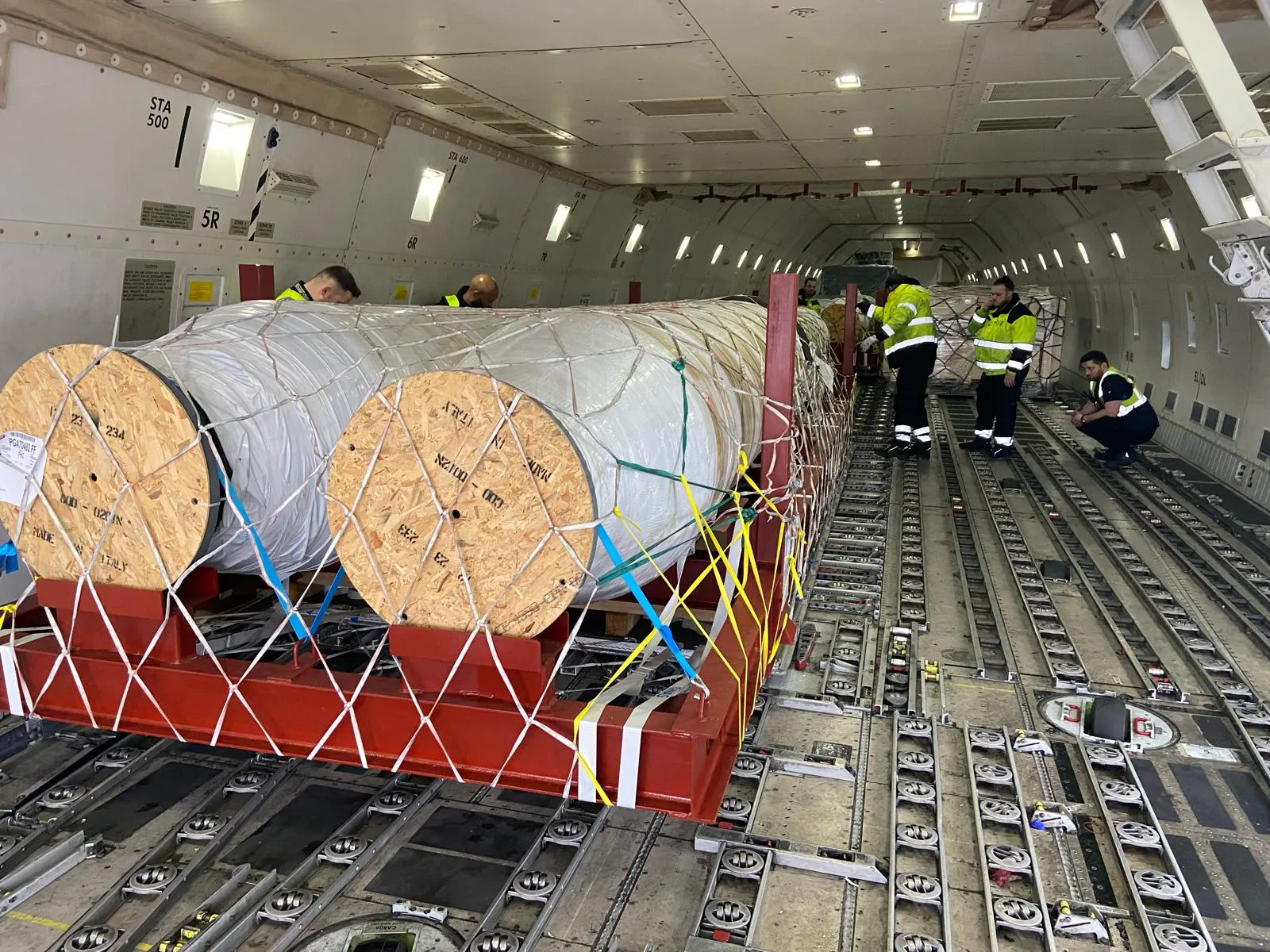
Cable reels and tubing sharing a main deck — mixed oversized cargo on a single charter. -
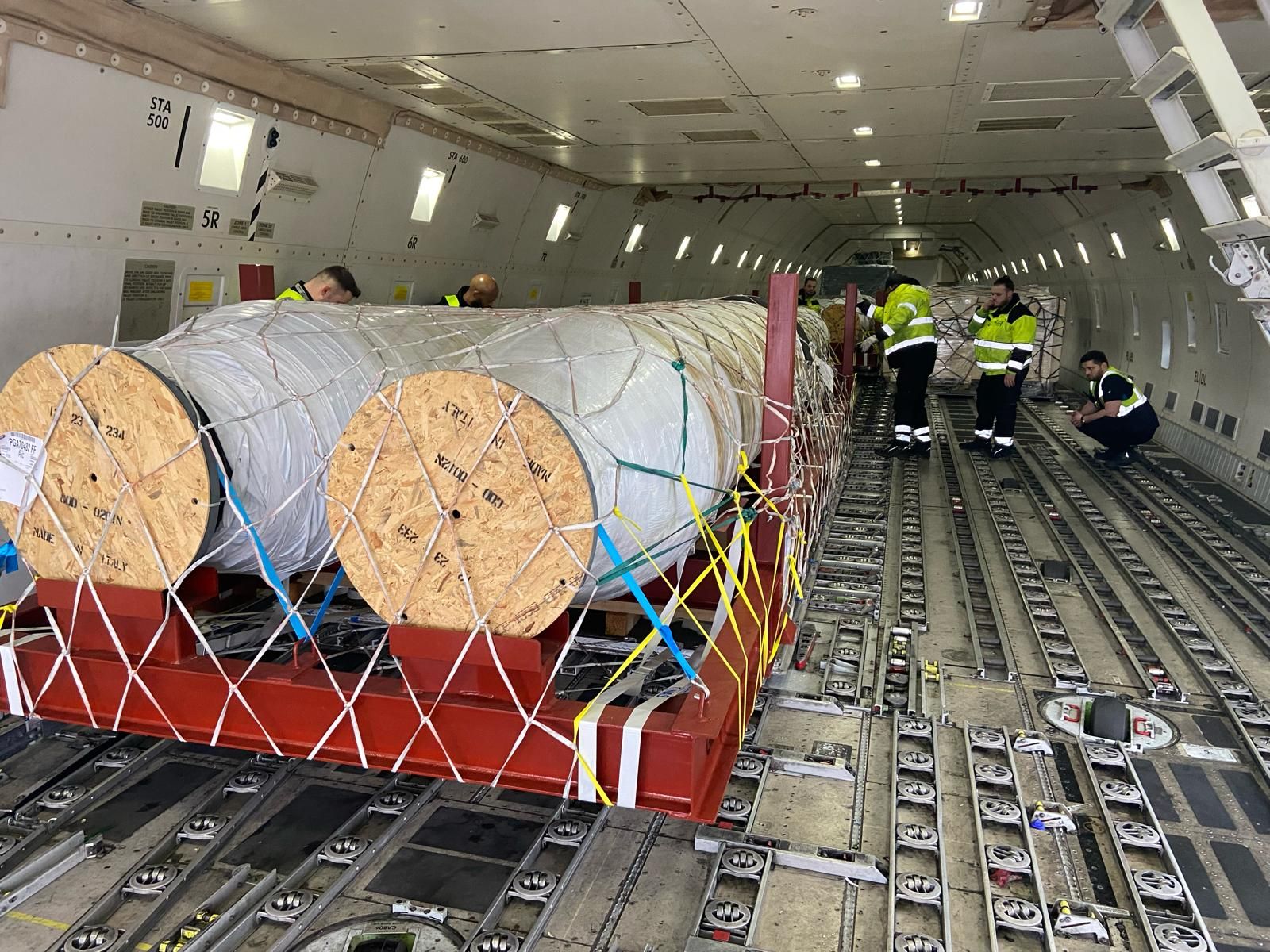
Restraint checked before the doors close. On a charter, load planning is the job. -
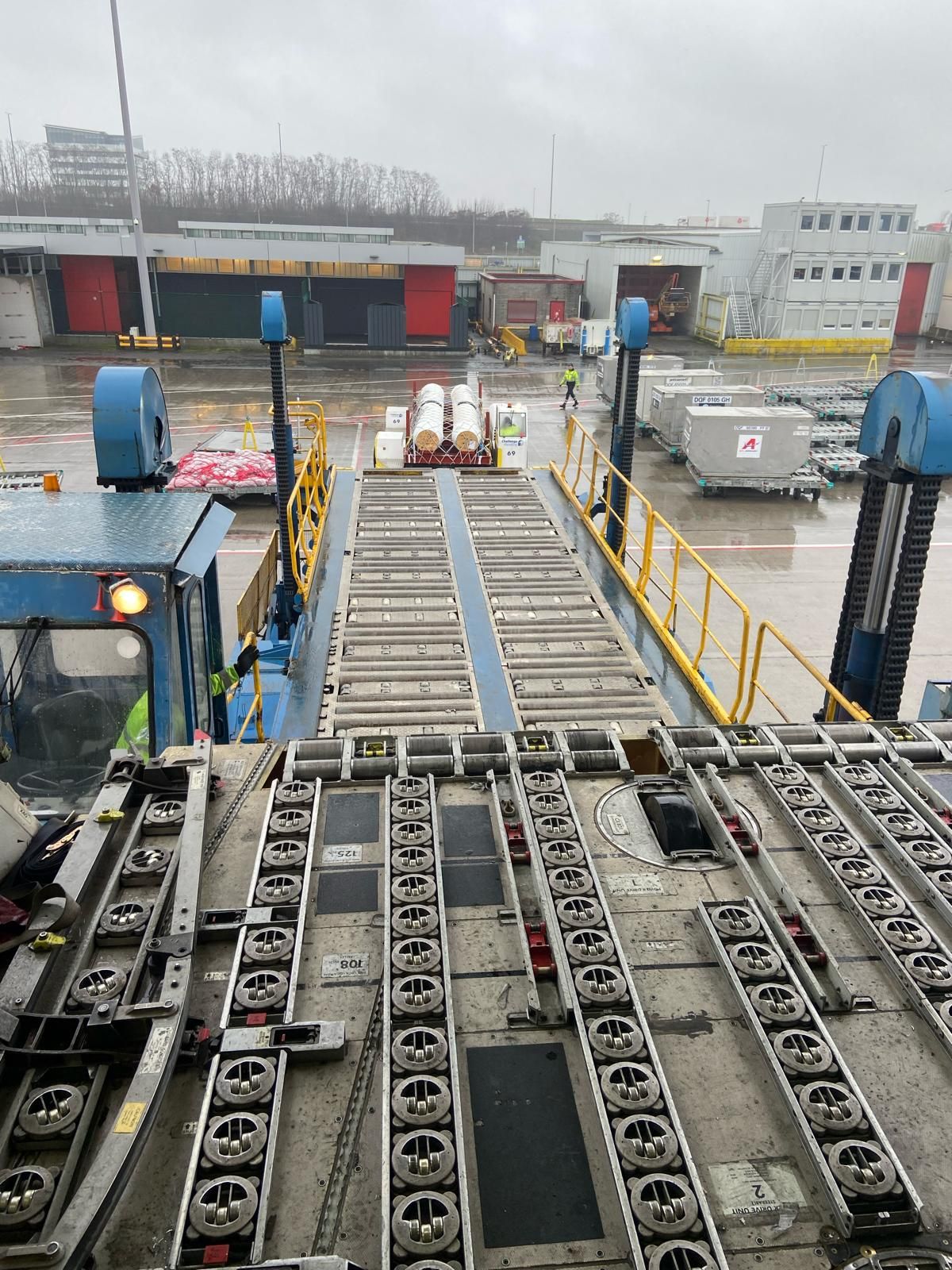
The roller floor a charter is planned around. -
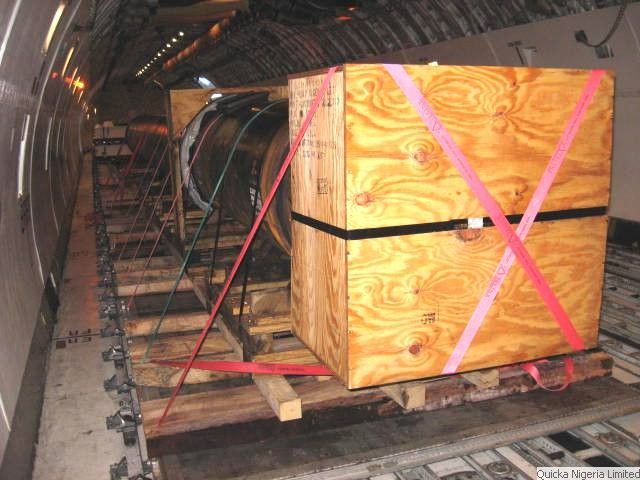
Lashing to the main-deck rails. Cargo that shifts in transit is cargo that arrives damaged. -
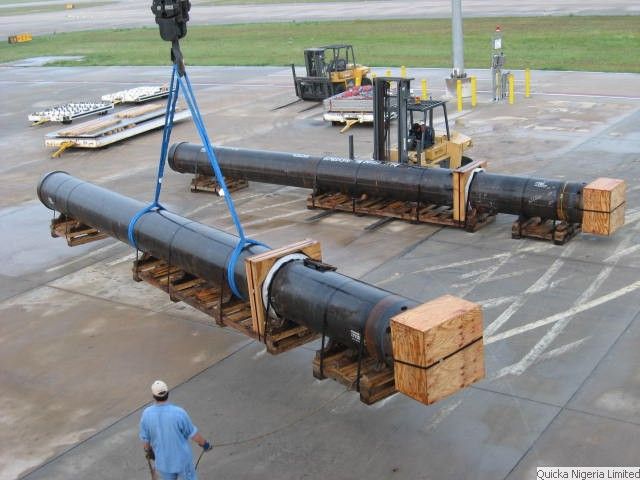
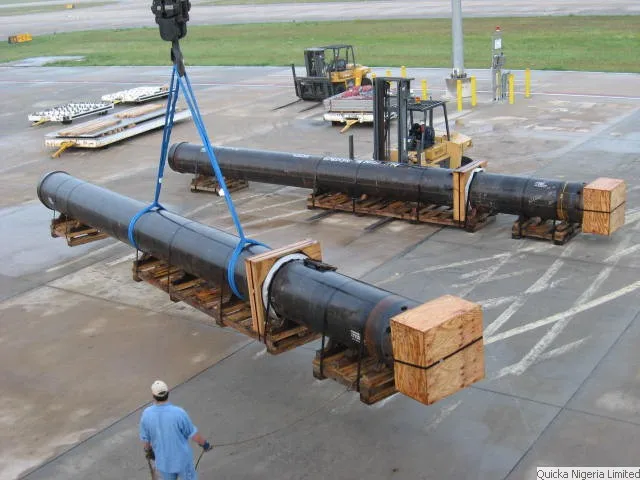
Pipe sections lifted onto cradles.
Project and heavy-lift cargo
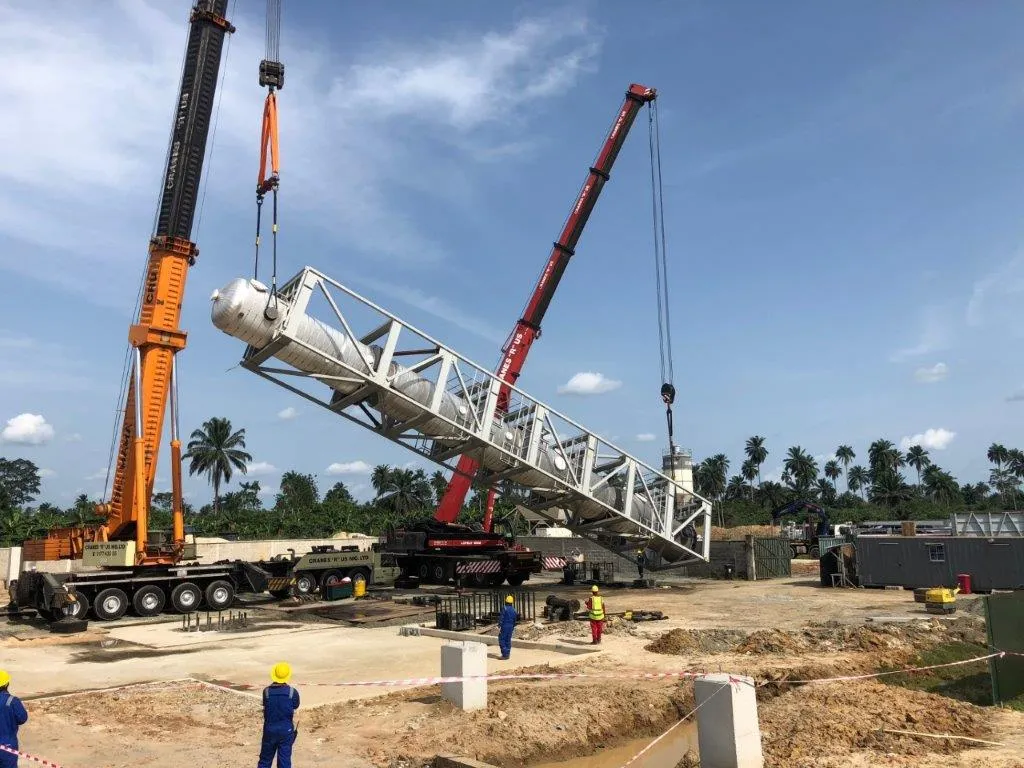
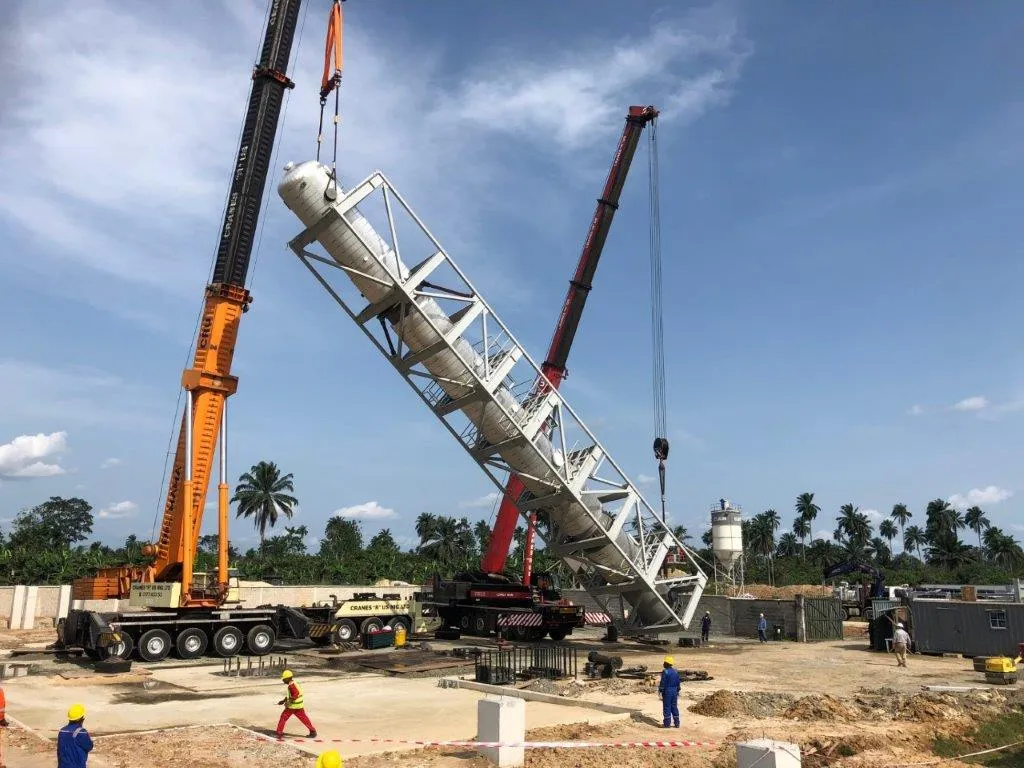
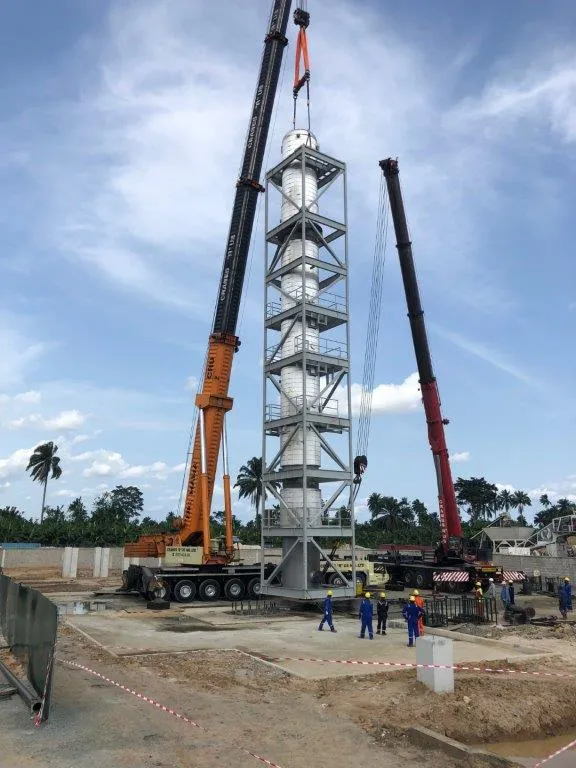
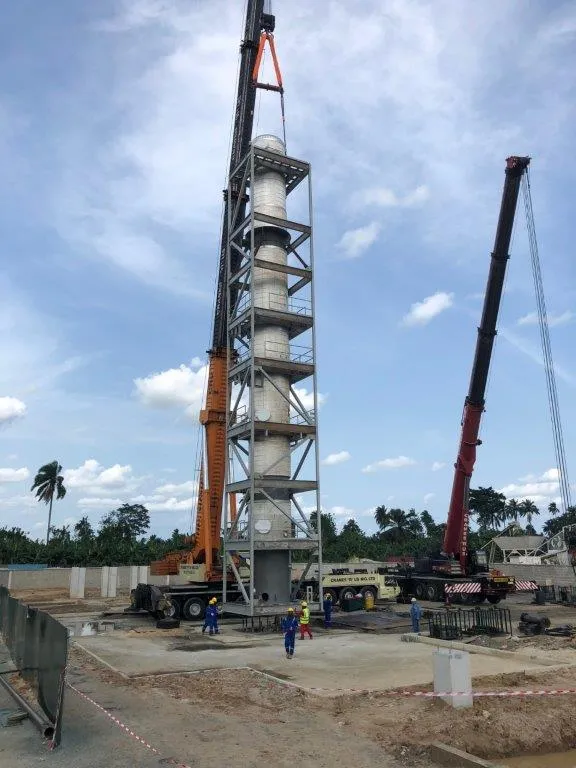
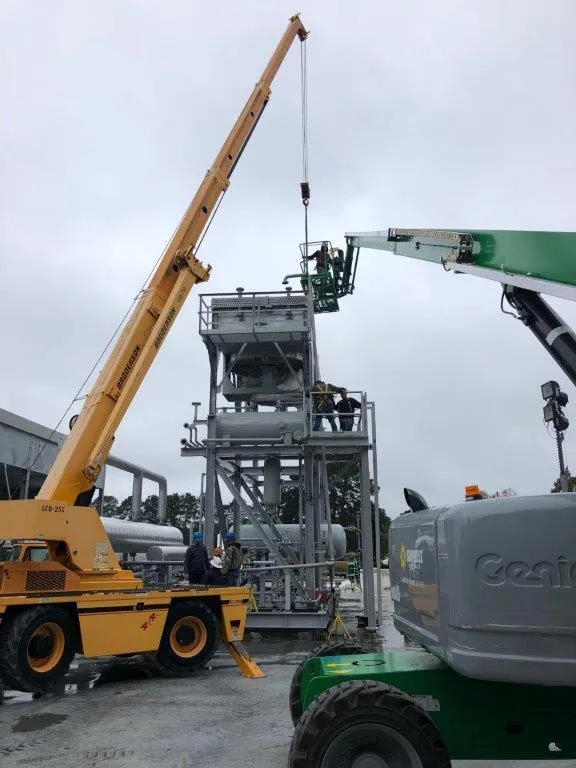
A modular refinery end to end: assembled at origin, shipped, hauled across Nigeria on multi-axle trailers, upended by tandem crane.
-
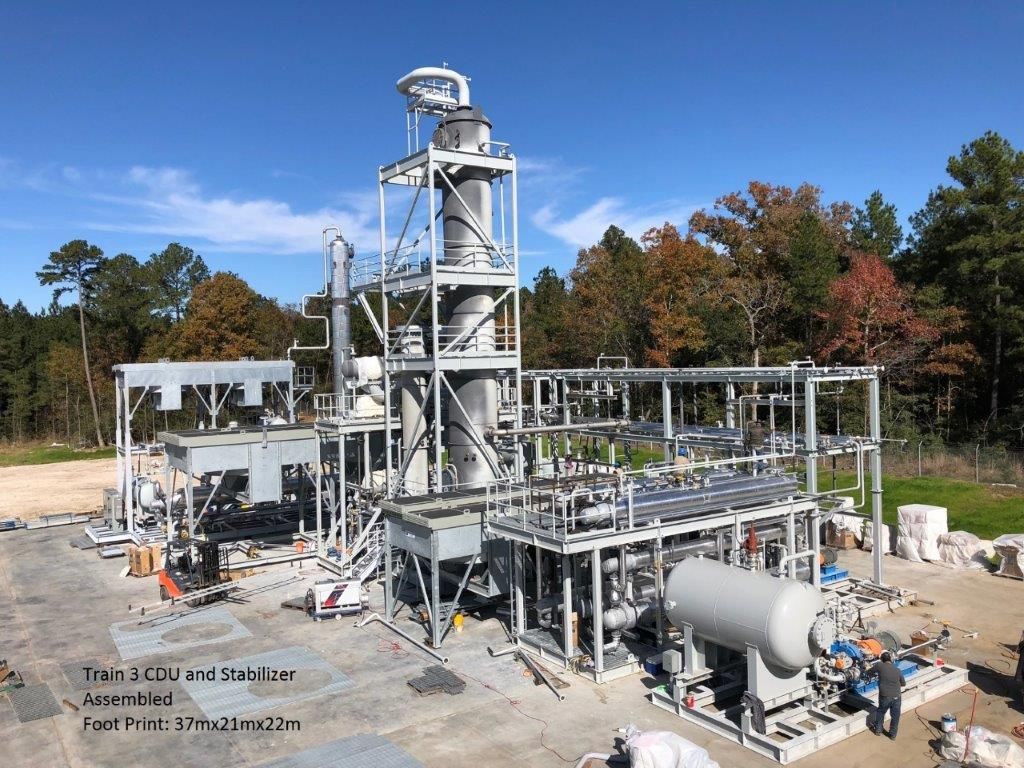
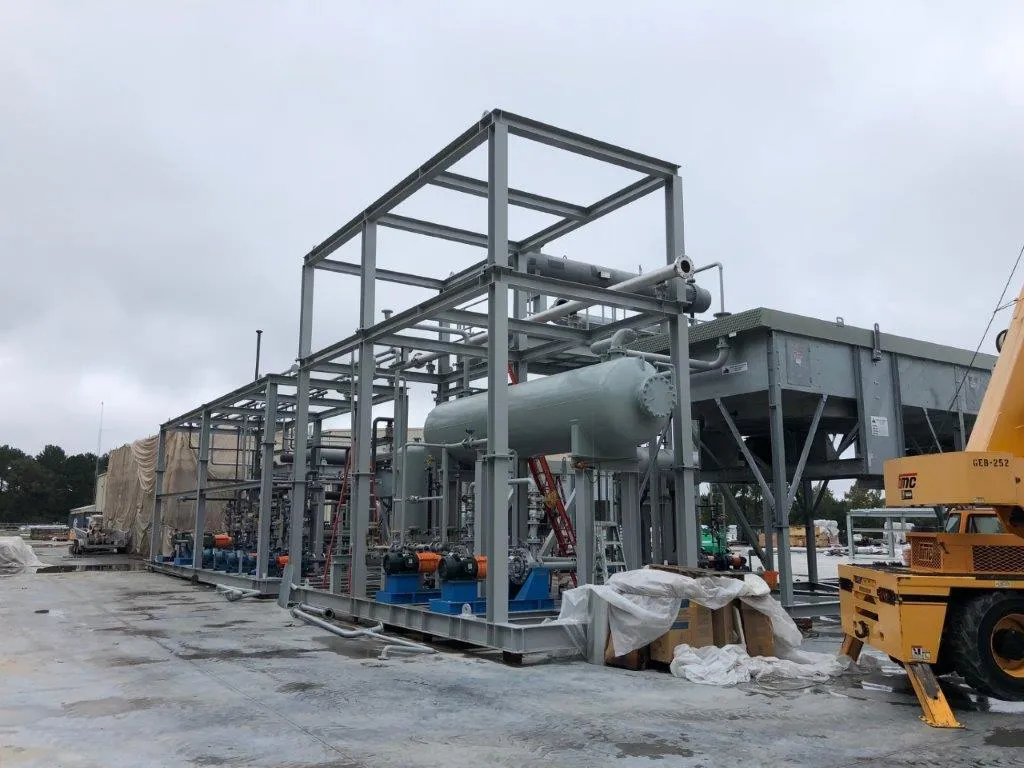
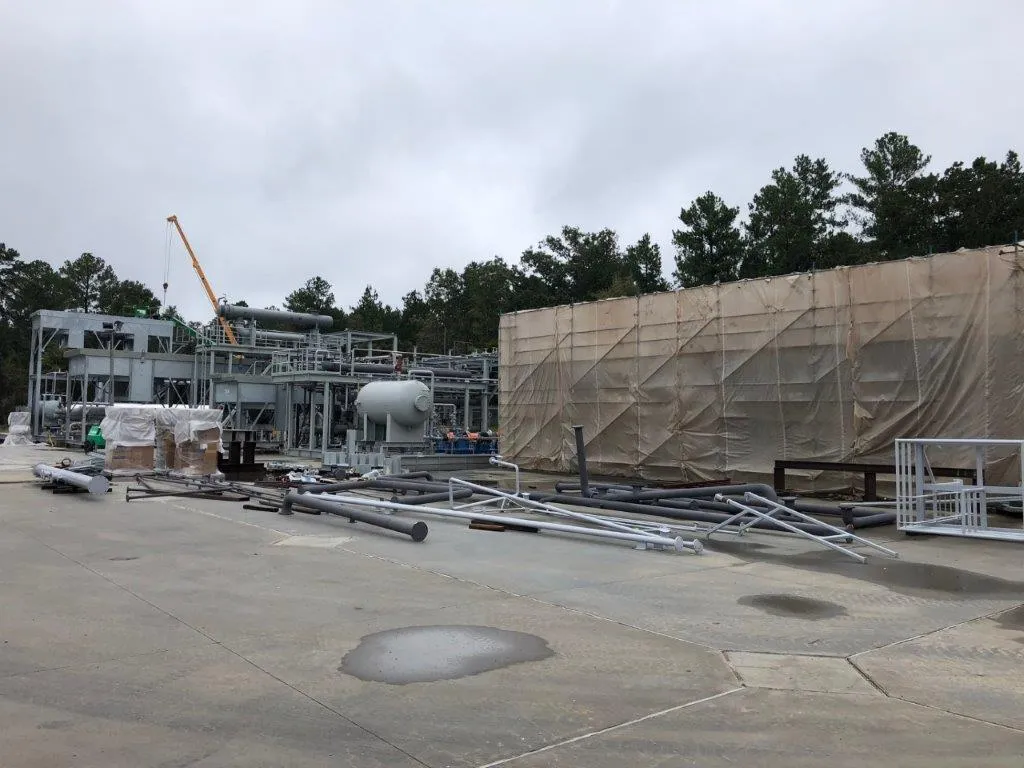
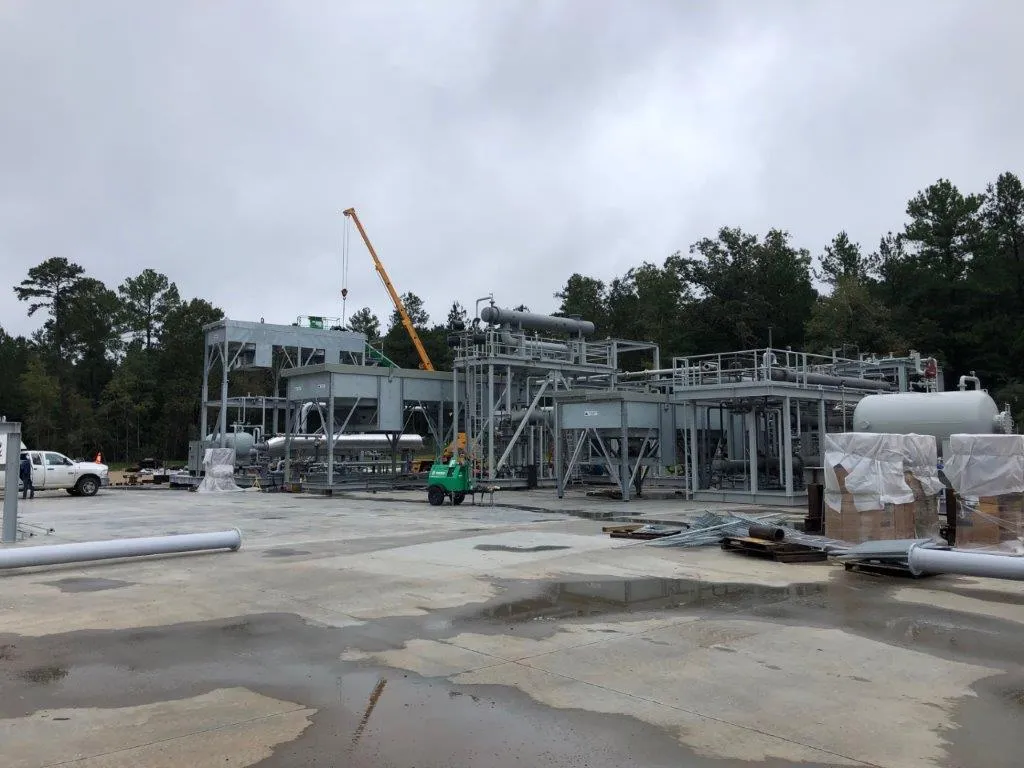
The modular refinery train as assembled at the fabrication yard, before disassembly for shipment. Footprint 37 × 21 × 22 metres — the figure every part of the move was planned around. -
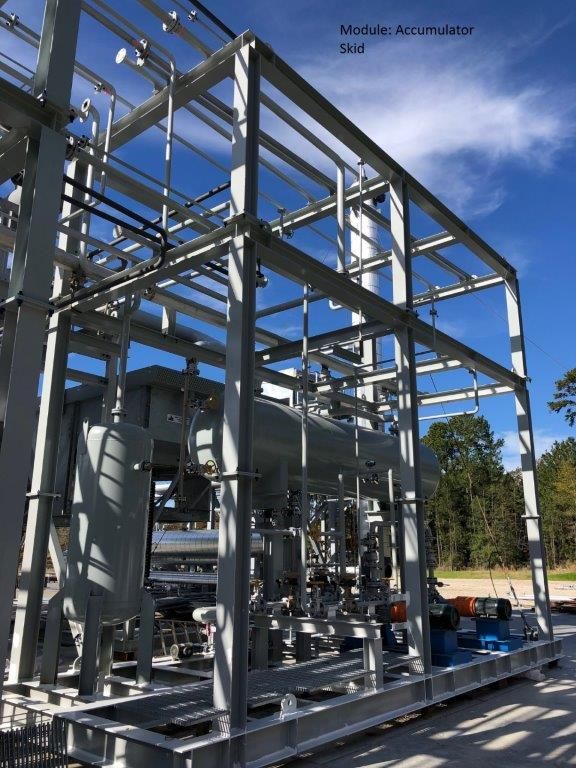
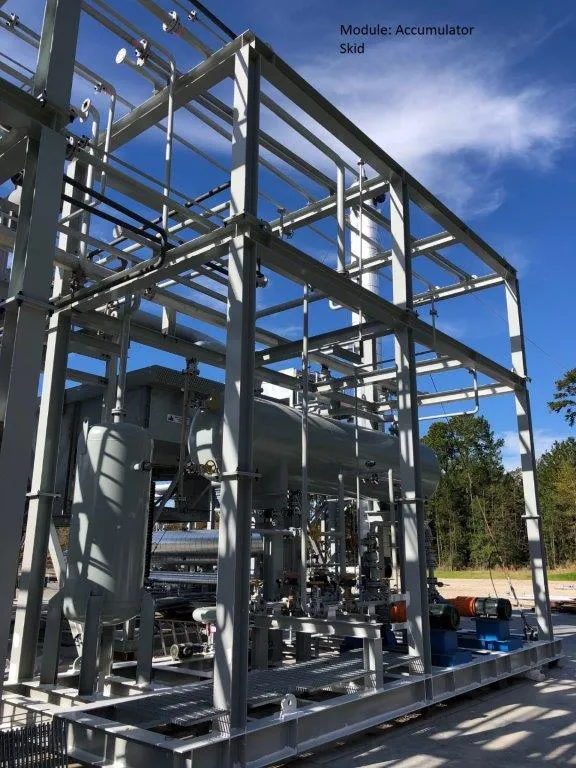
Accumulator skid, as fabricated. -
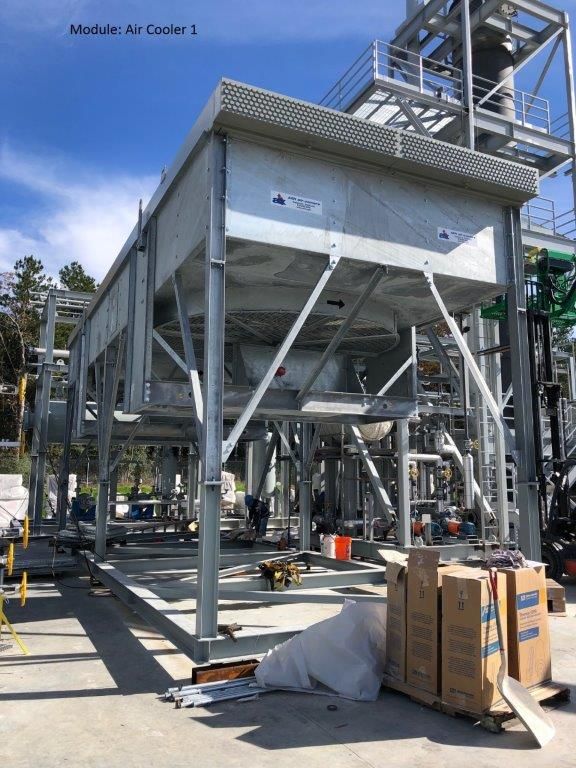
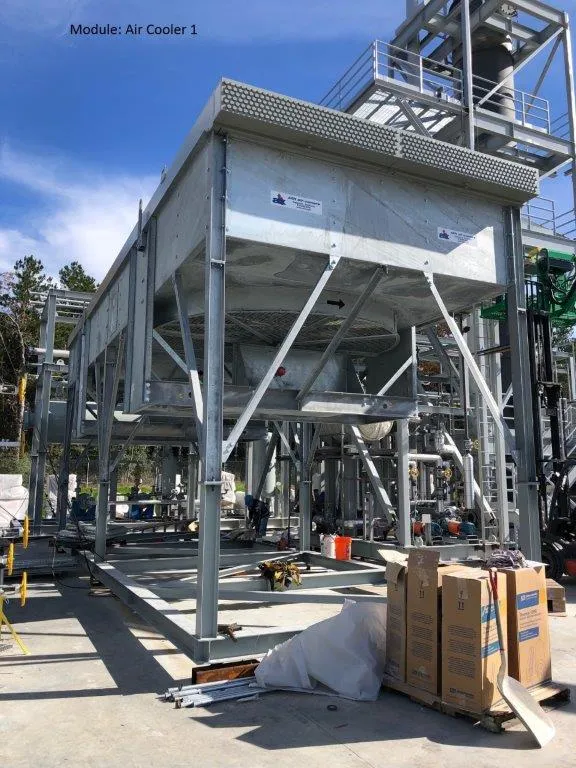
Air cooler module, as fabricated. -
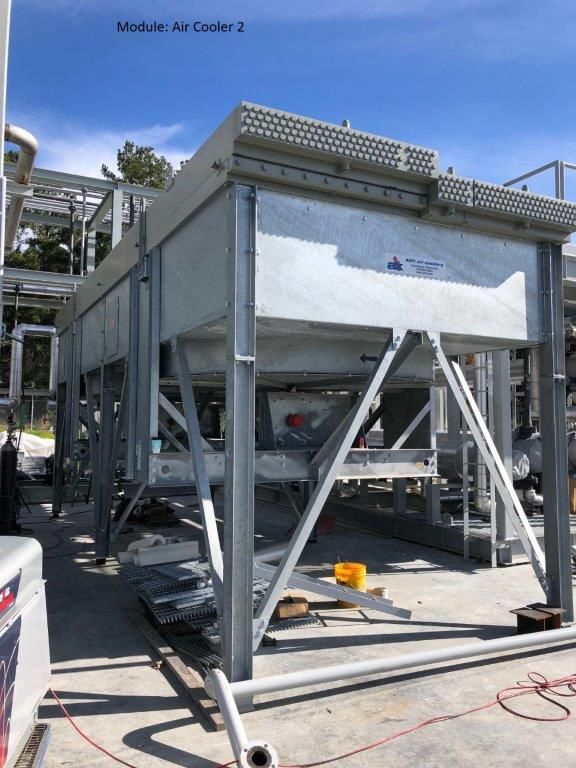
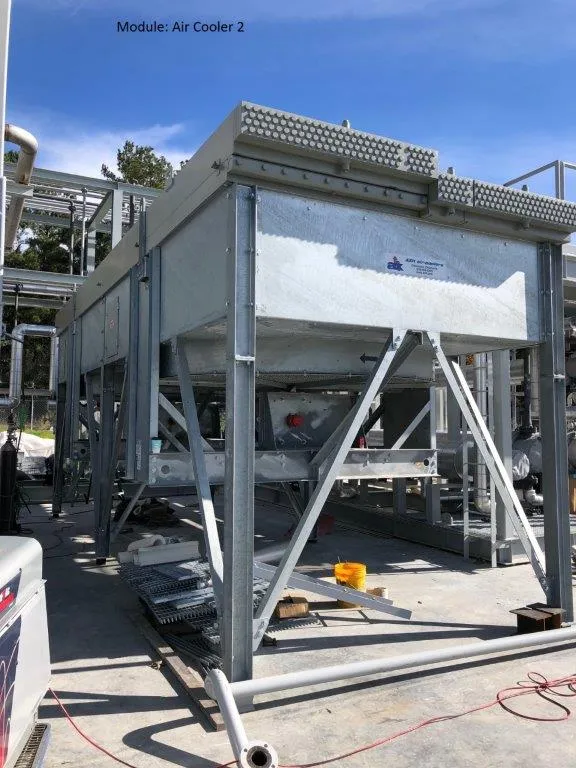
The second air cooler module. -
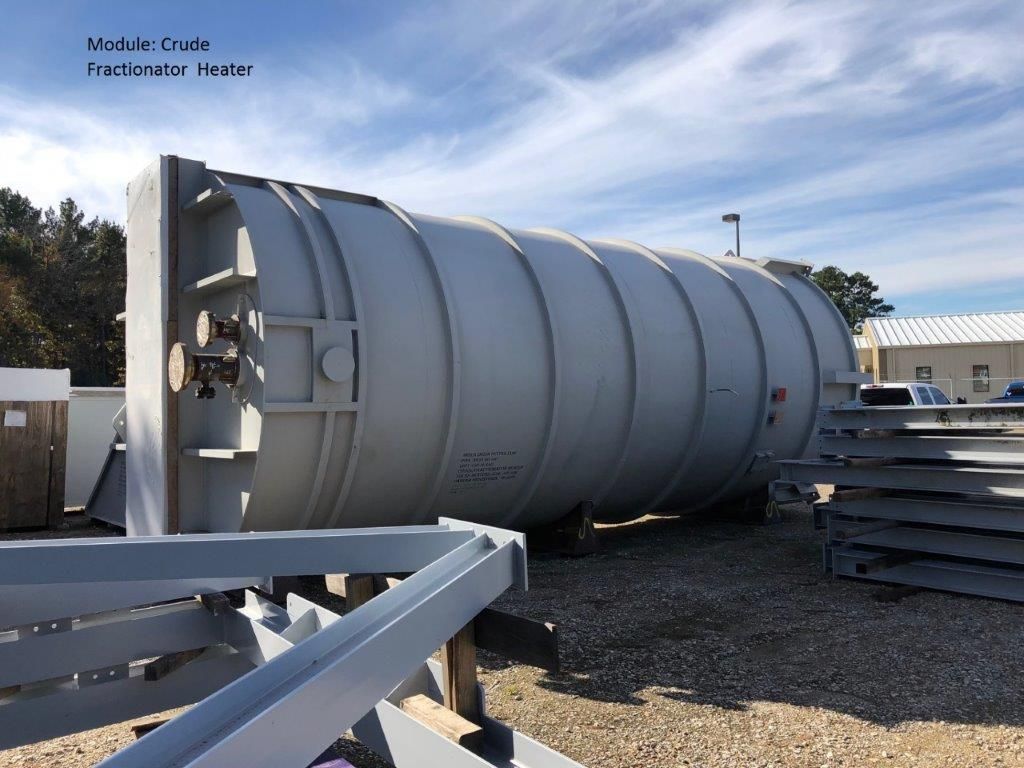
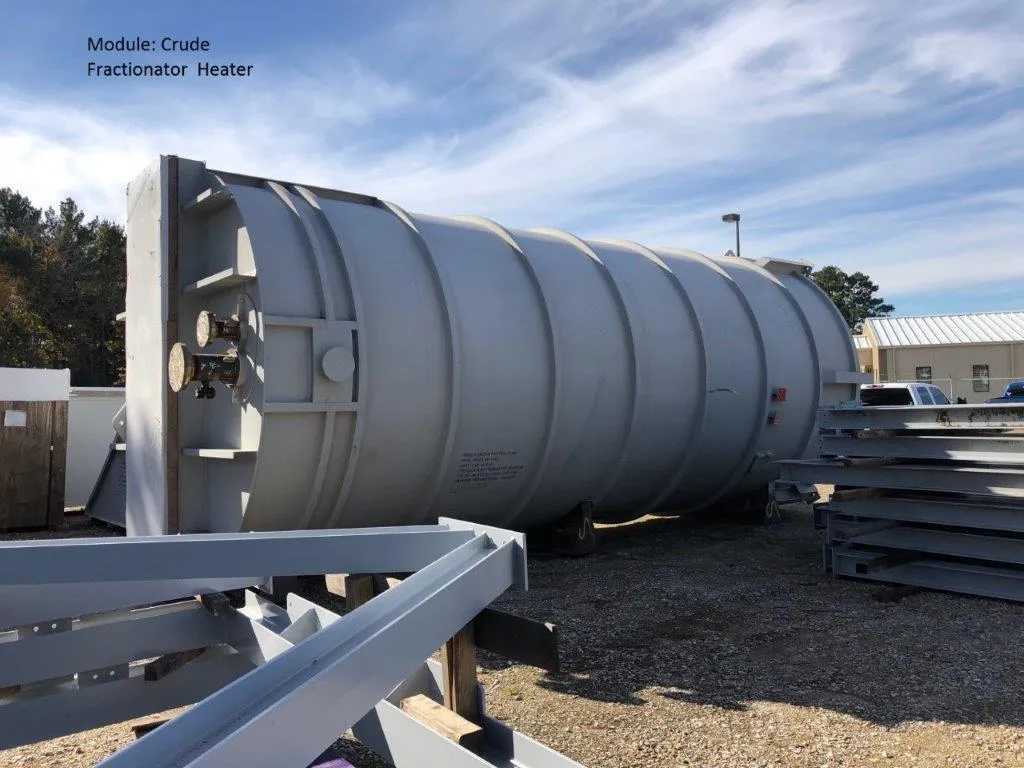
Crude fractionator heater, as fabricated. -
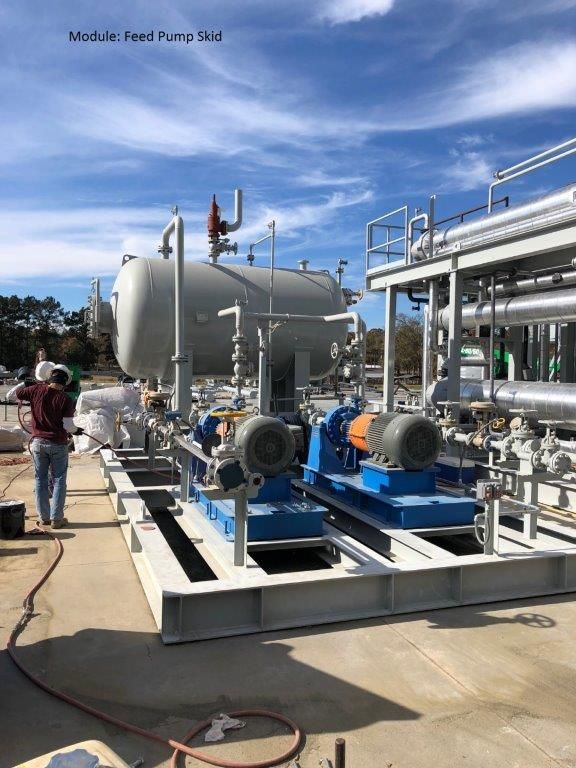
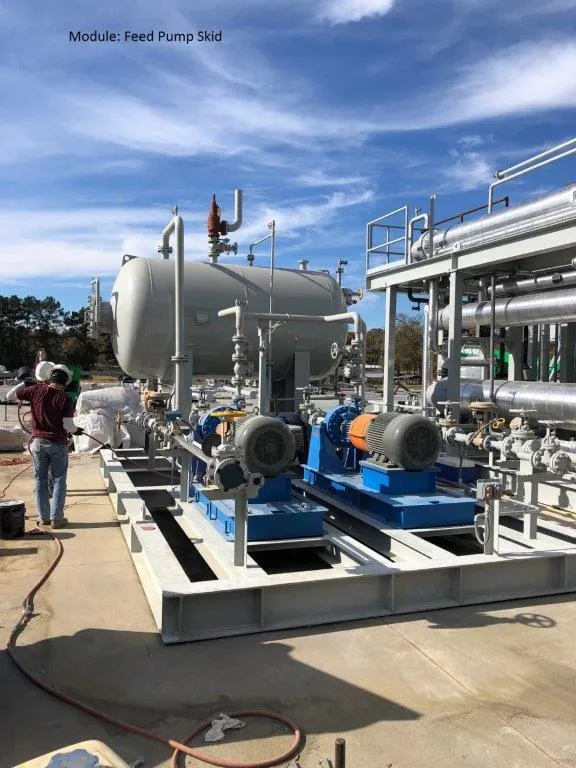
Feed pump skid, as fabricated. -
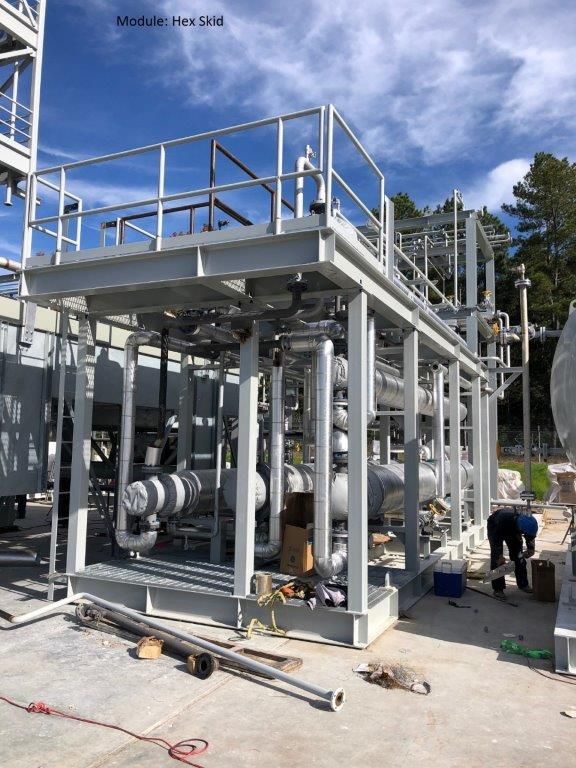
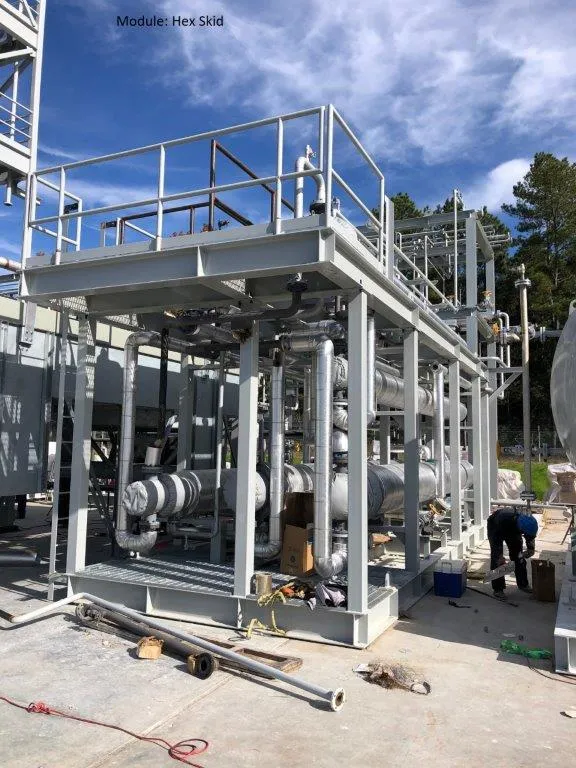
Heat exchanger skid, as fabricated. -
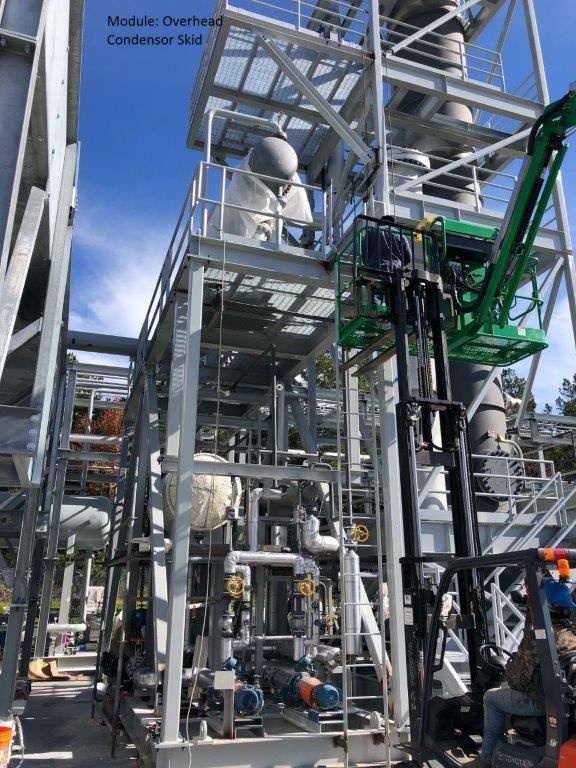
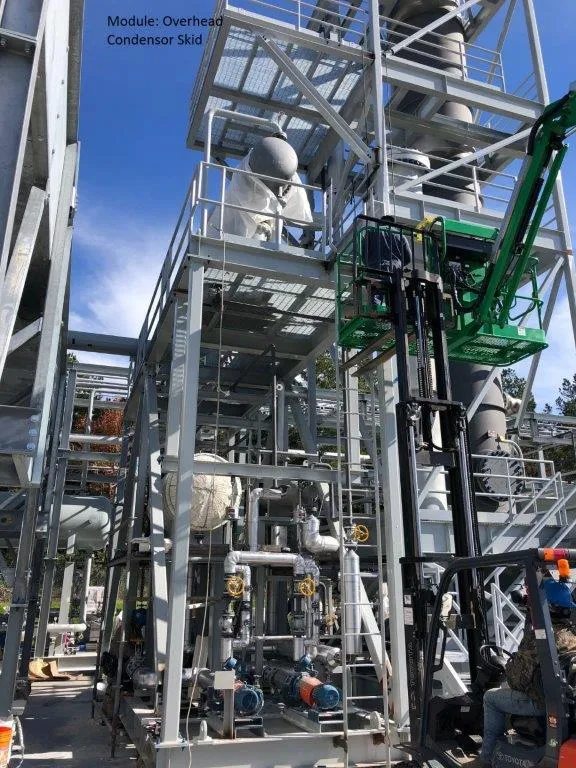
Overhead condenser skid, as fabricated. -
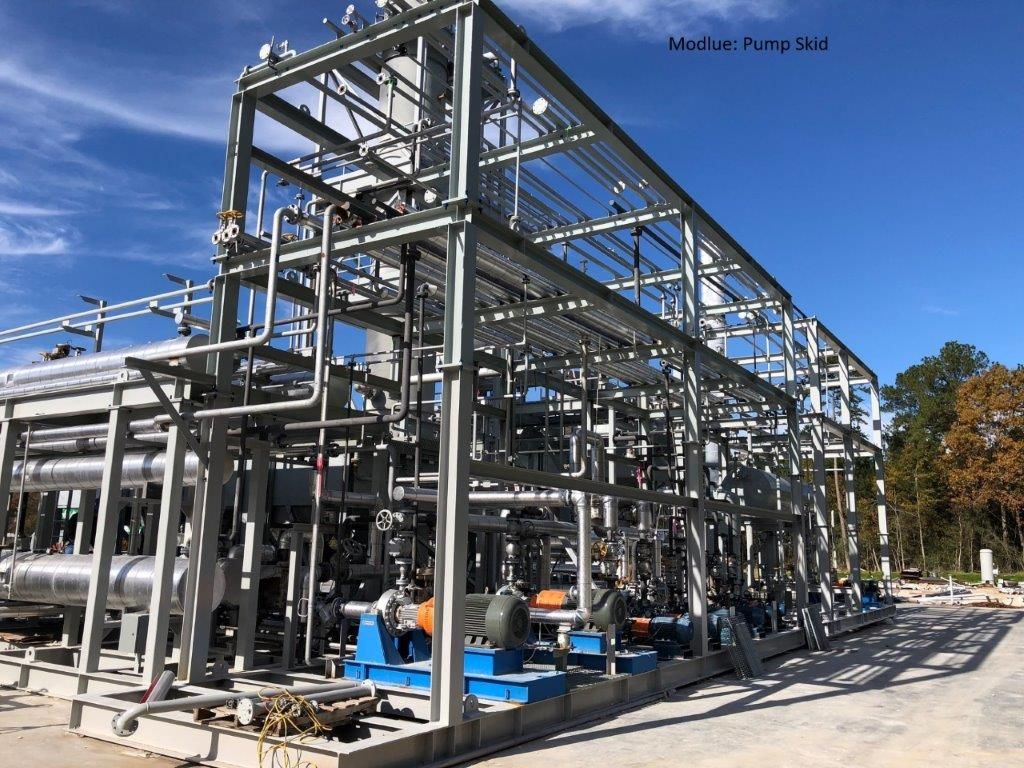
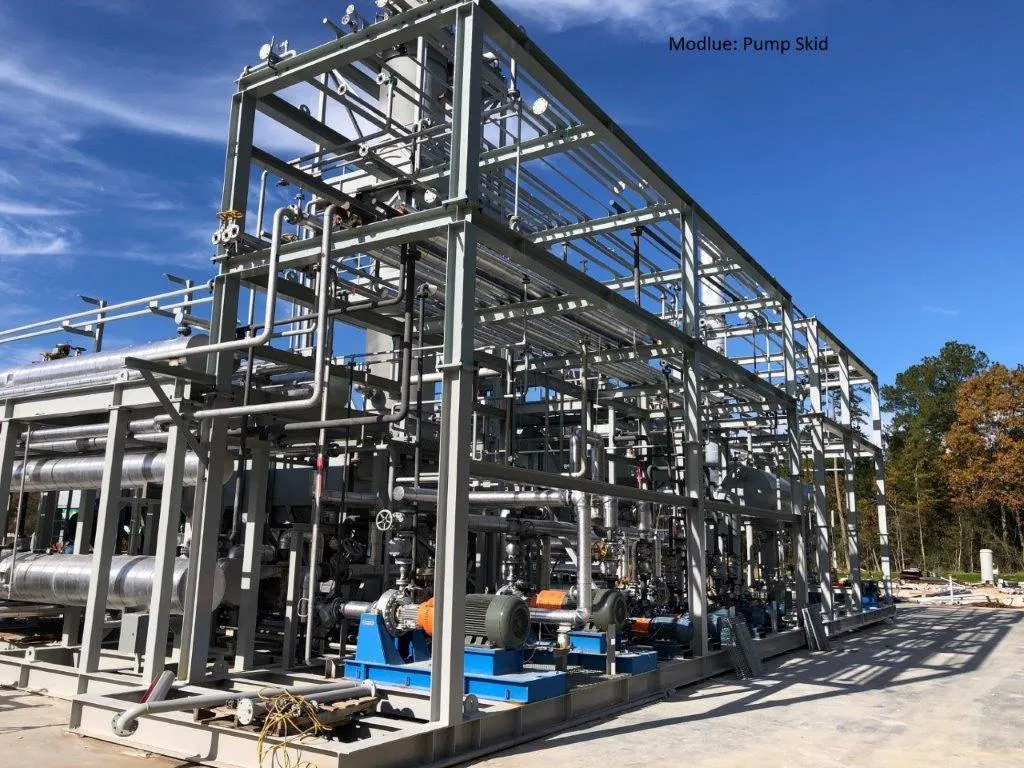
Pump skid, as fabricated. -
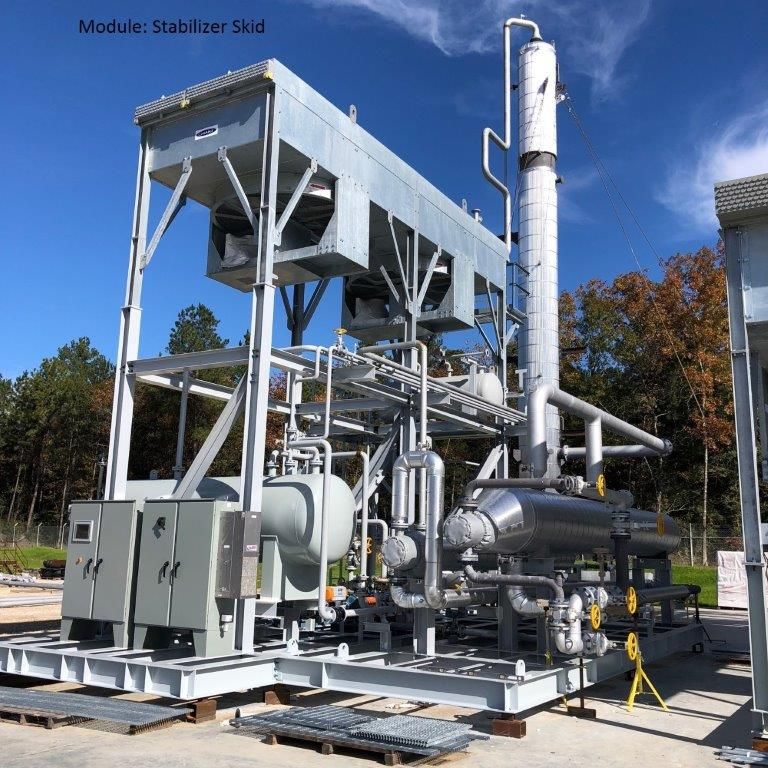
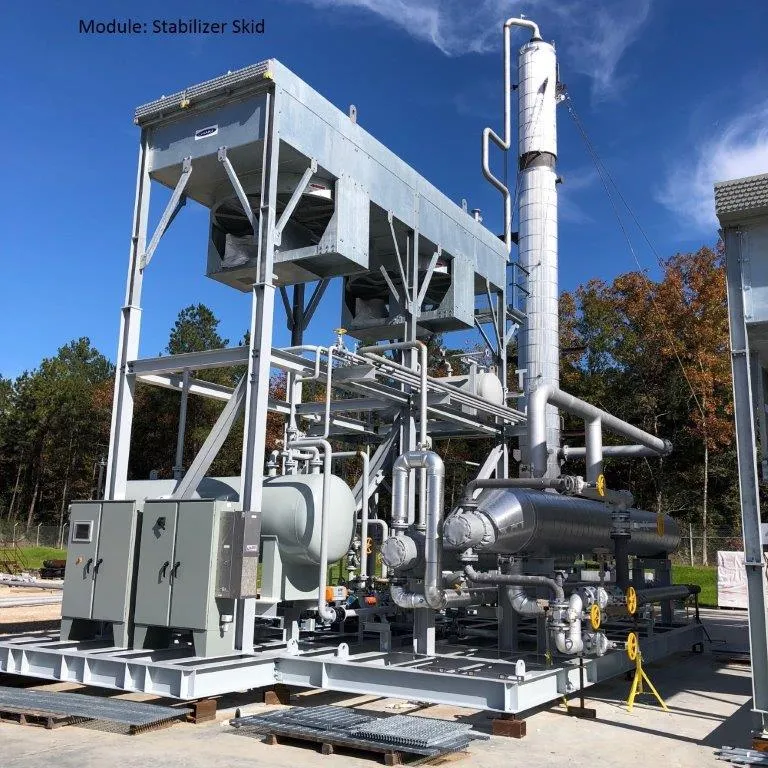
Stabiliser skid, as fabricated. -
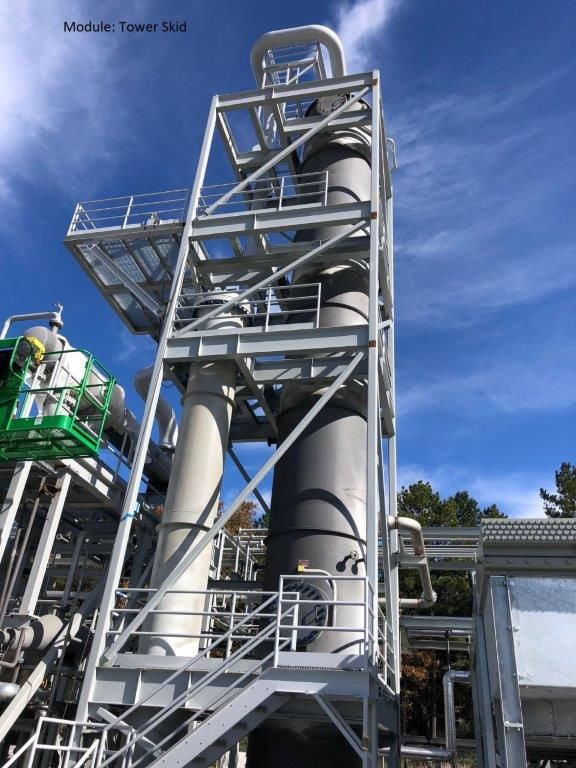
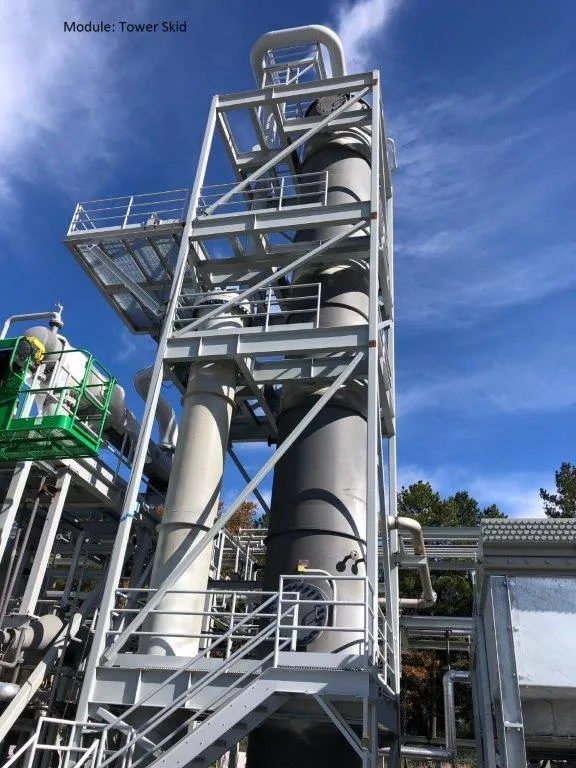
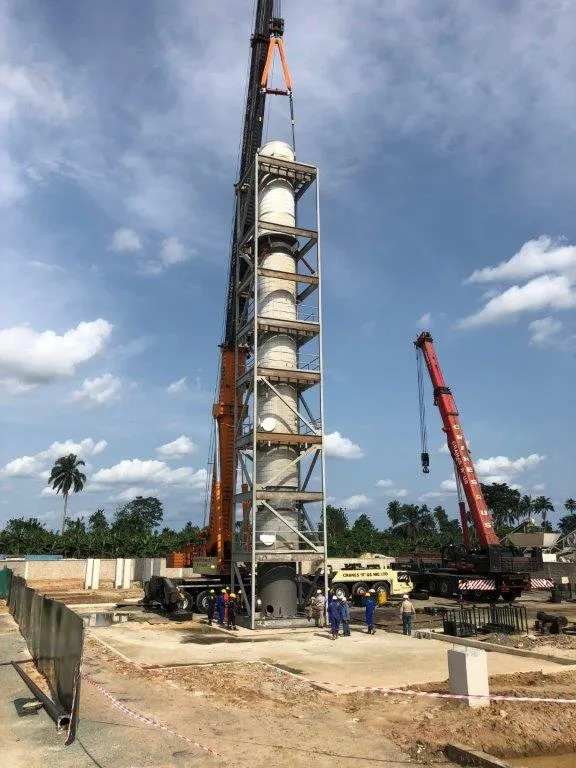
Tower skid — the piece later upended on site by tandem crane. -
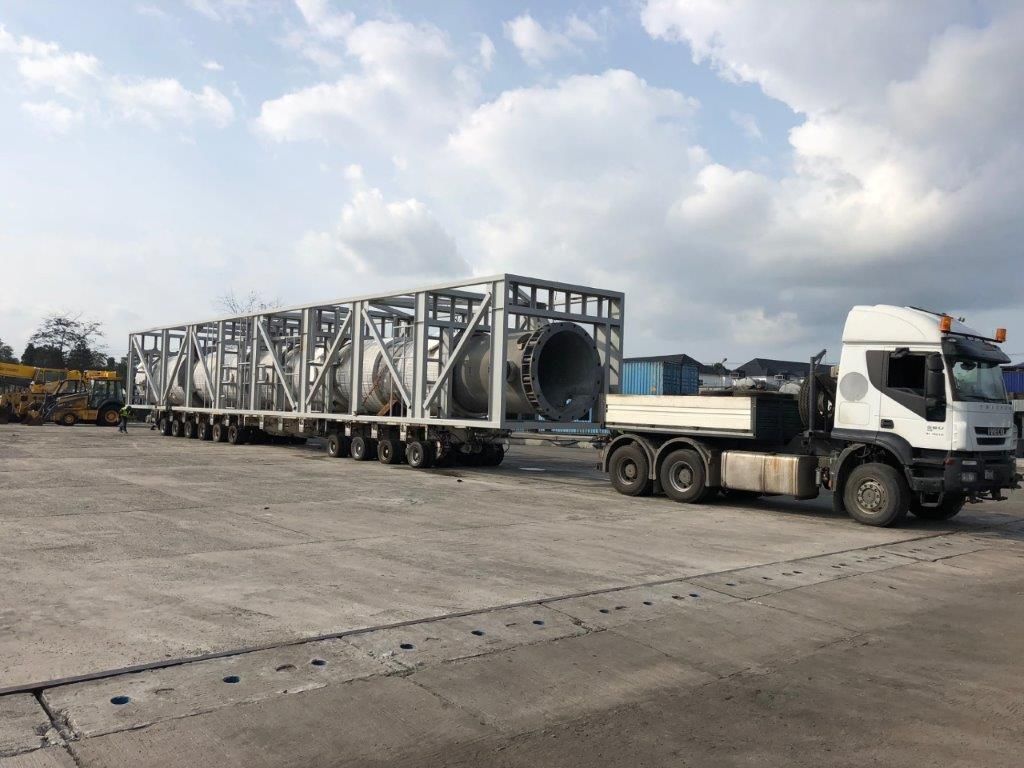
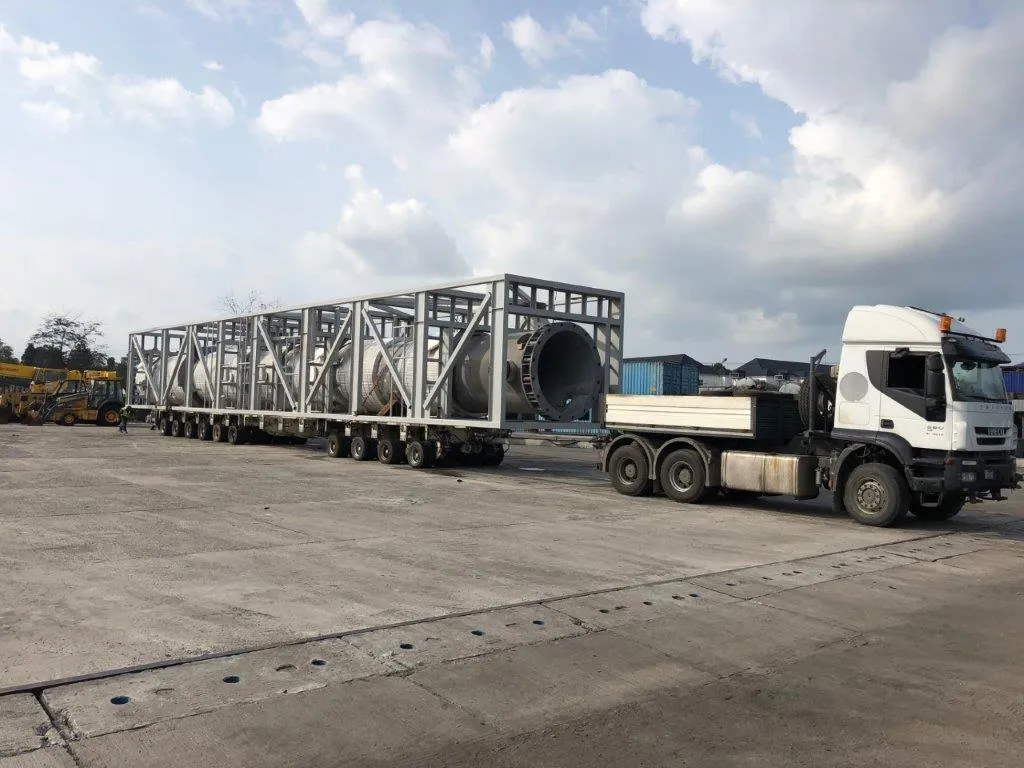
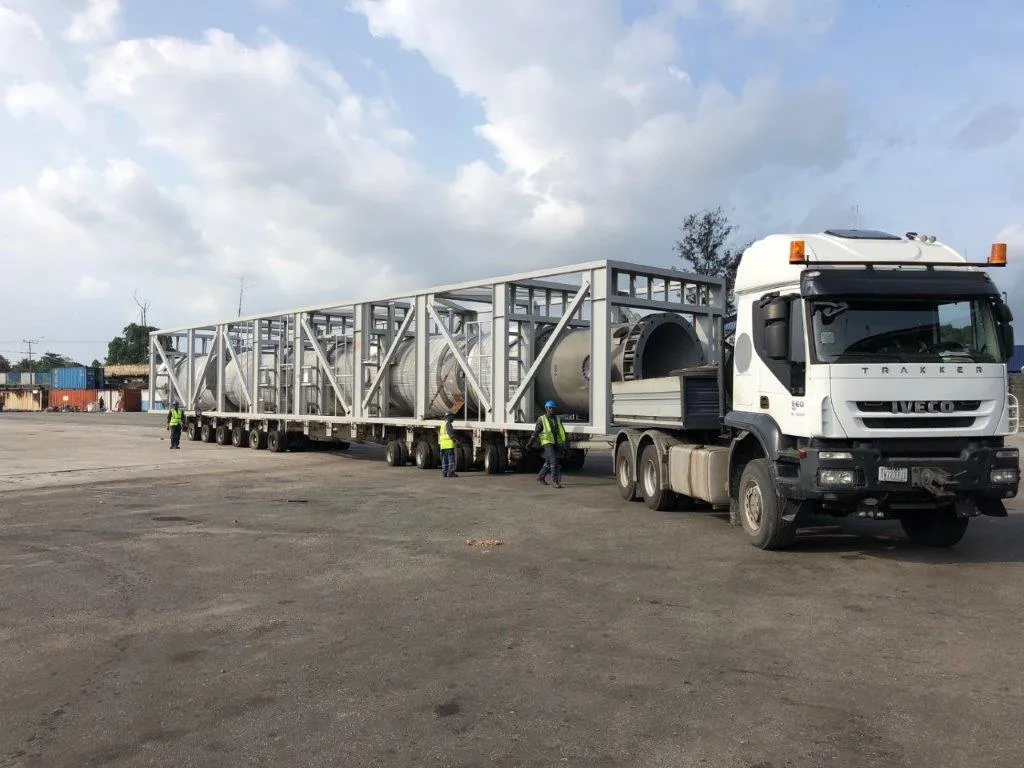
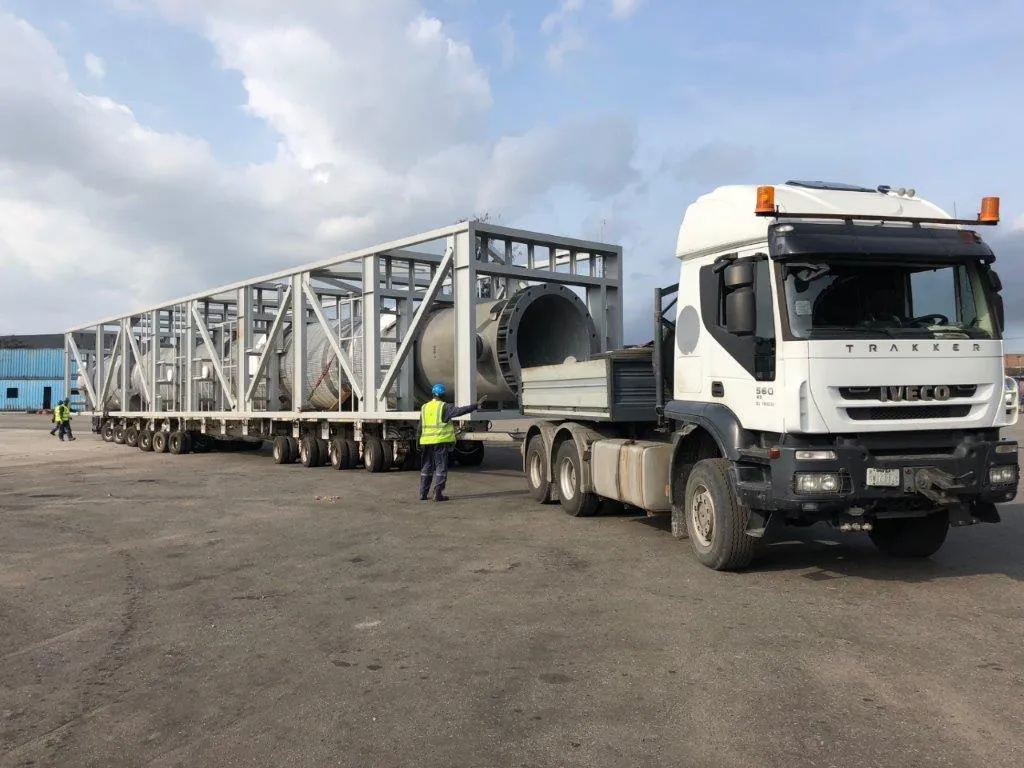
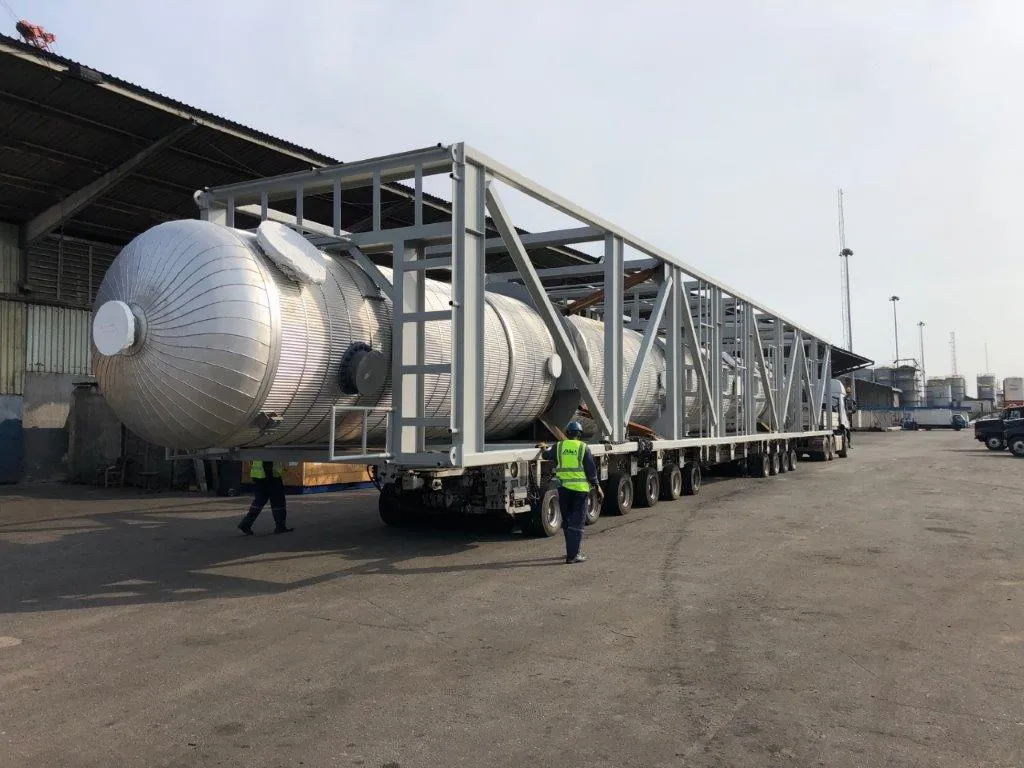
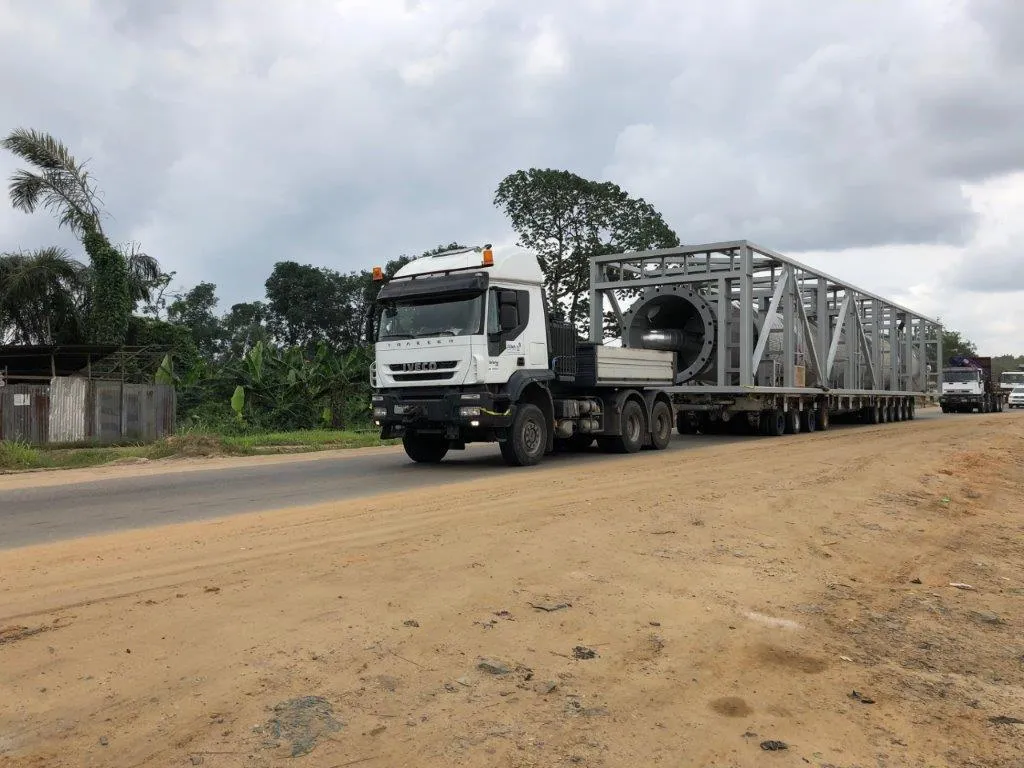
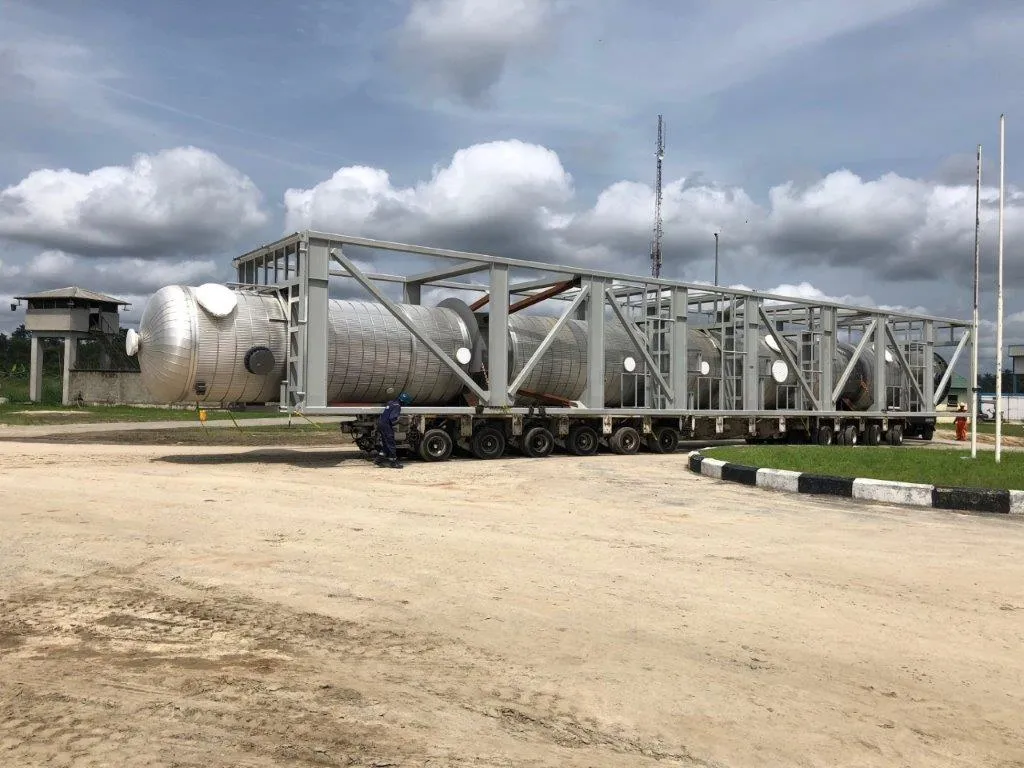
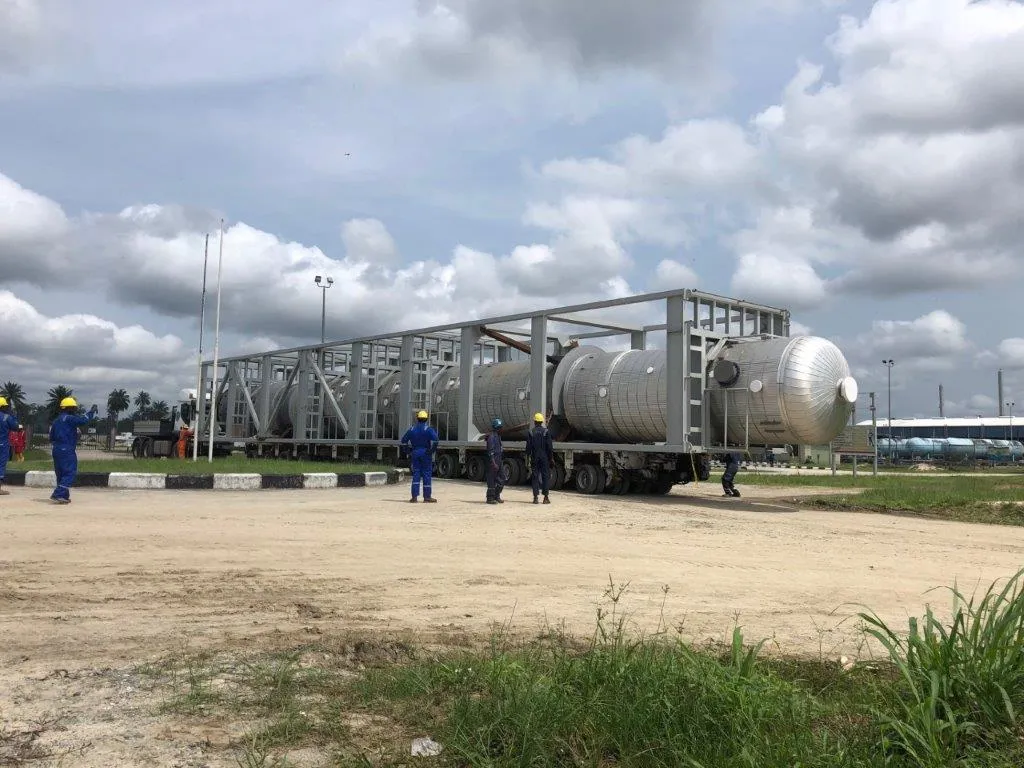
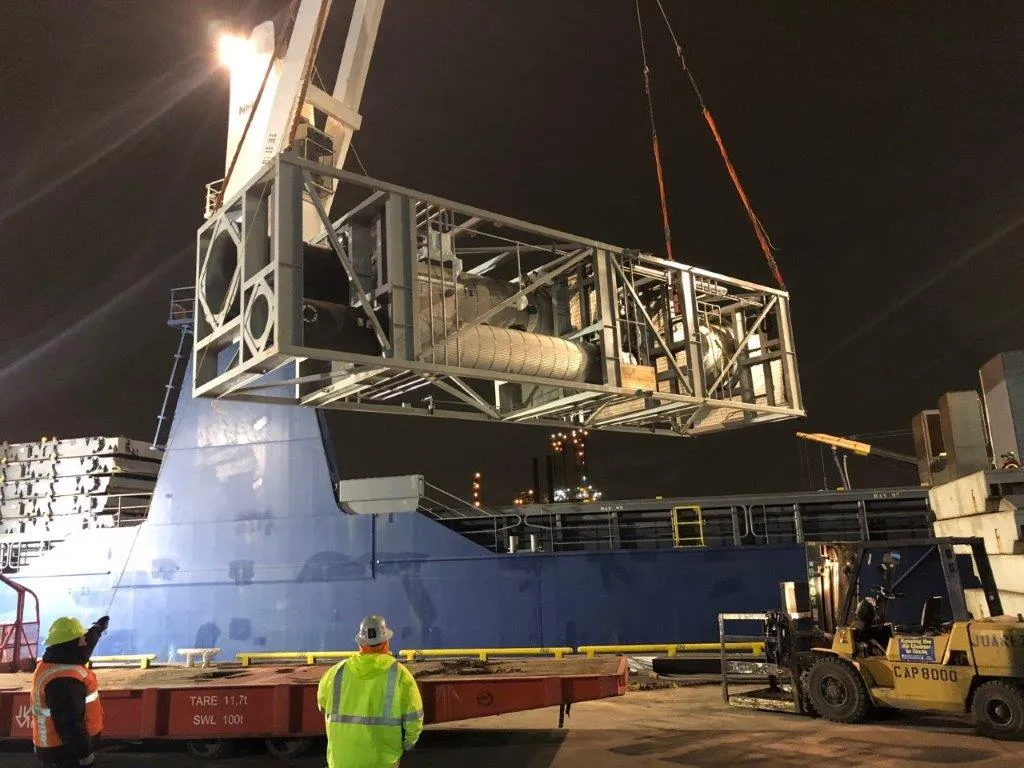
Vessels in their transport frame, ready to move. -
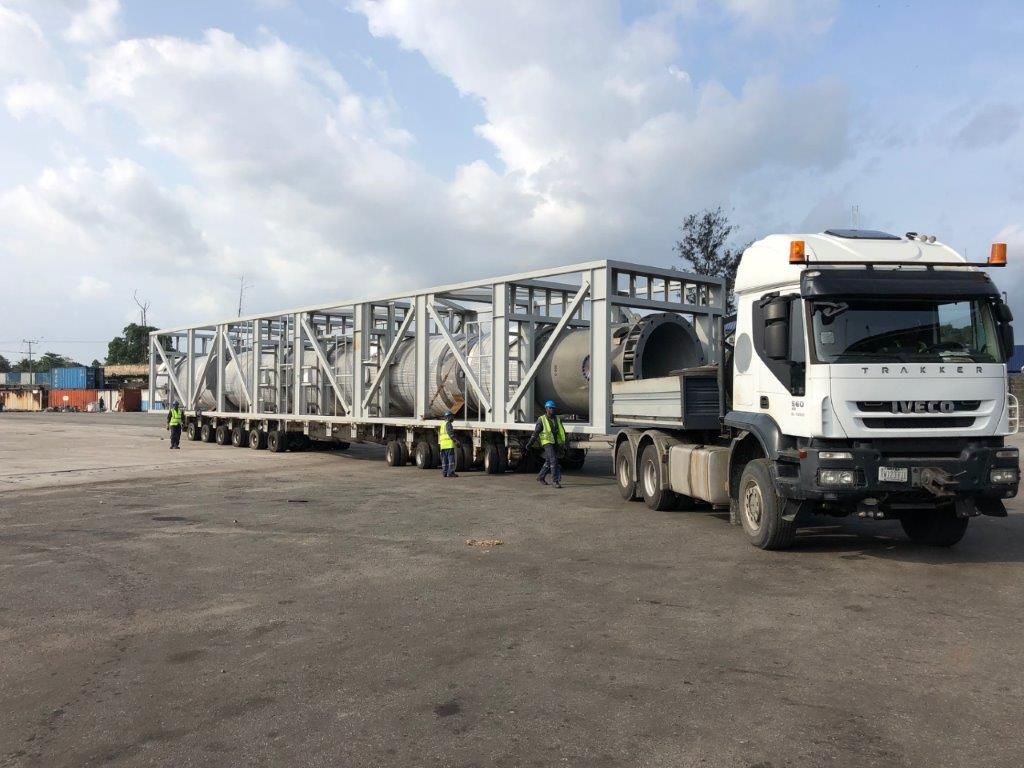
Banksmen walk the load out. Nothing on a move like this happens at speed. -
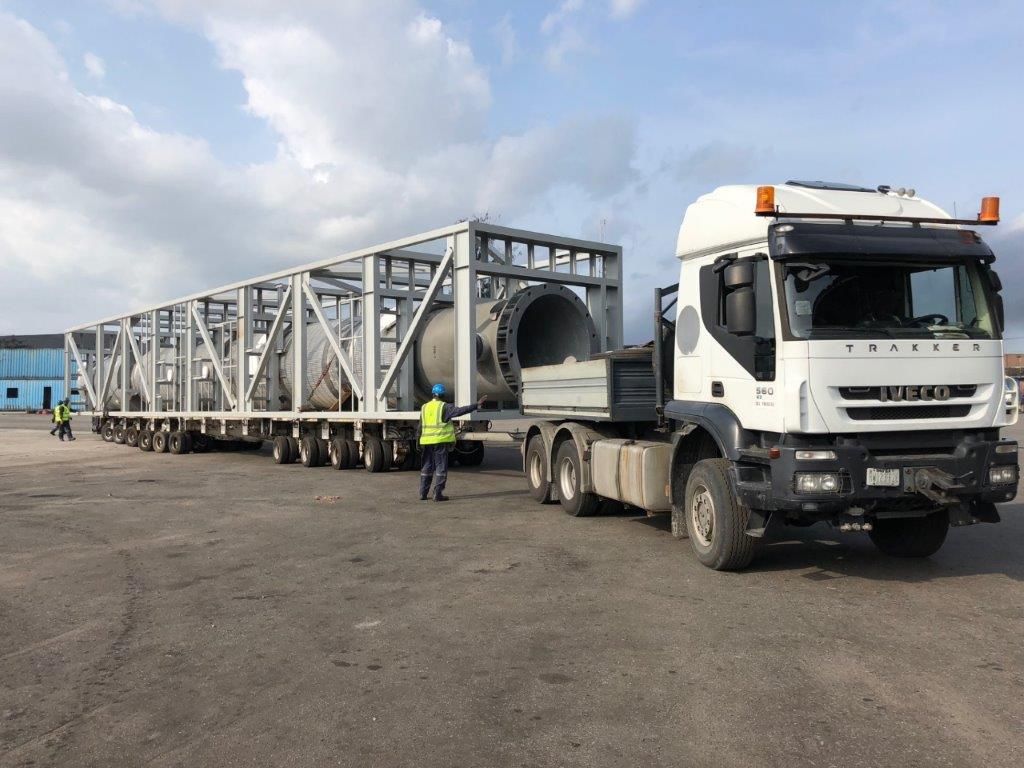
Escorted movement within the marshalling yard. -
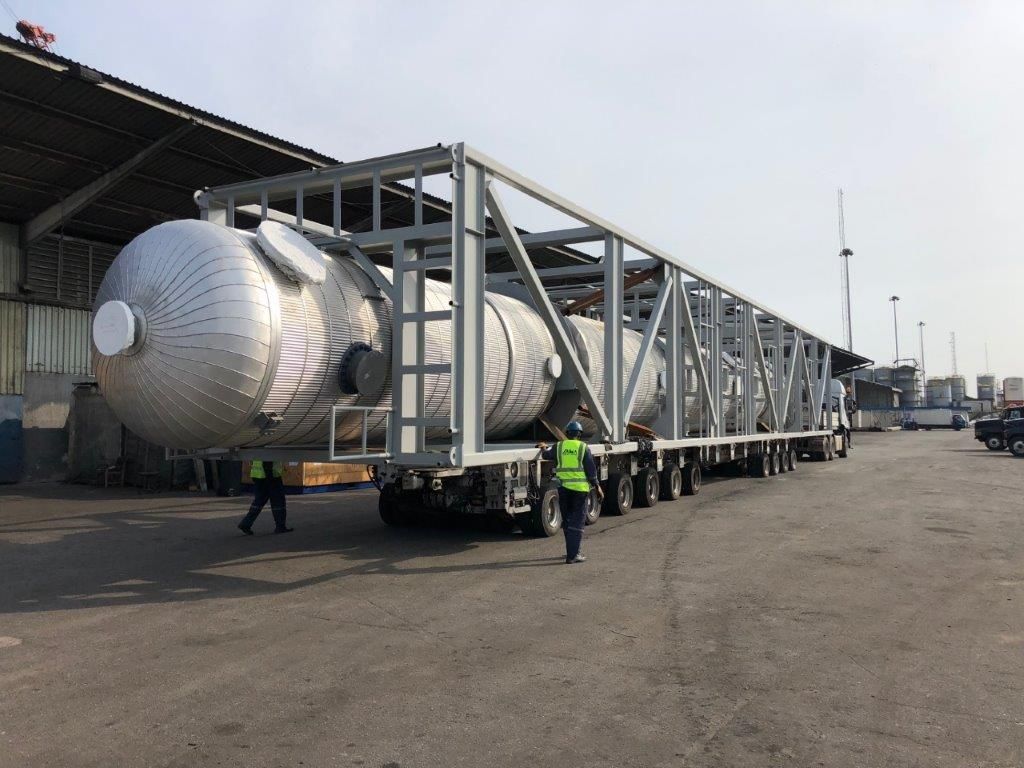
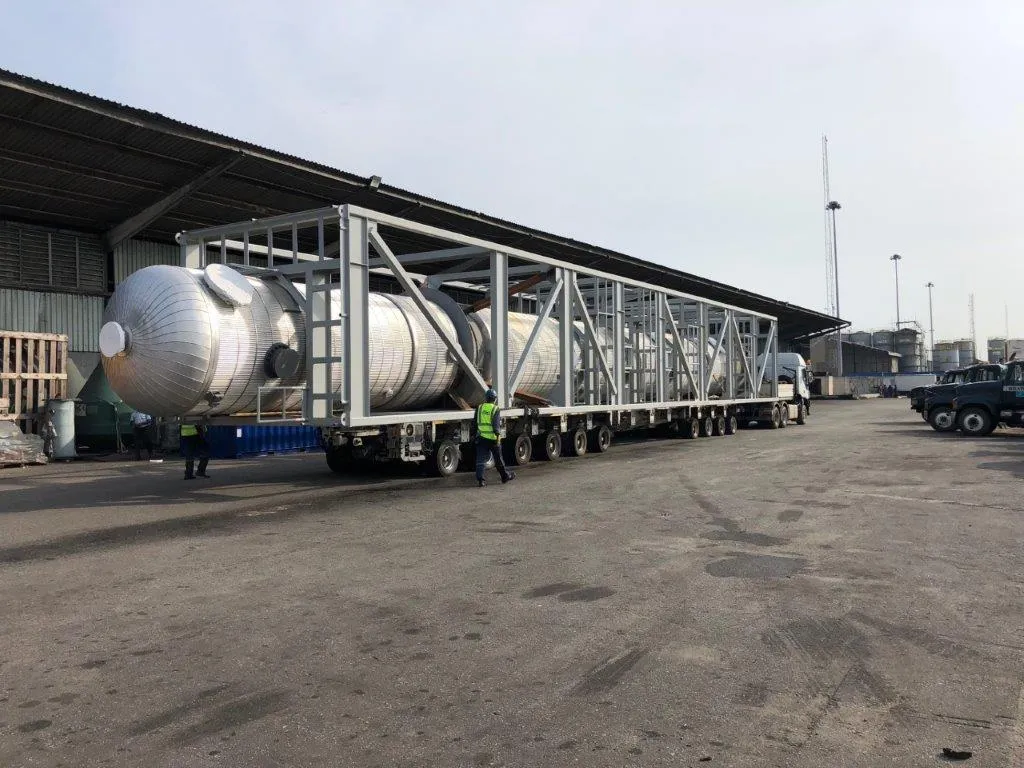
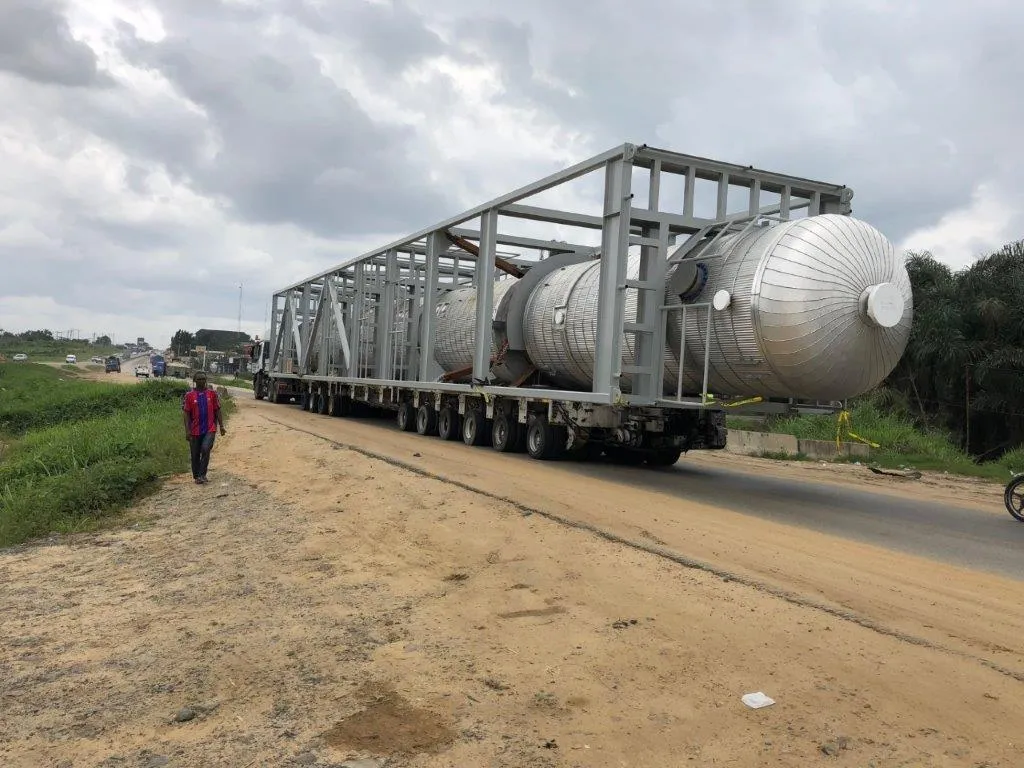
Pressure vessels cradled in their transport frame. -
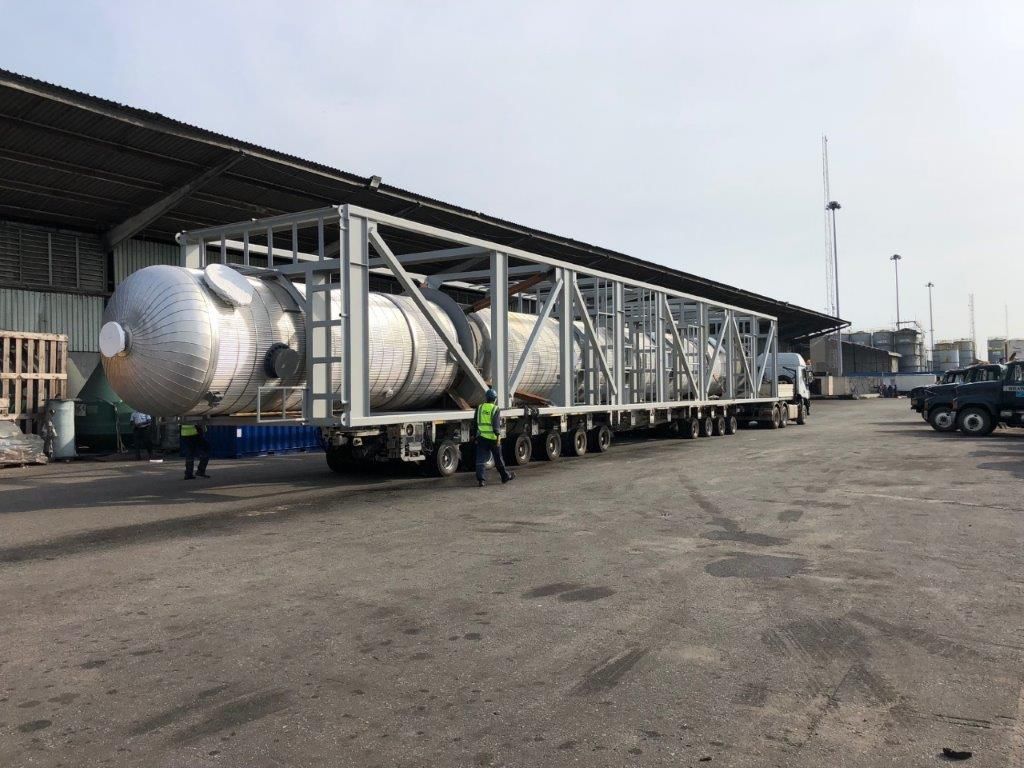
Loaded and secured, waiting on the road permit. -
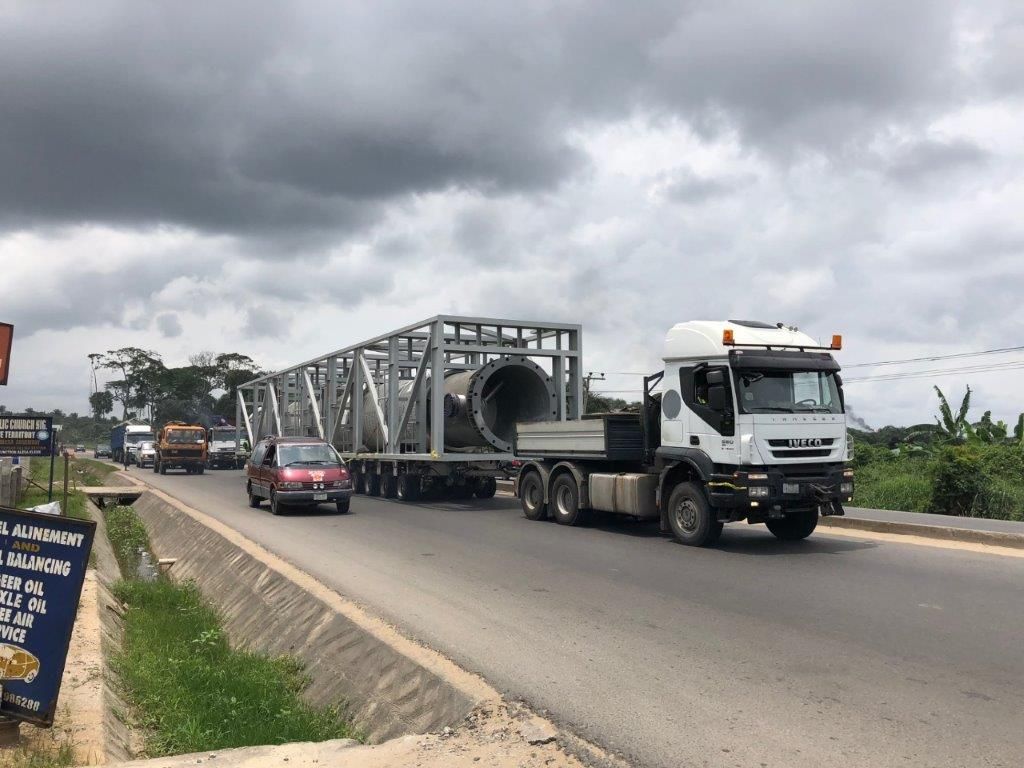
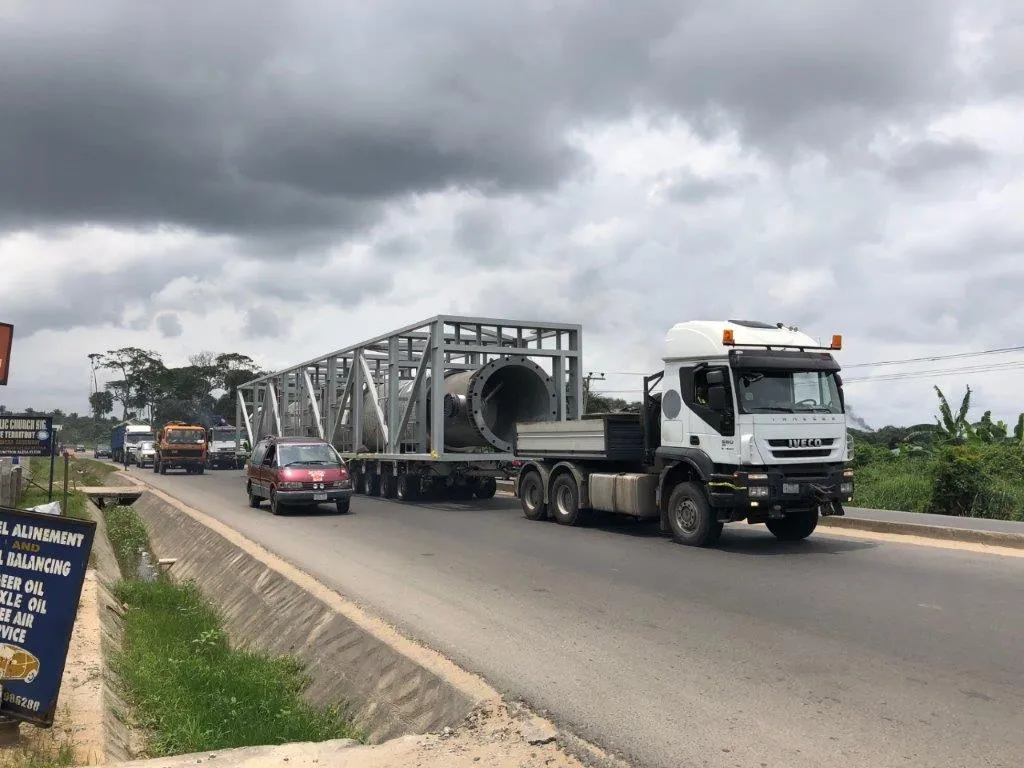
On the public road. Sharing a carriageway with ordinary traffic is the part of a project move that has to be planned hardest. -
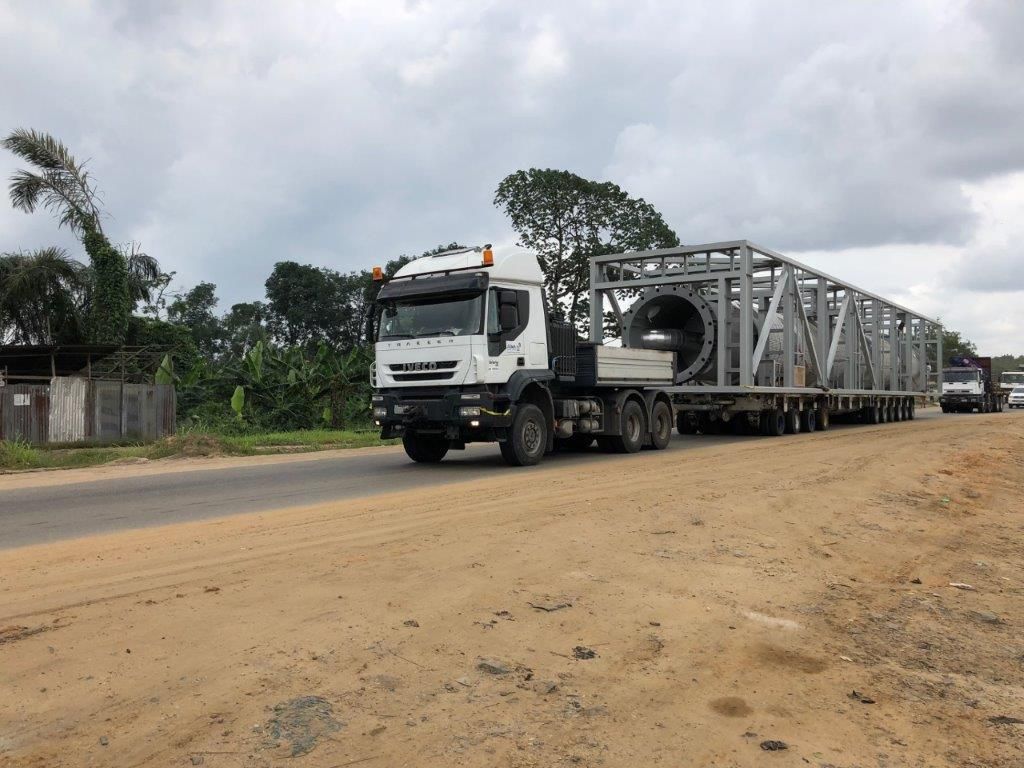
The convoy under way between the port and site. -
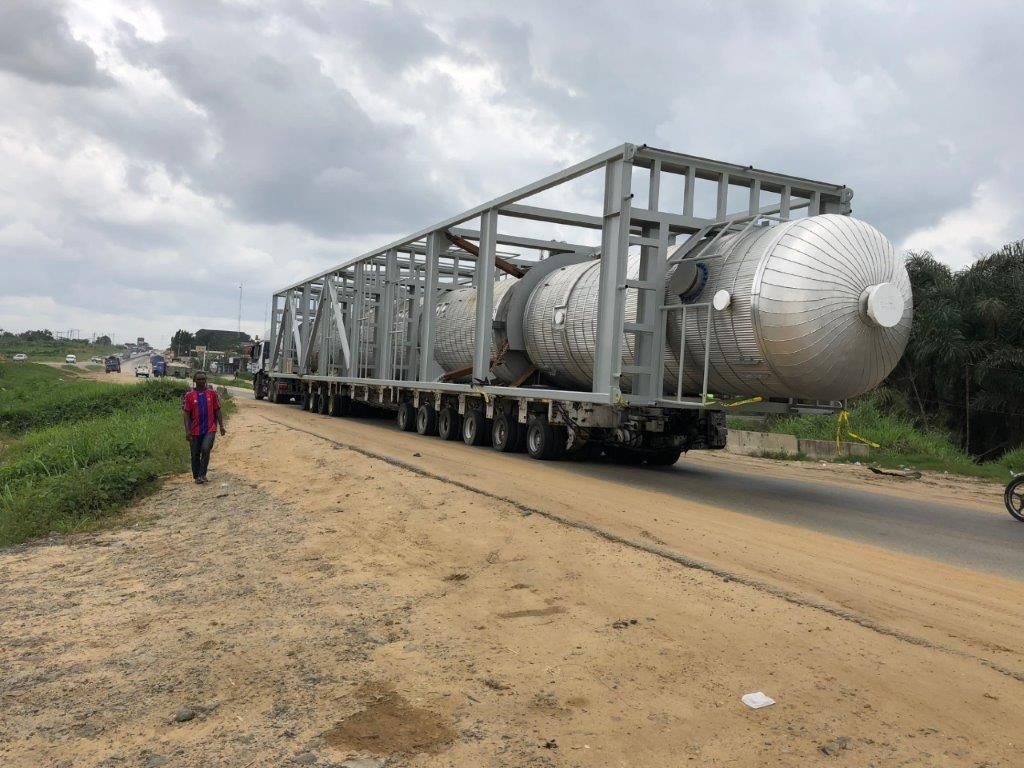
Verge clearance checked continuously as the load moves. -
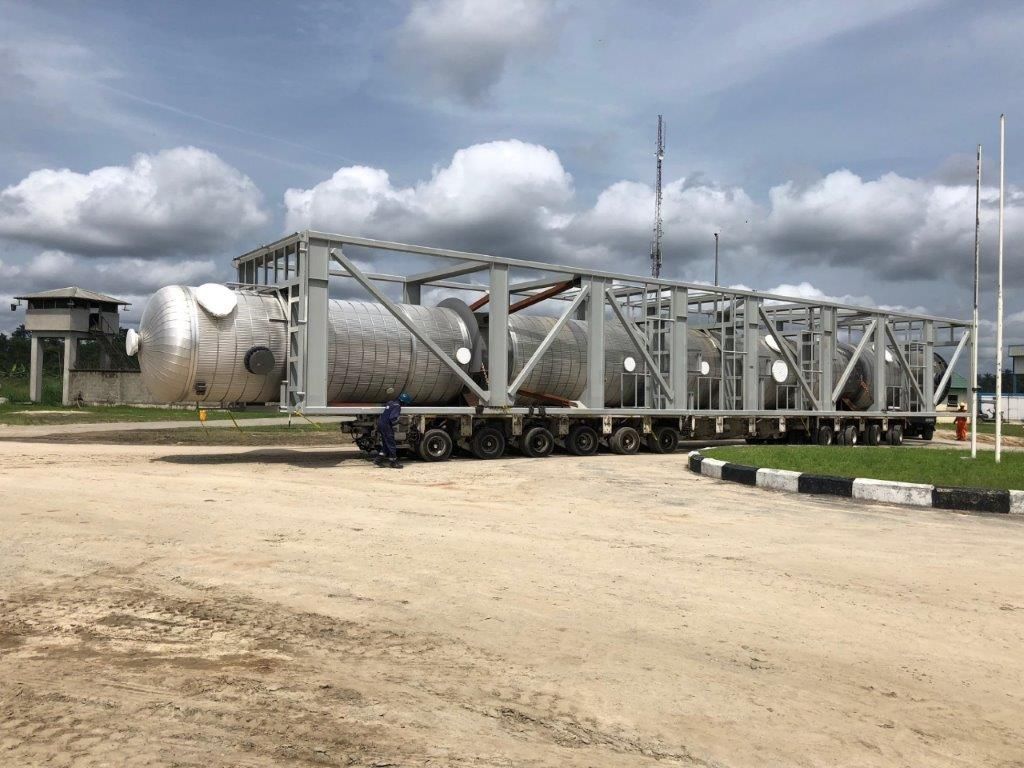
Arrival on site. -
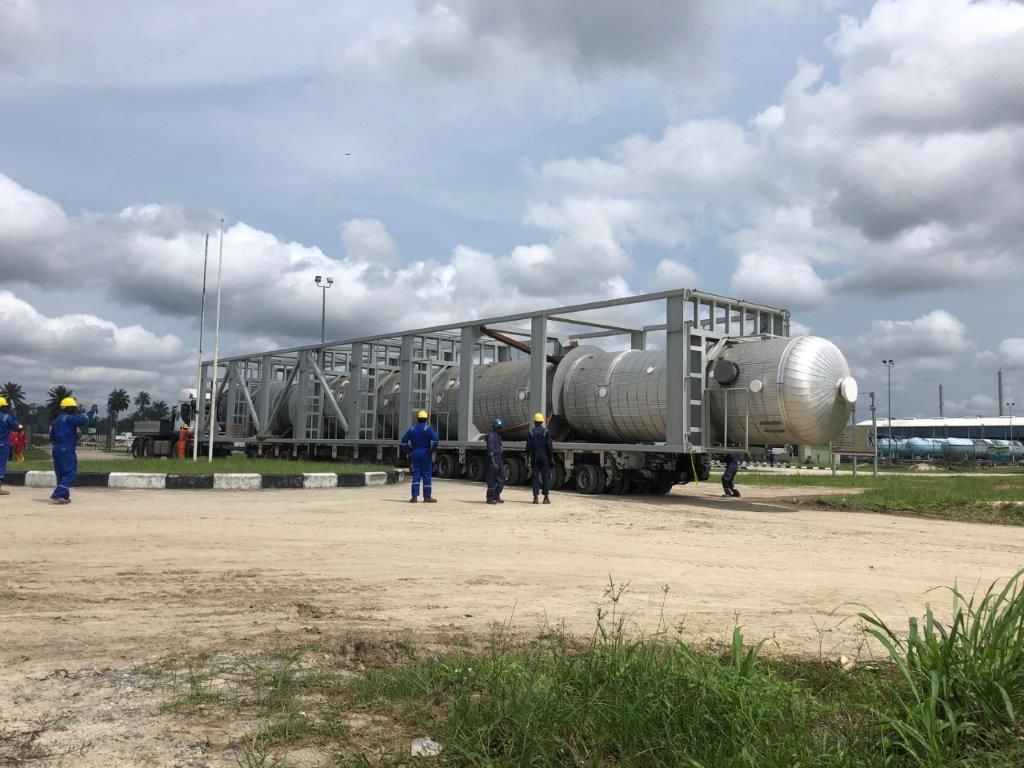
Positioning before the lift. -
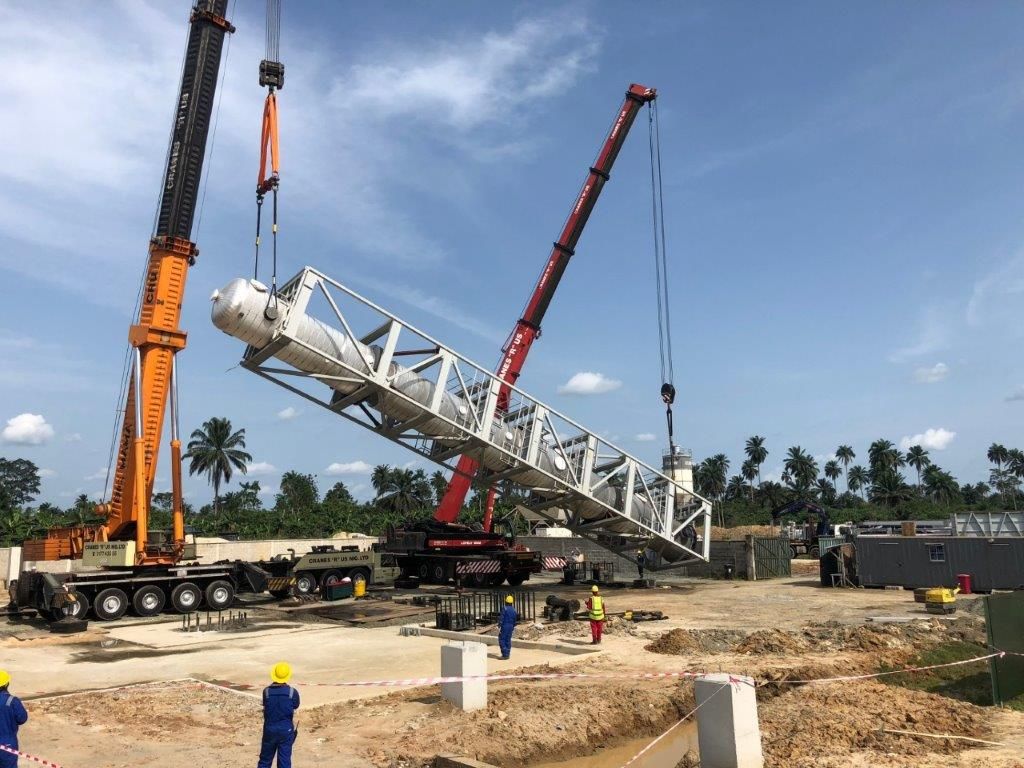
The upend begins. Two cranes, one load — the tail crane walks in as the main crane takes the weight. -
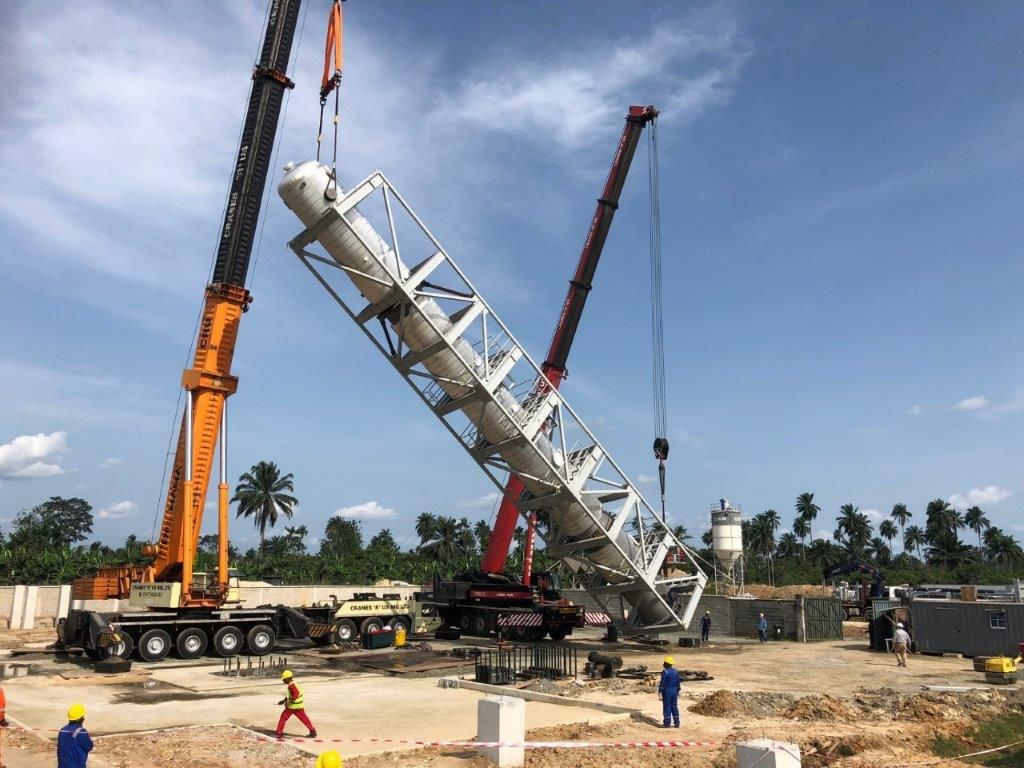
Halfway up. -
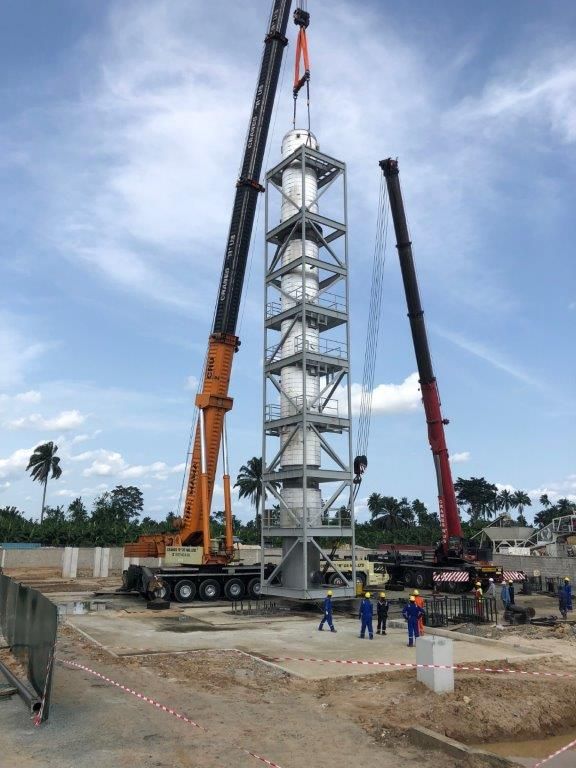
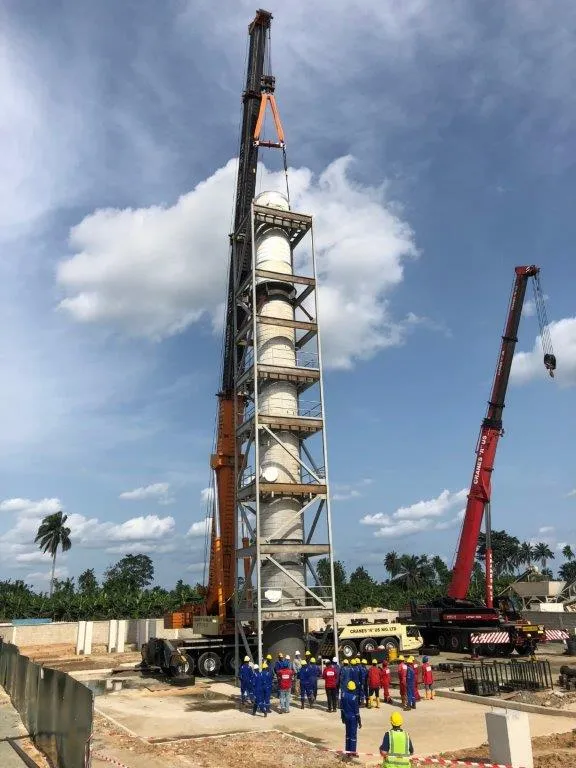
Vertical, still on the hooks. -
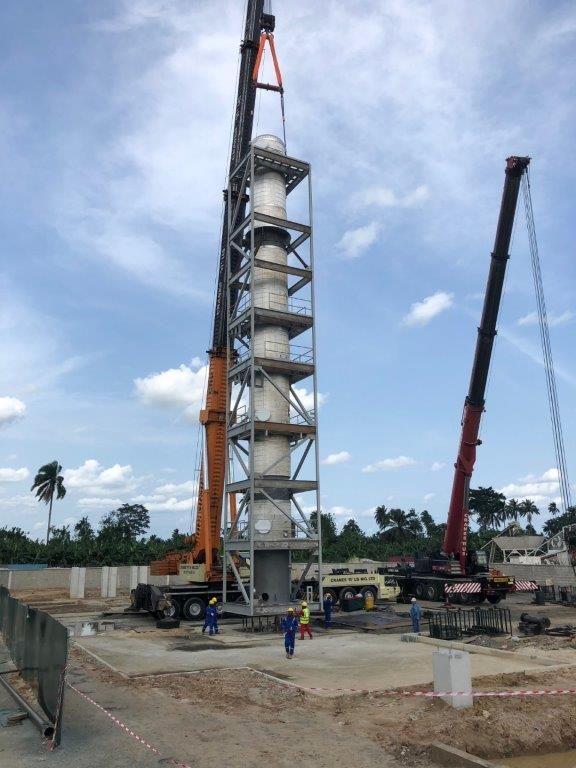
Positioning over the bolts. -
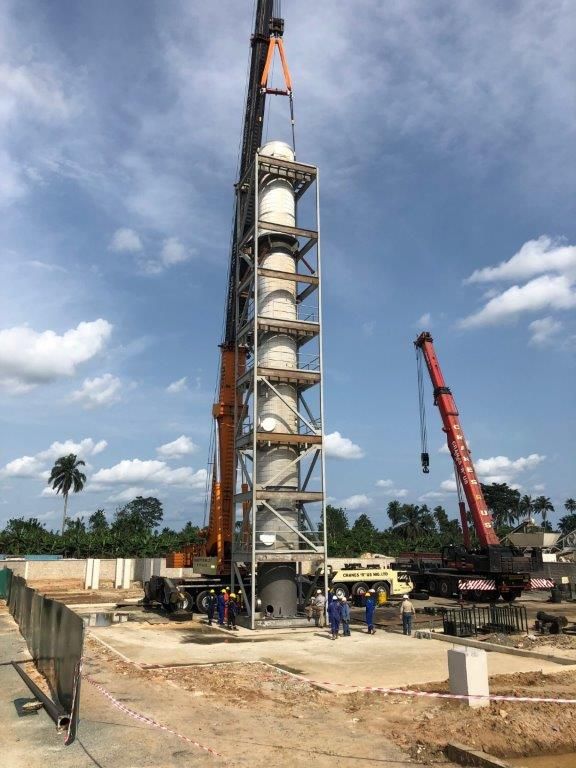
Landing. Millimetres, at the end of a journey measured in thousands of kilometres. -
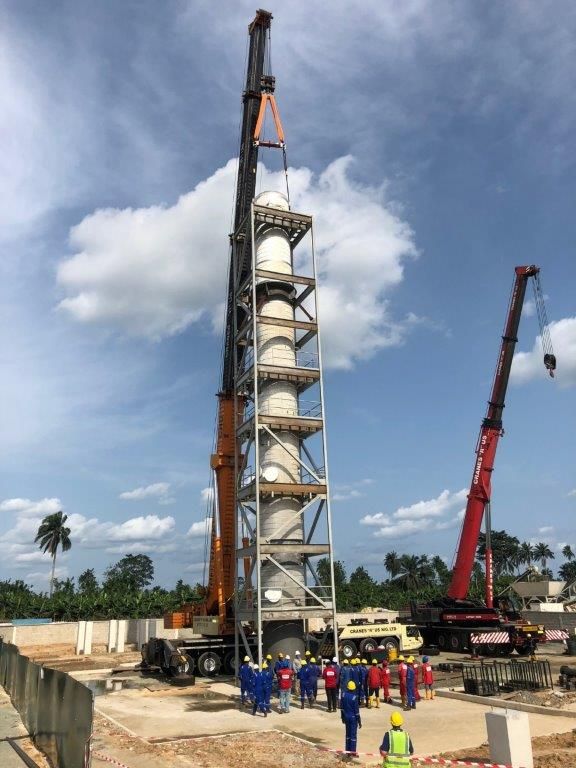
Set and secured. -
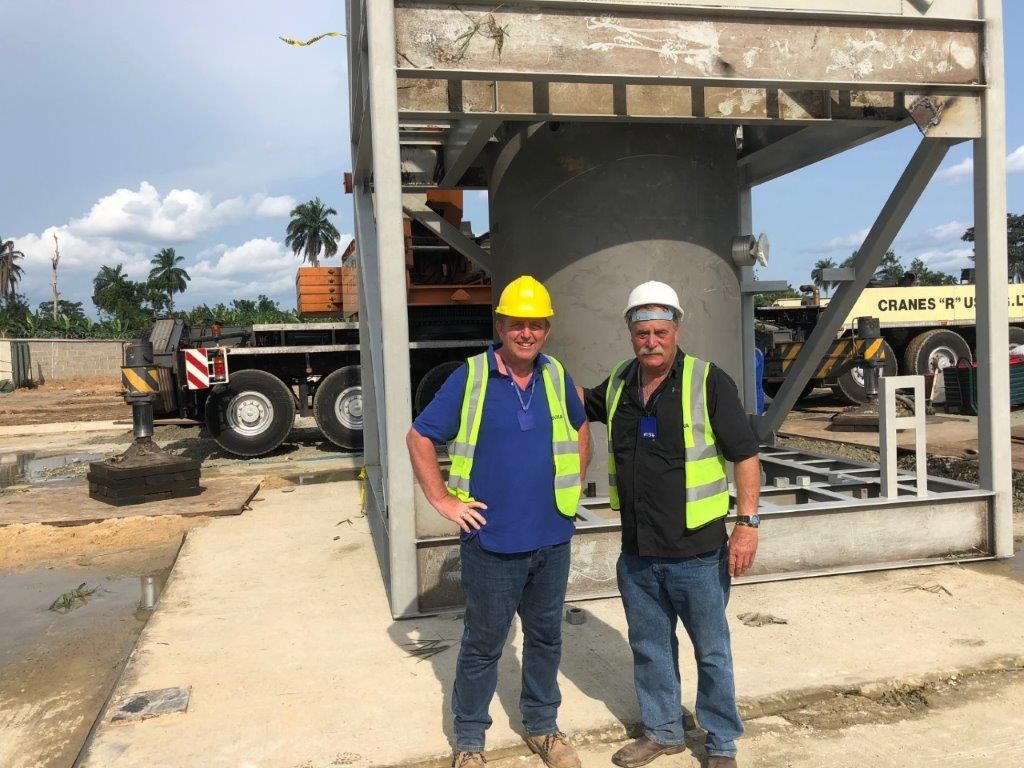
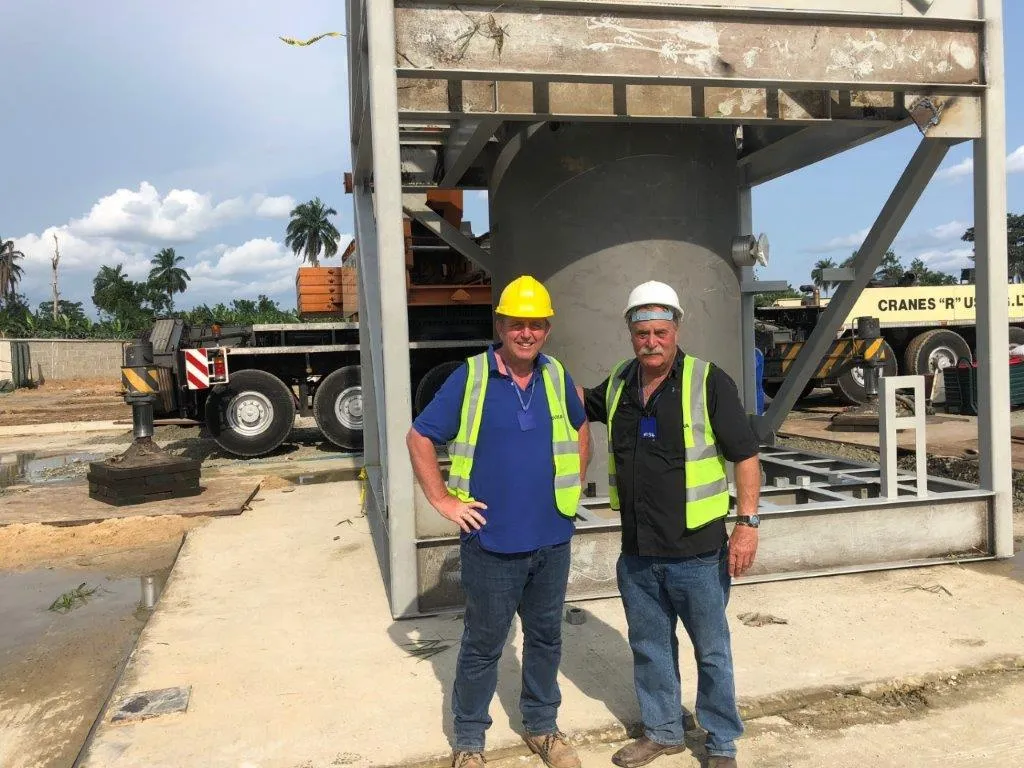
At the base of the finished lift. -
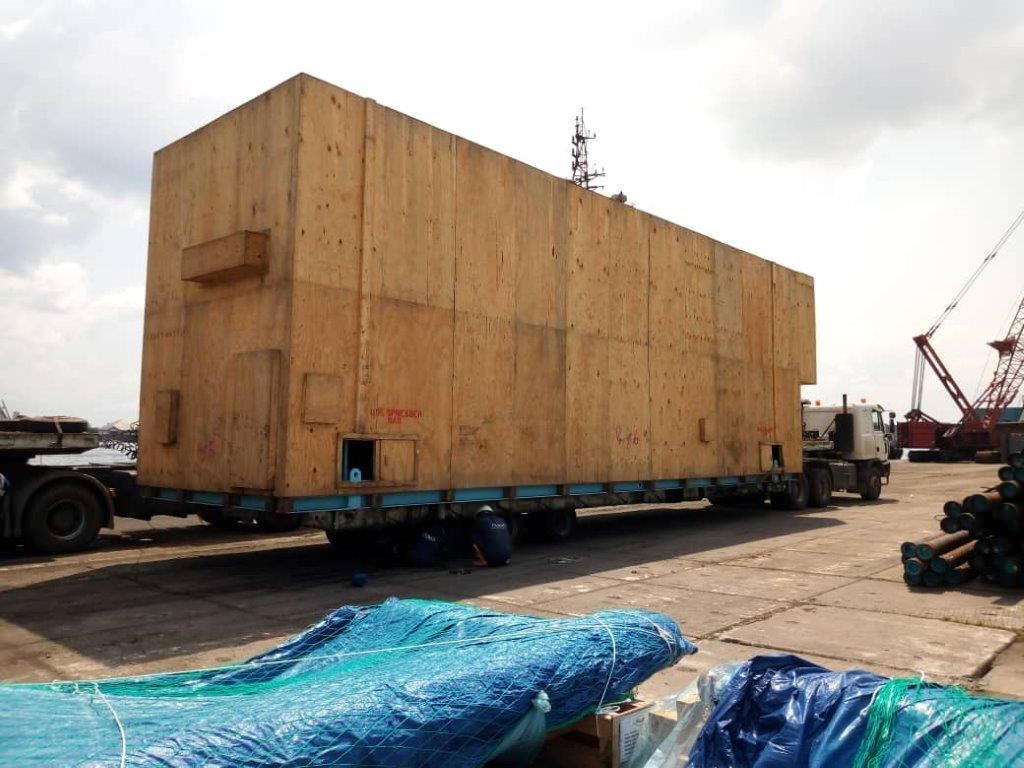
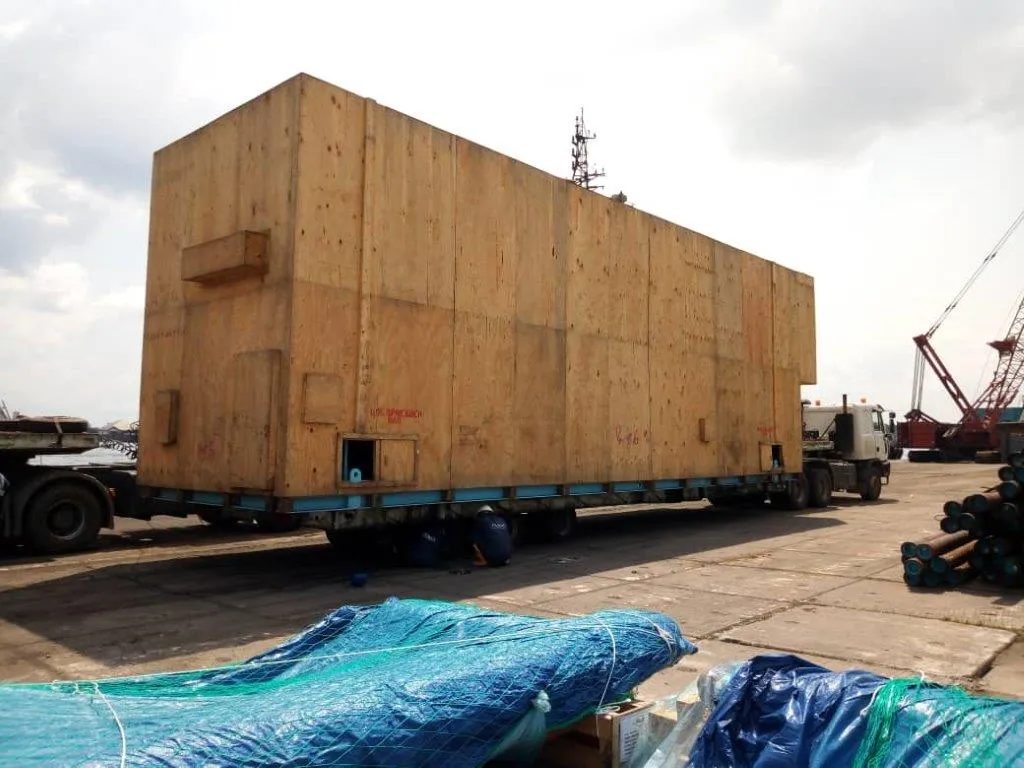
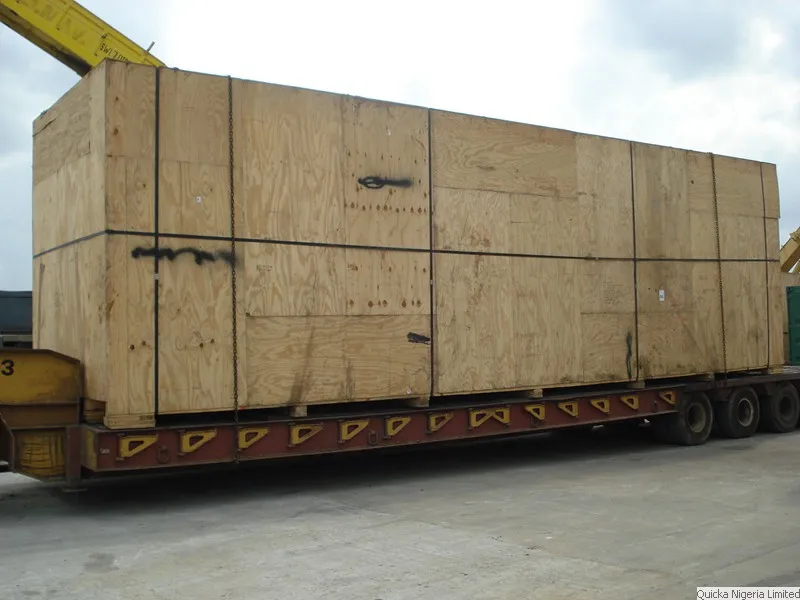
Cased project cargo on a lowbed, ready to leave the port. -
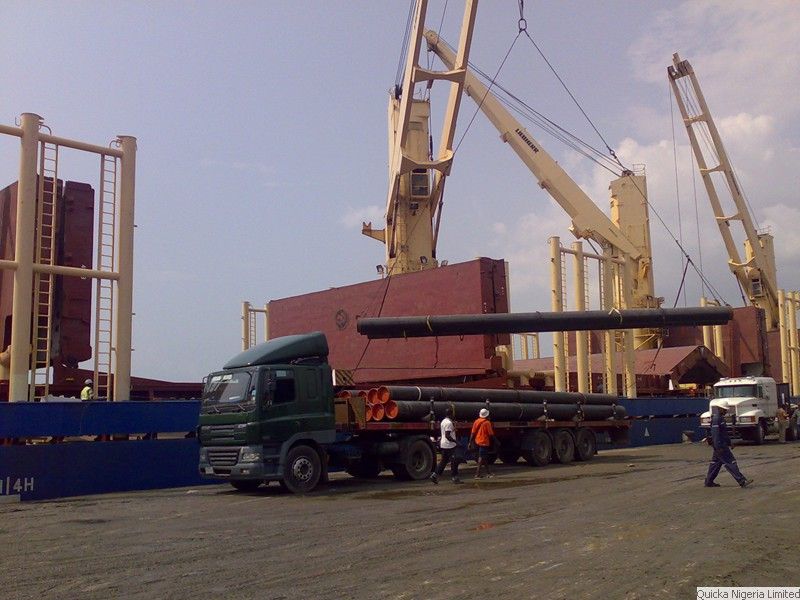
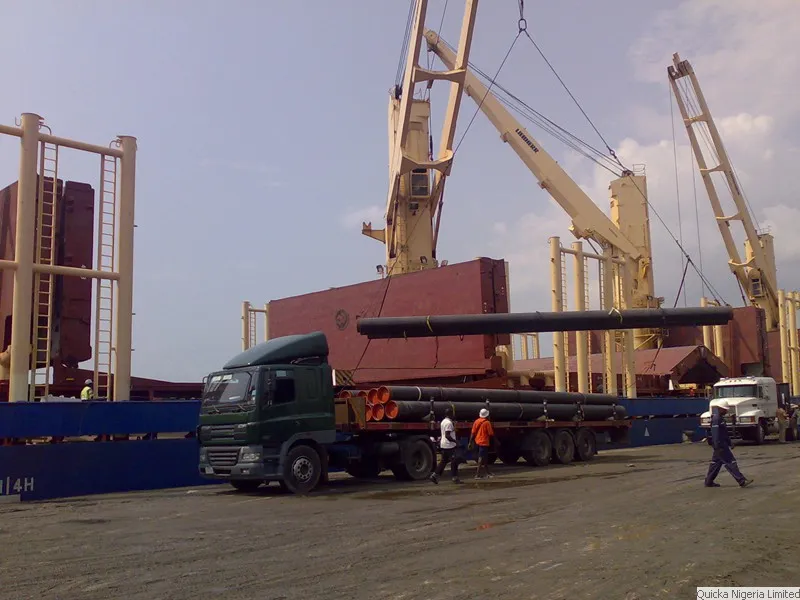
Pipe discharge, direct from ship to truck. -
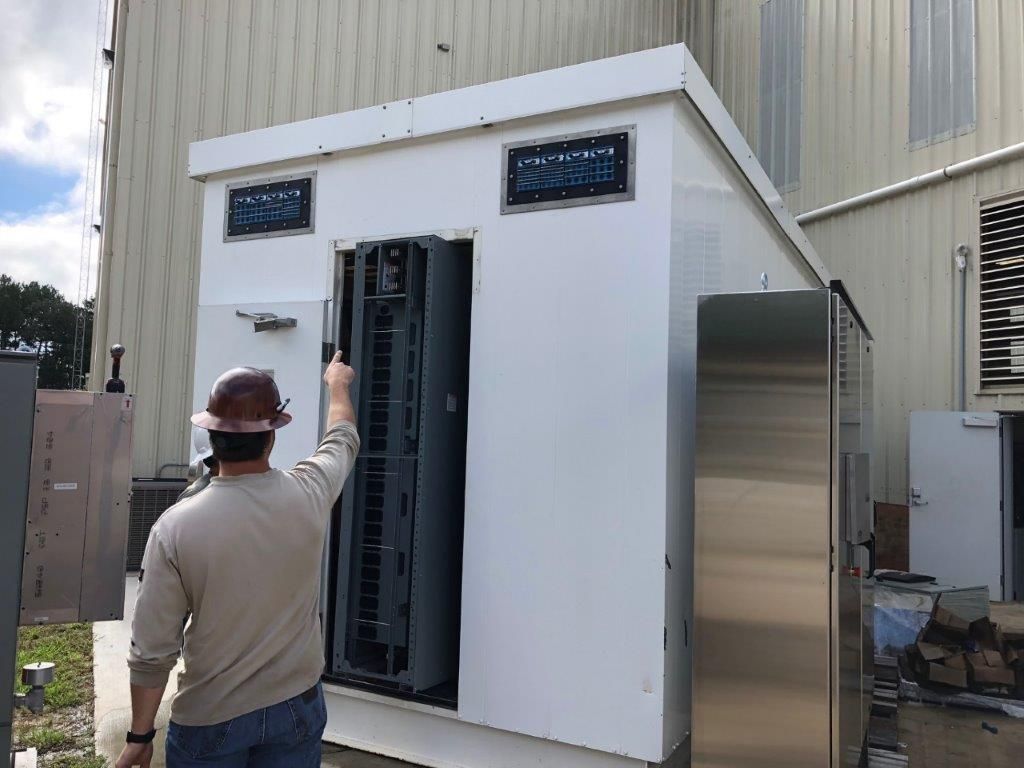
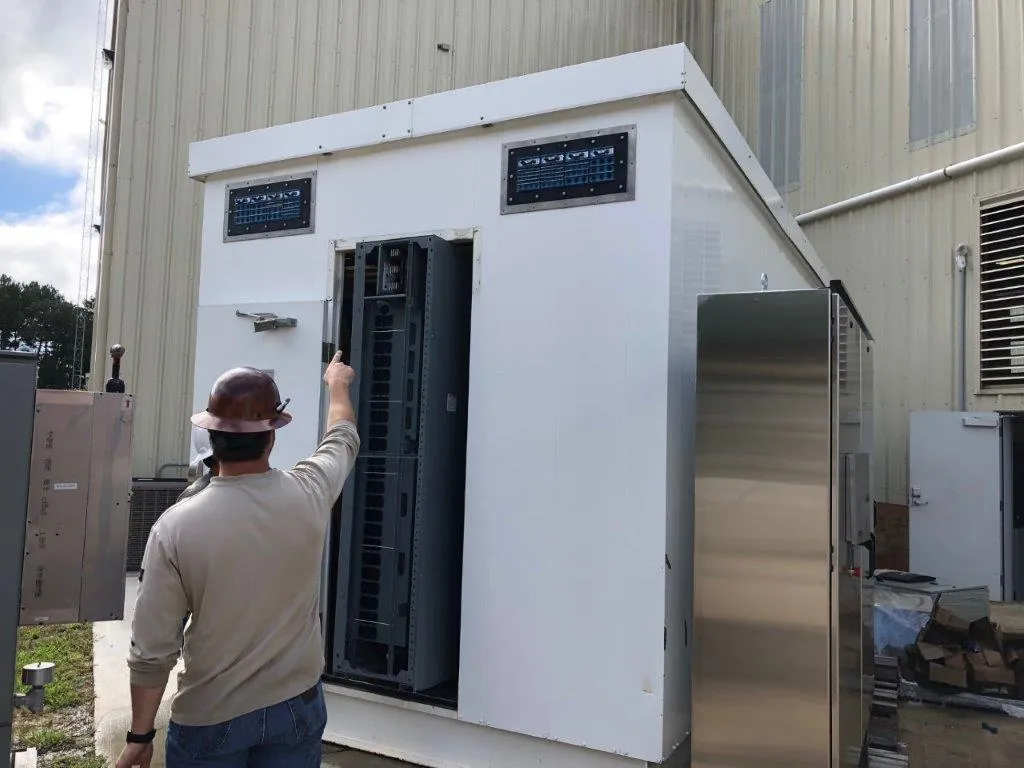
A control room module checked at the yard before shipment. -
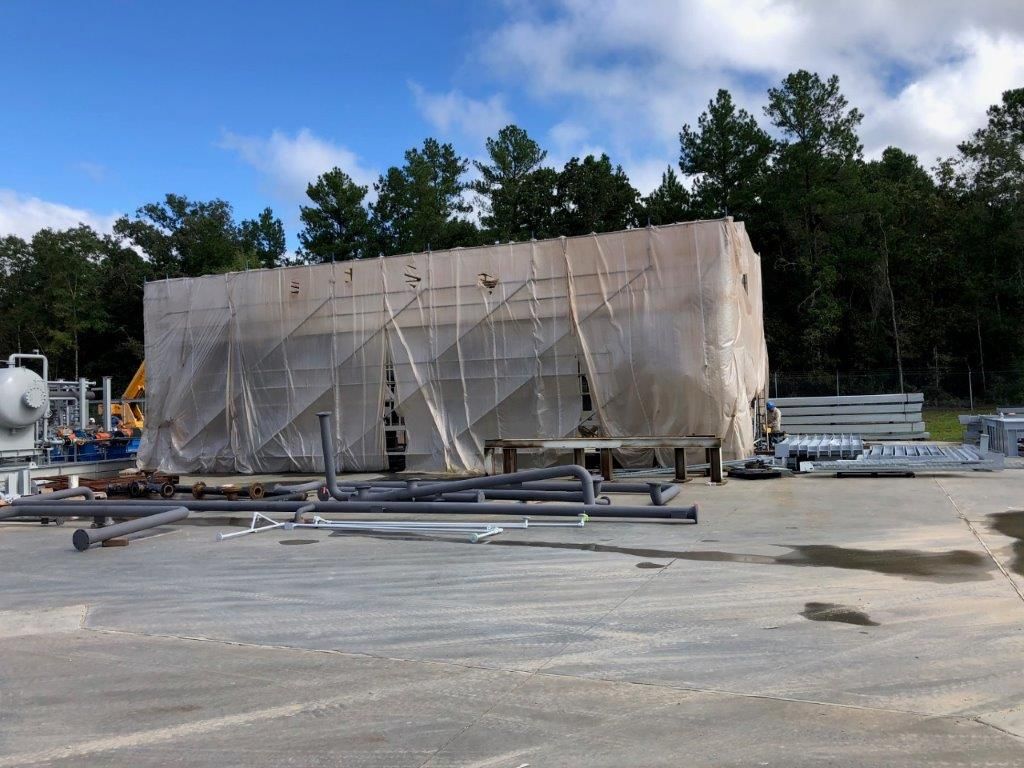
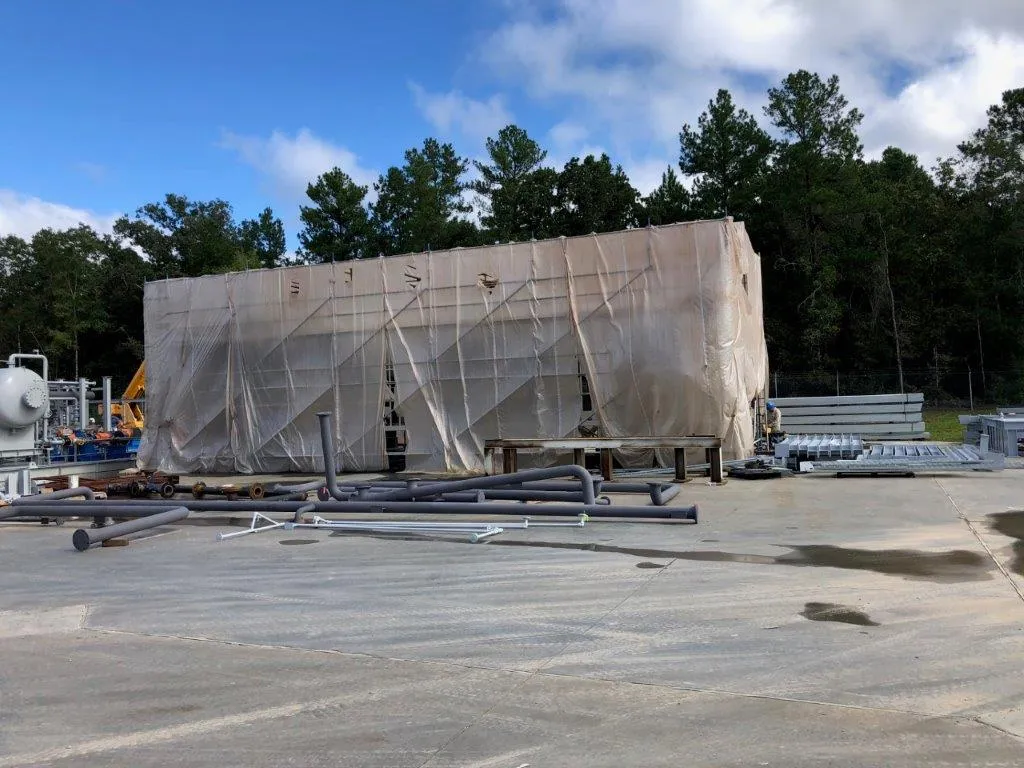
Wrapped for the sea passage. -
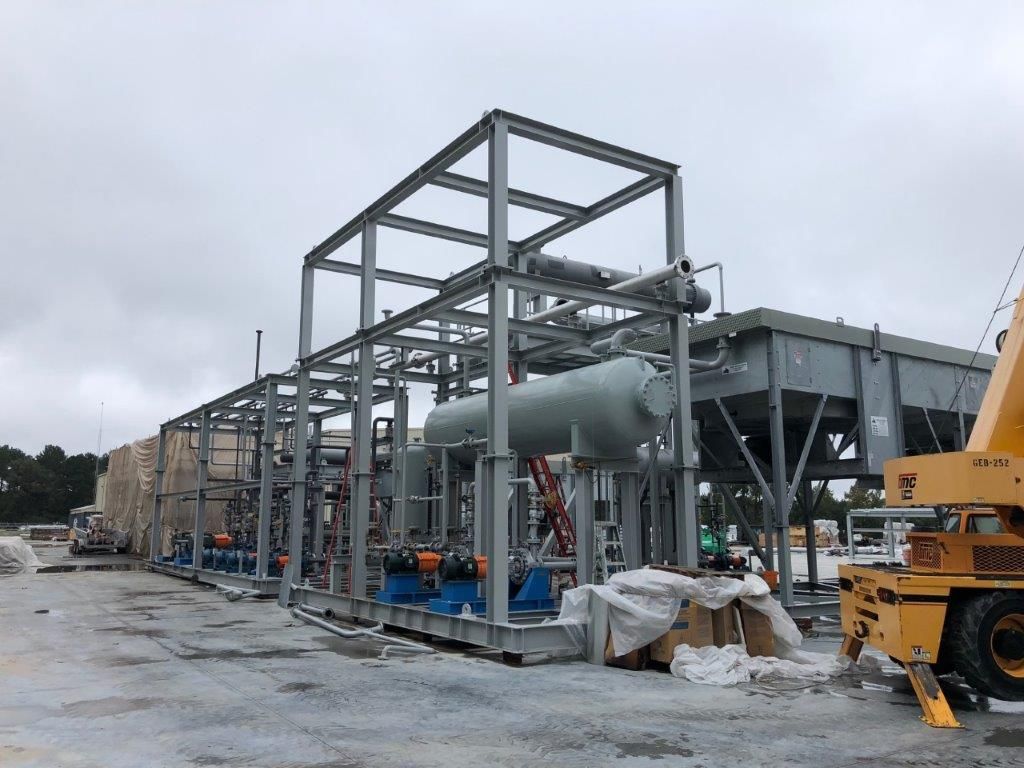
Modules staged in sequence — the order they are shipped in is the order they are erected. -
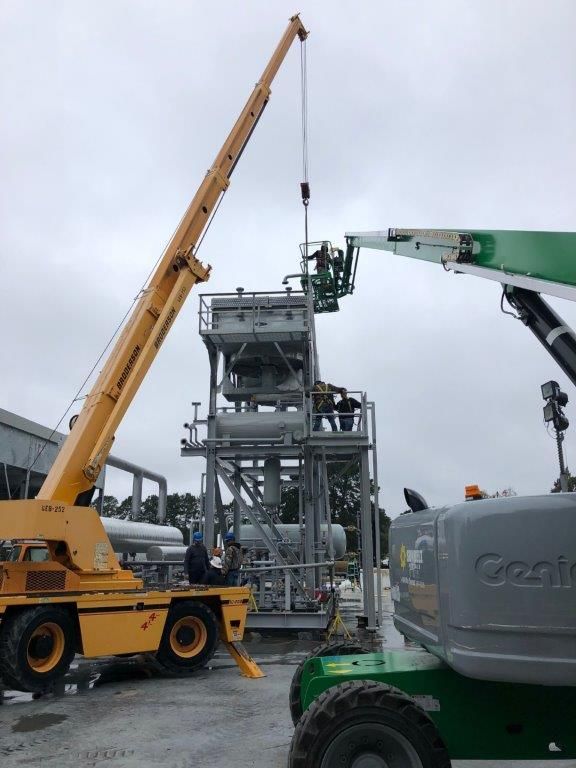
Final assembly work before wrapping. -
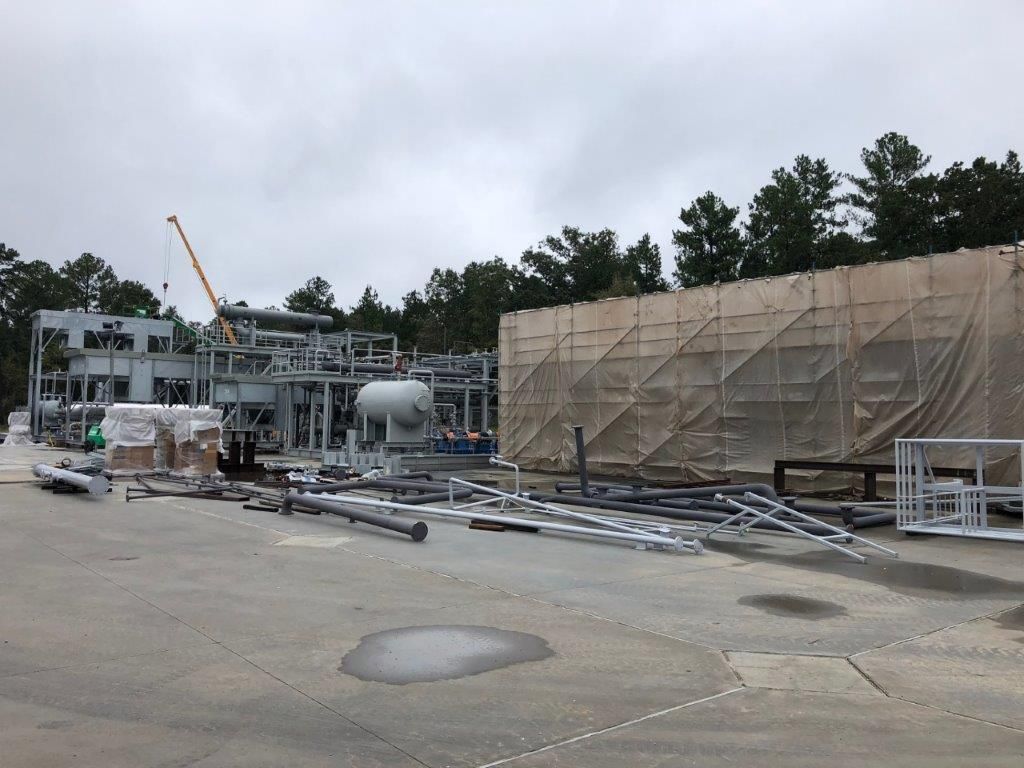
The consignment as a whole, at origin. -
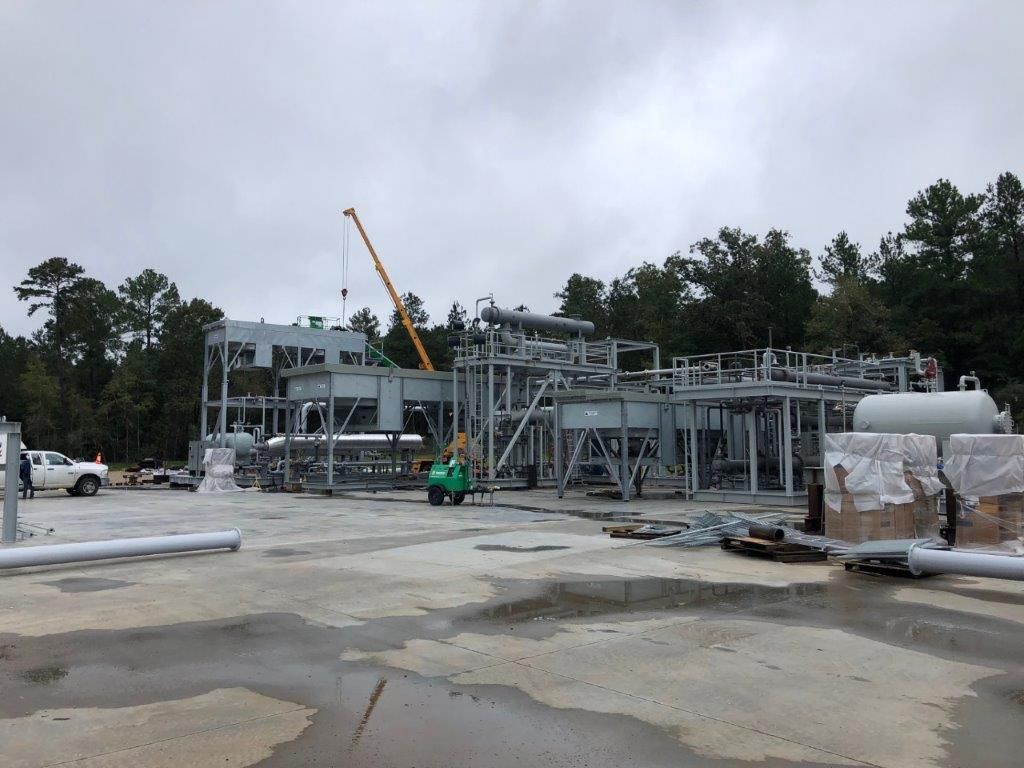
Ready for breakdown and shipment.
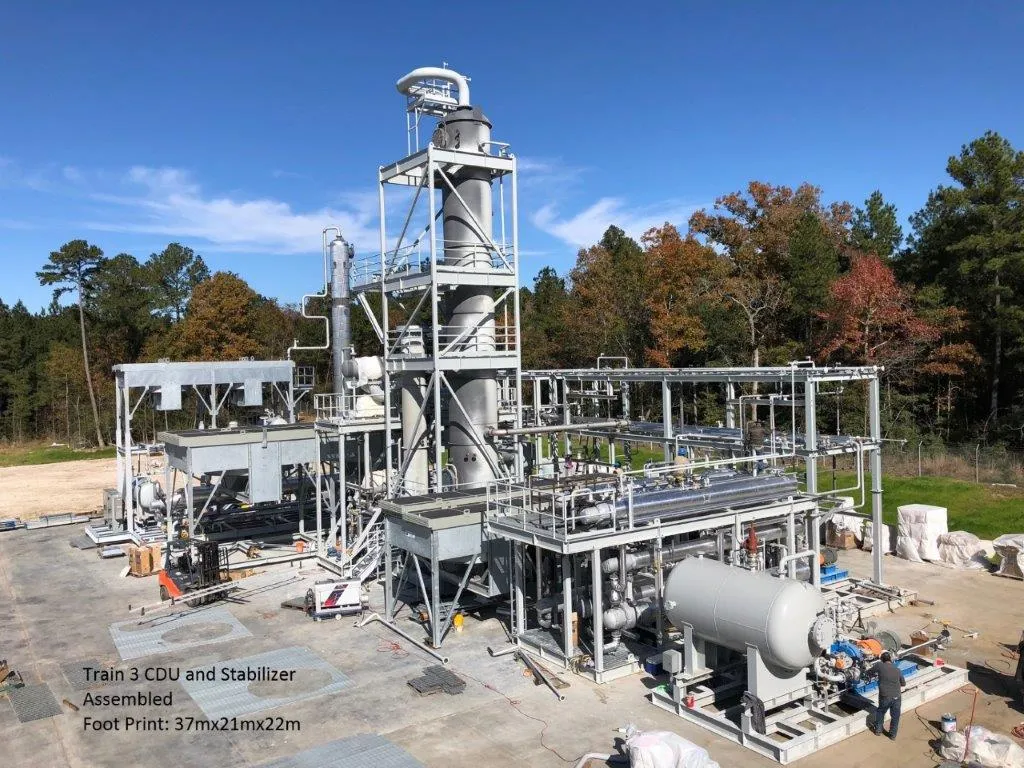
Power and energy equipment
Generating plant and process equipment off the quay on self-propelled transporters, and vessels in and out of ships’ holds.
-
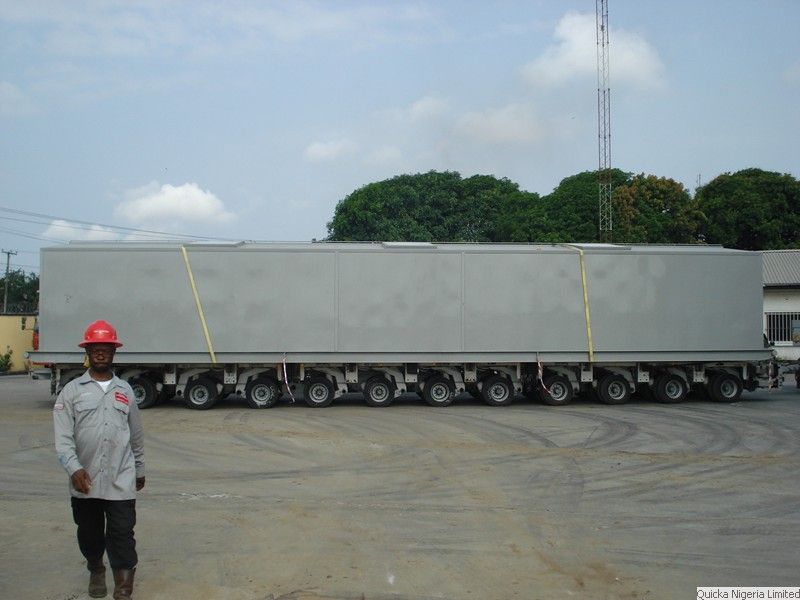
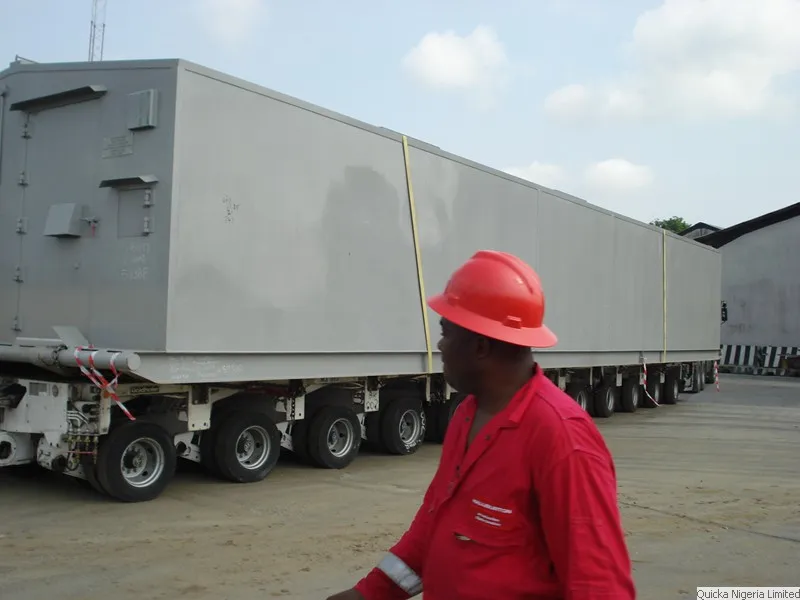
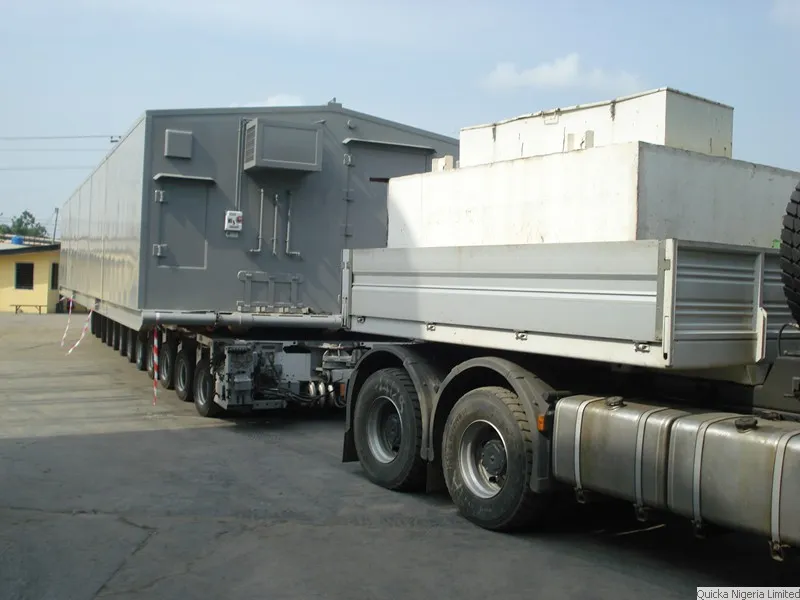
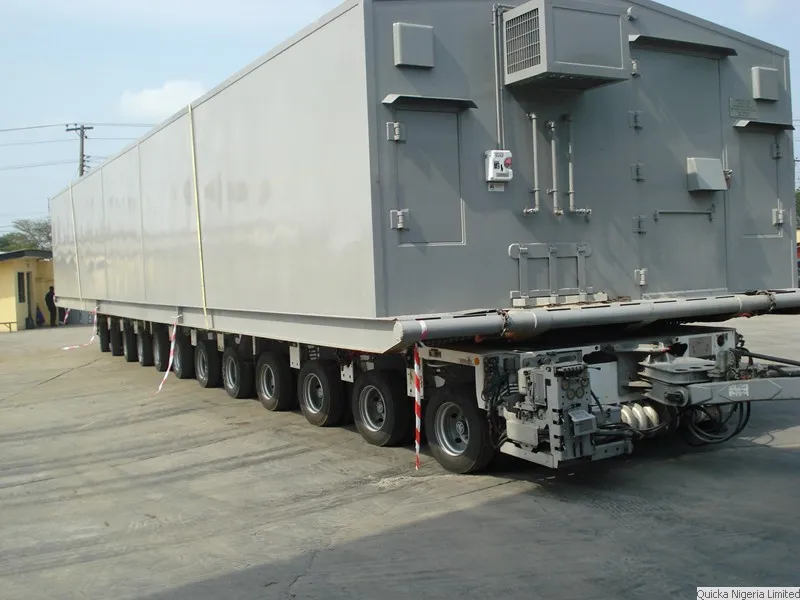
A power module on a self-propelled transporter, moving off the quay. -
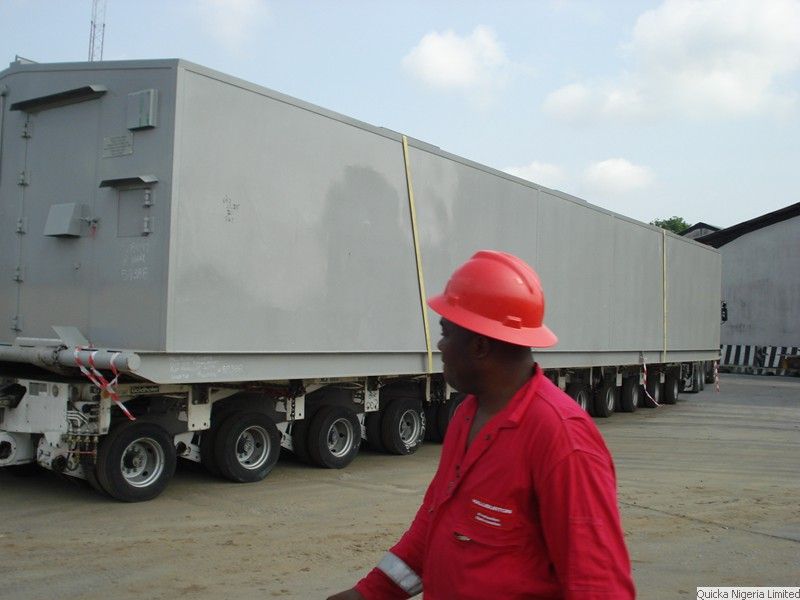
Every metre of a move like this is walked. -
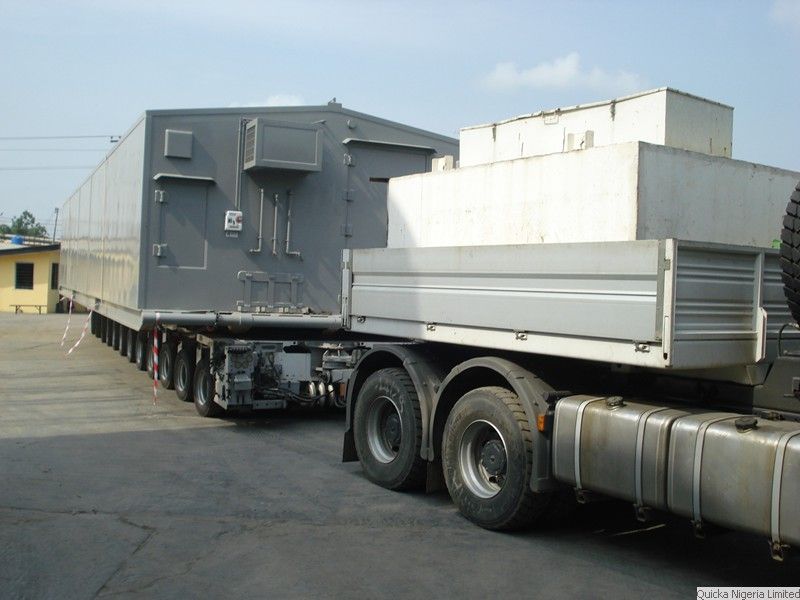
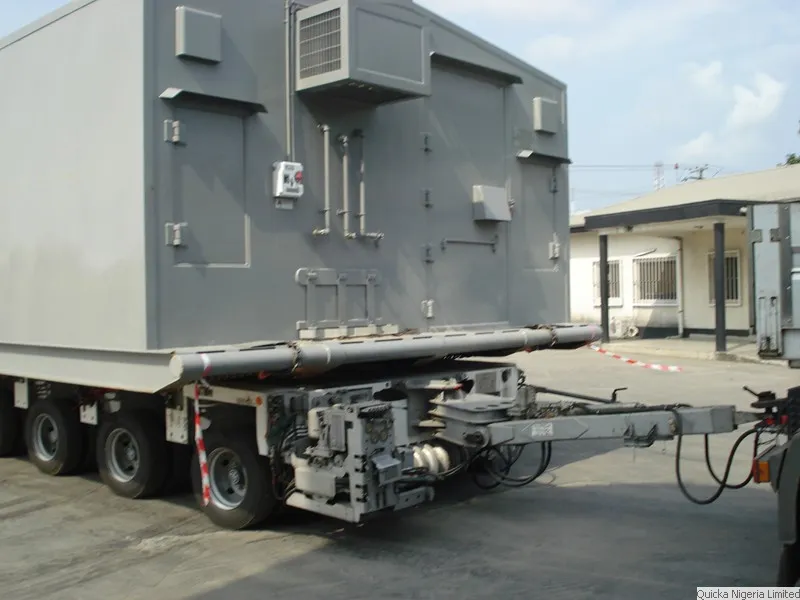
Coupled up for the road leg. -
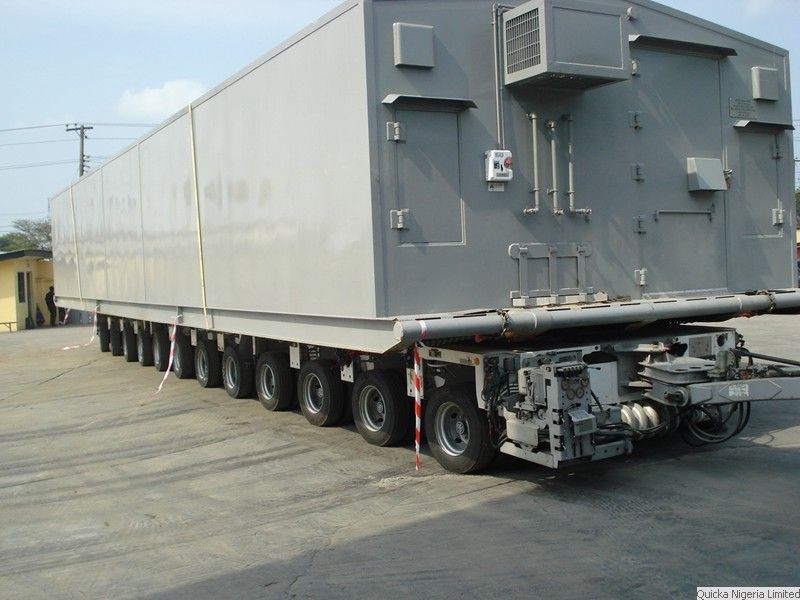
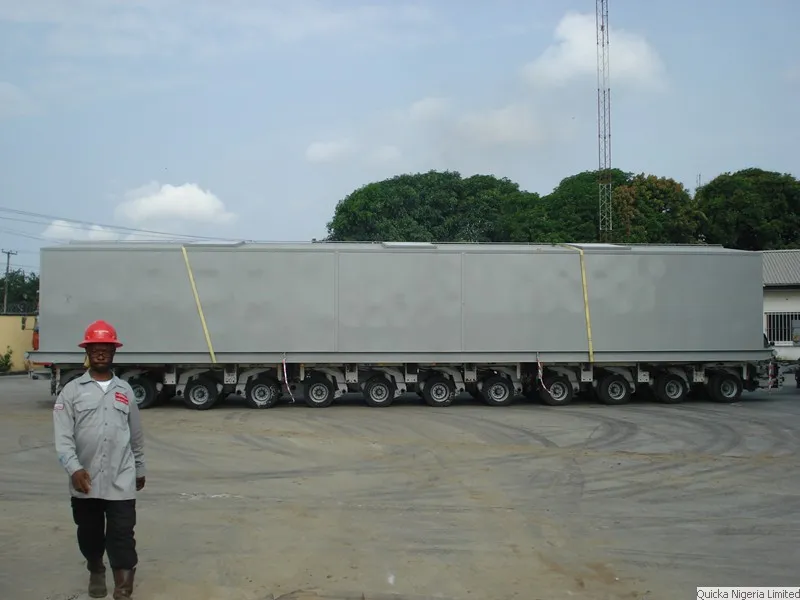
Axle count is set by the load, not the vehicle. -
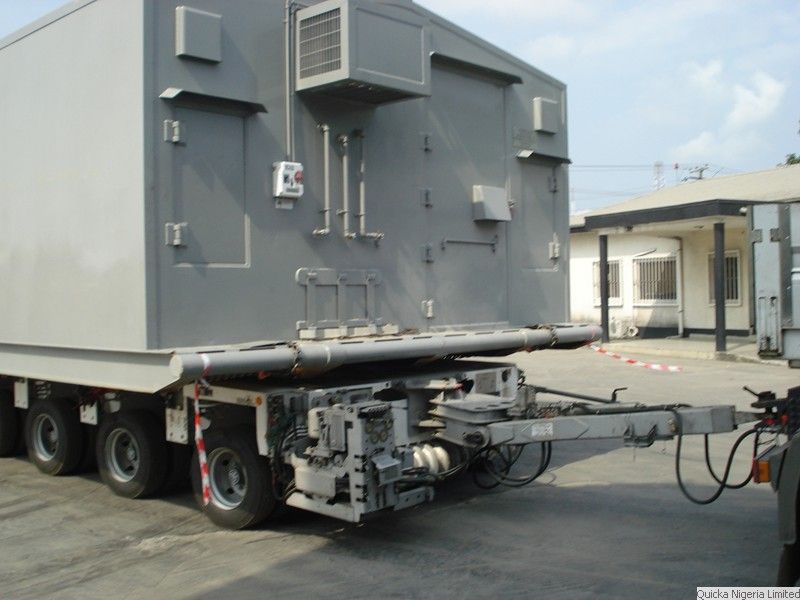
The steering gear that lets a load this size turn at all. -
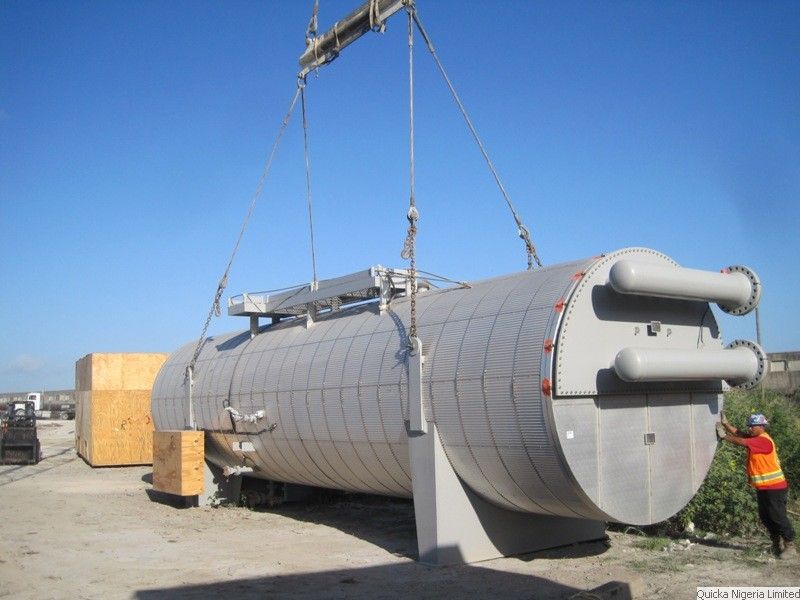
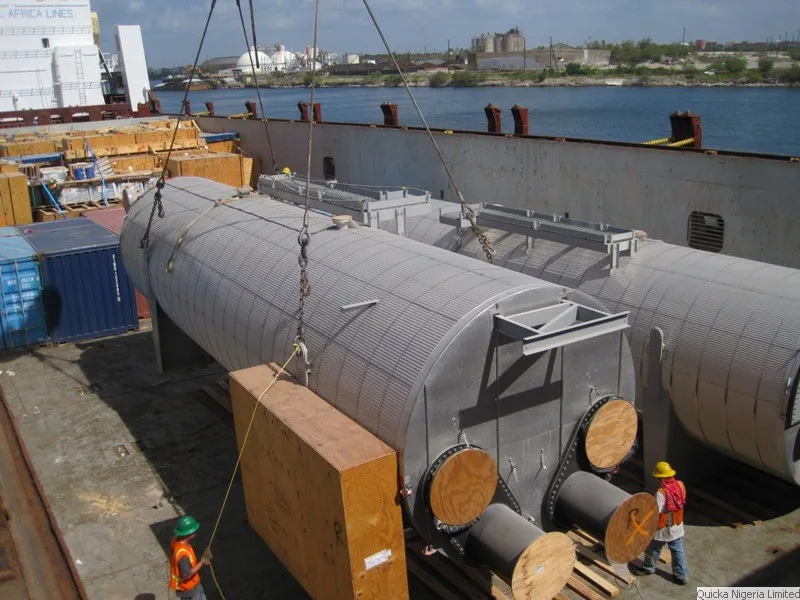
A large vessel under the hook. -
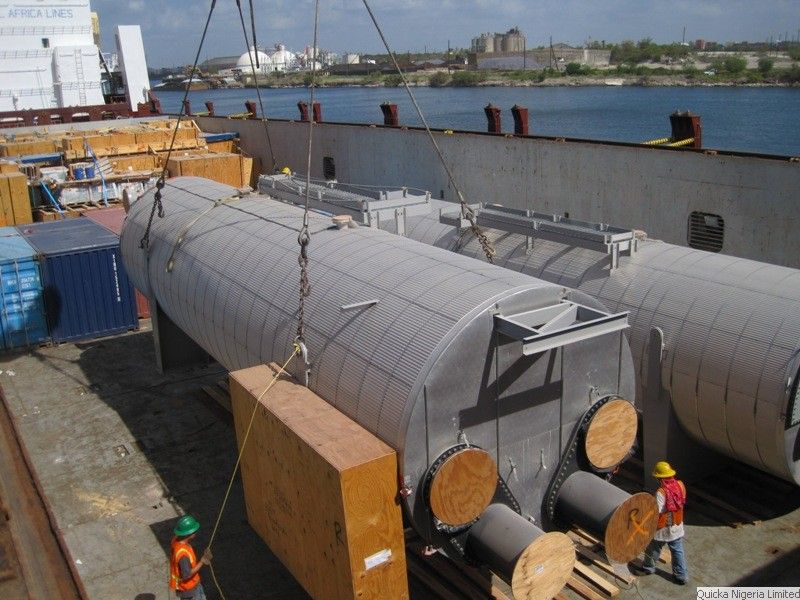
Landed alongside, with the next lift on the hook. -
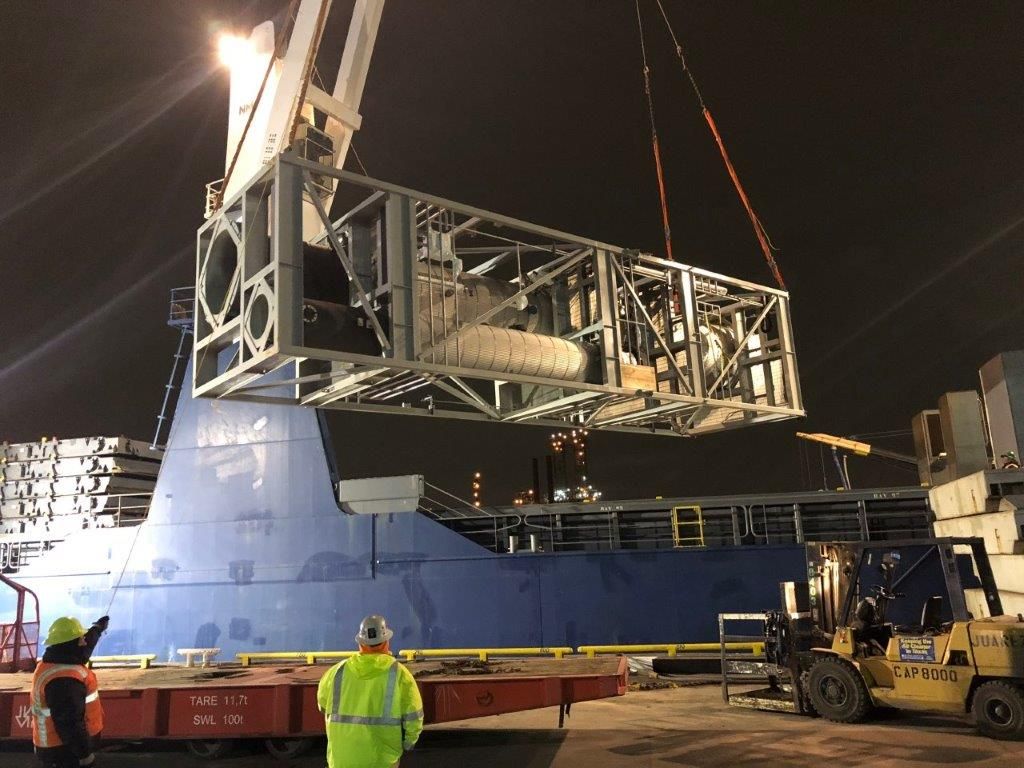
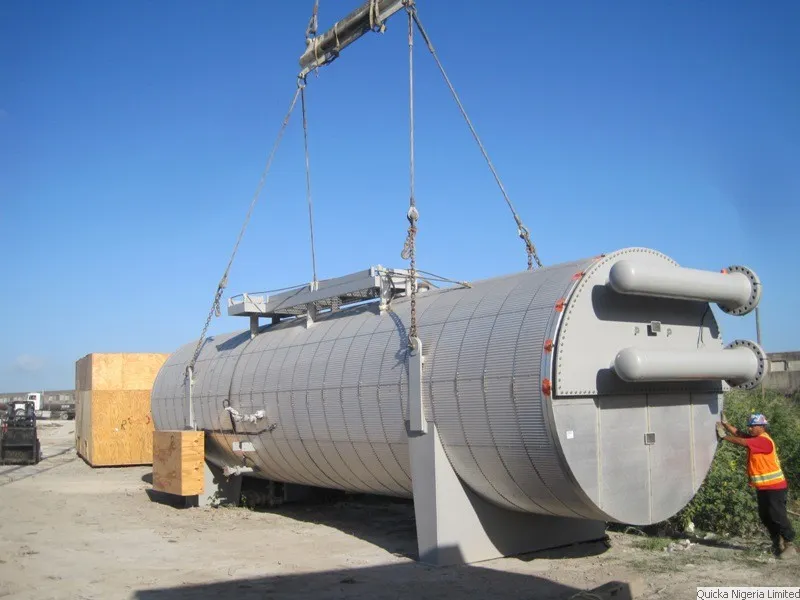
A night lift onto a barge in the Niger Delta. Tide and daylight do not always agree.
Port handling, breakbulk and customs
Discharge, examination, storage, release. Clearing is a physical process before it is a paper one, and this is what that looks like.
-
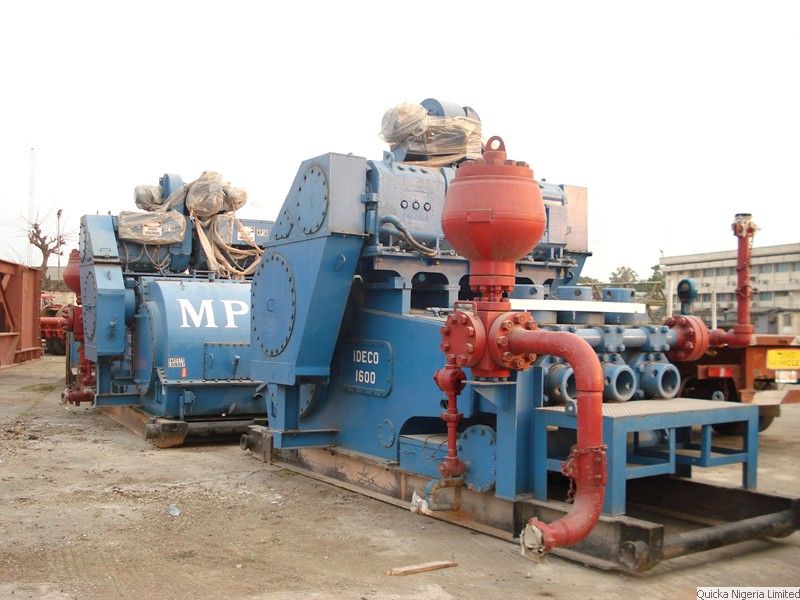
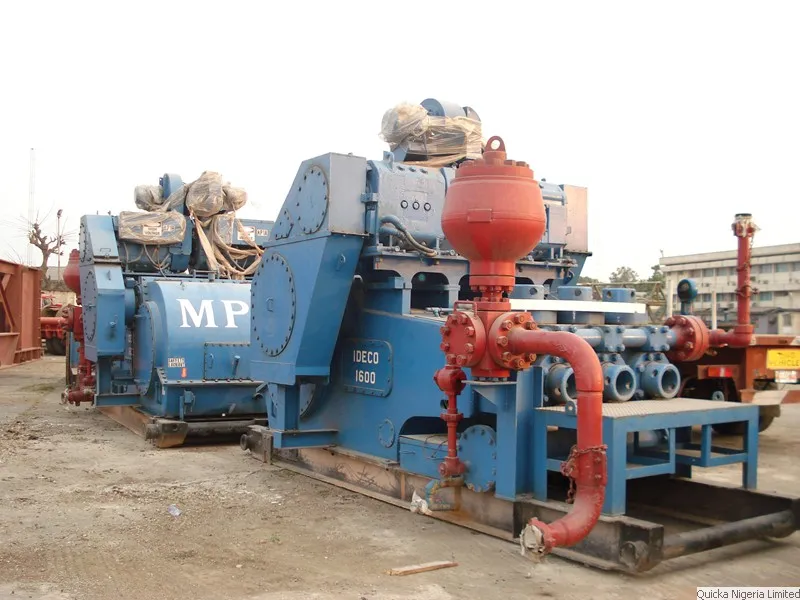
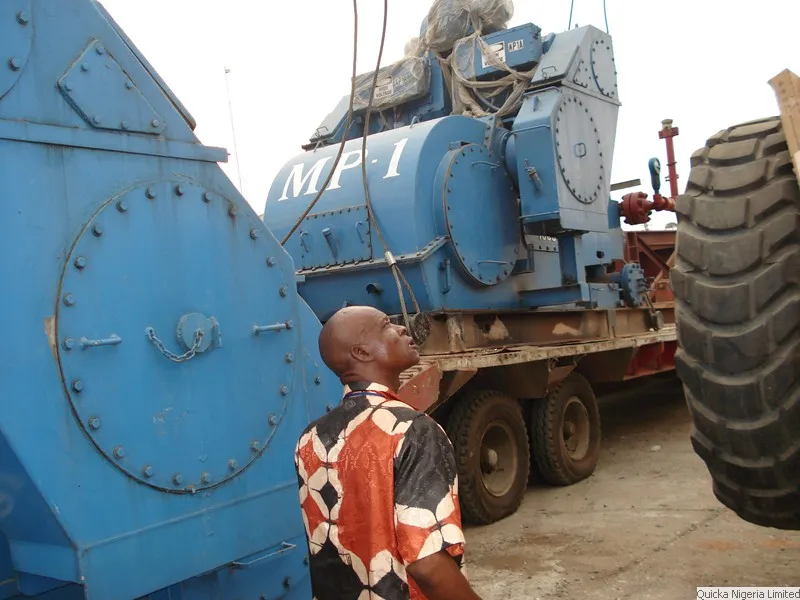
Drilling equipment received as breakbulk. -
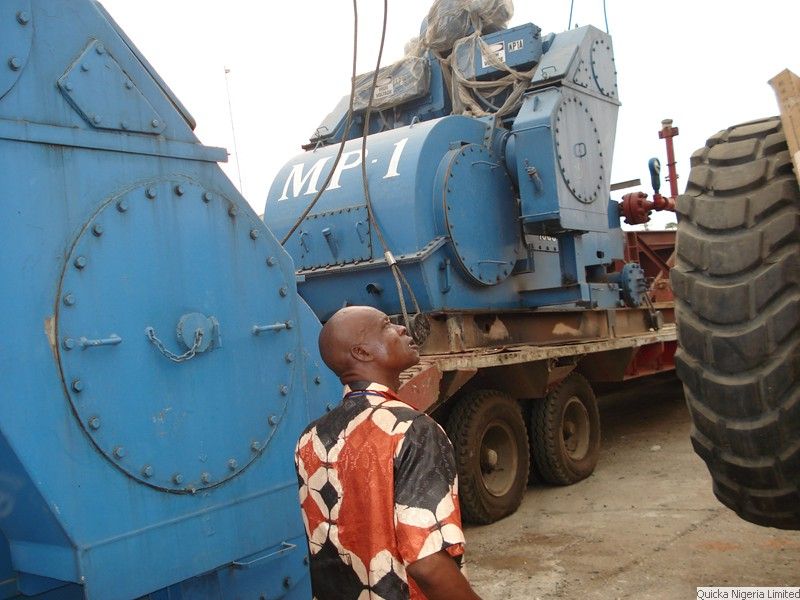
Checking clearances before the load leaves the port. -
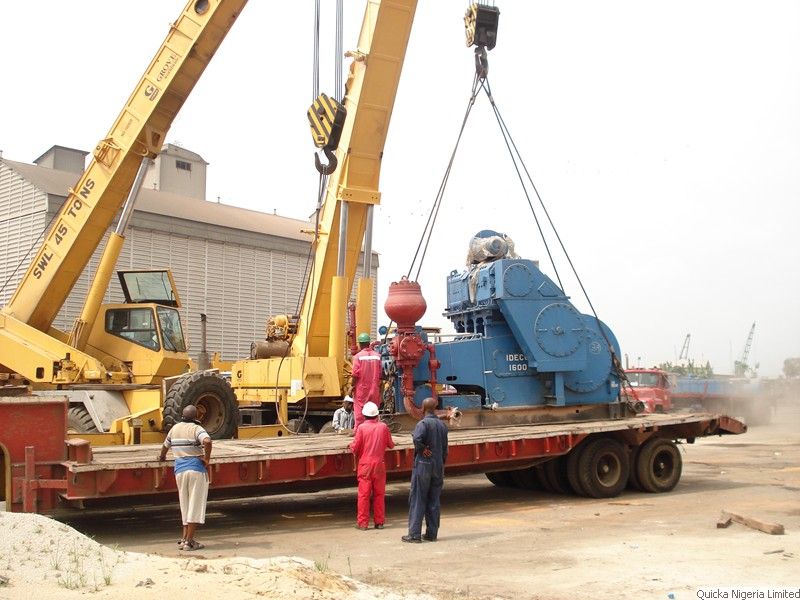
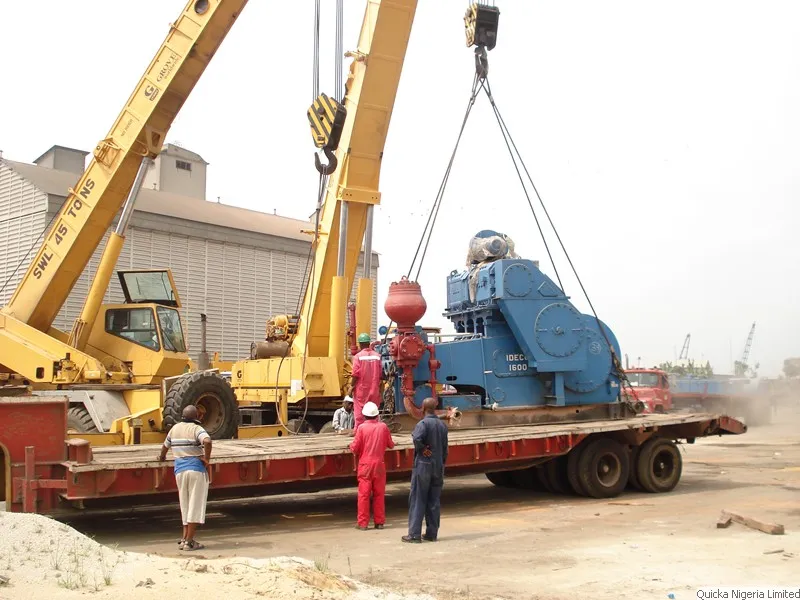
Tandem lift onto a flatbed at the port. -
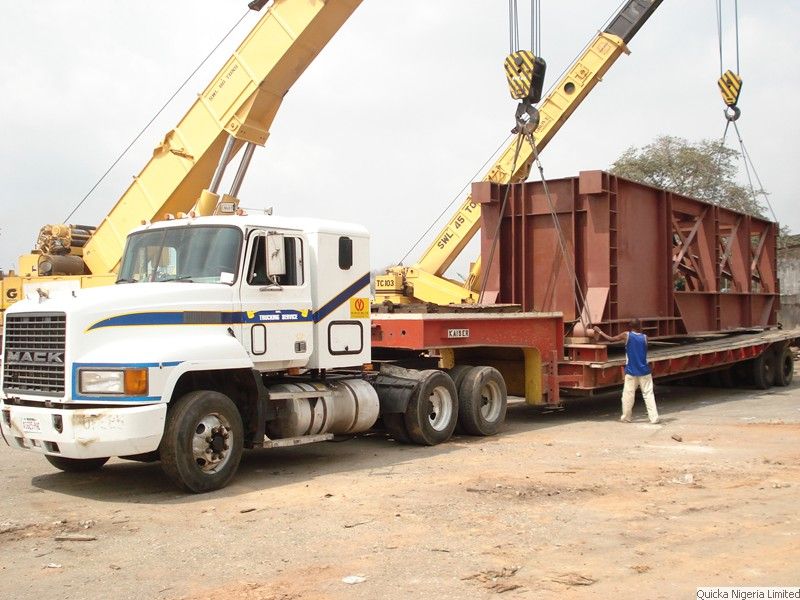
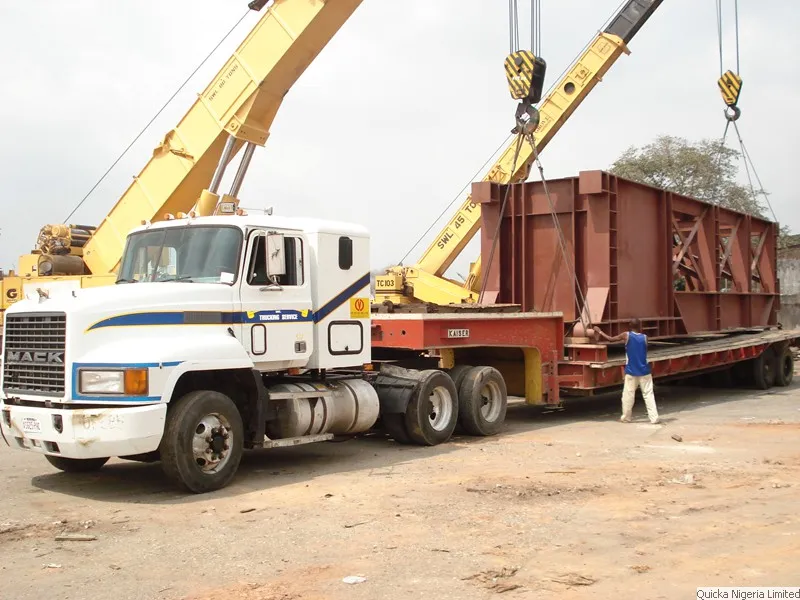
Structural steel loaded for the road leg. -
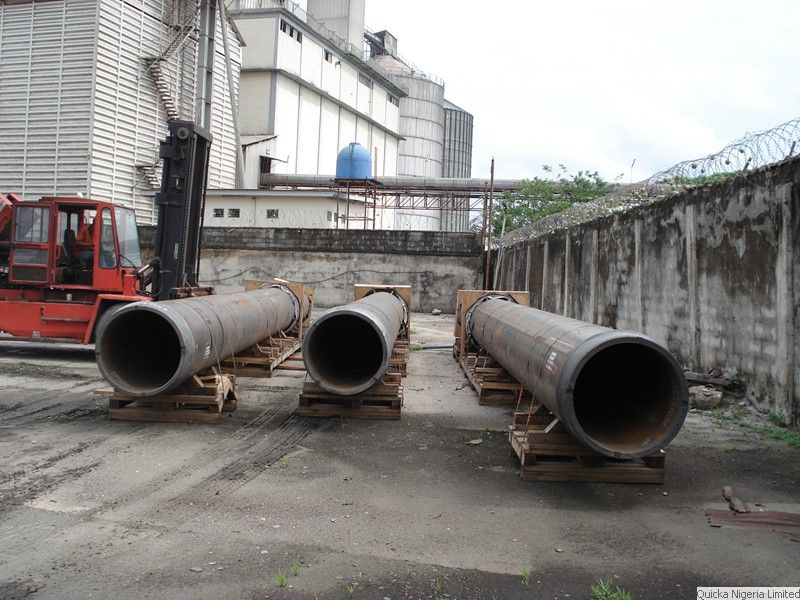
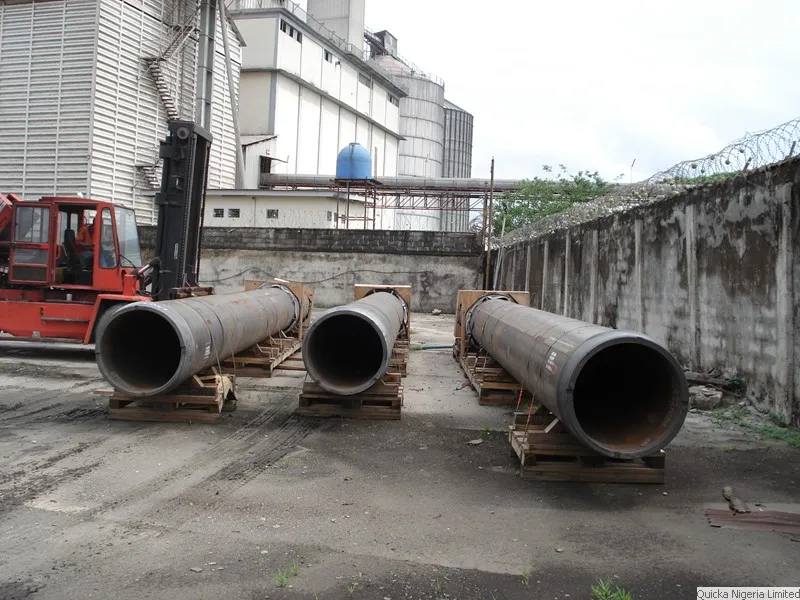
Large-diameter pipe on dunnage, awaiting release. -
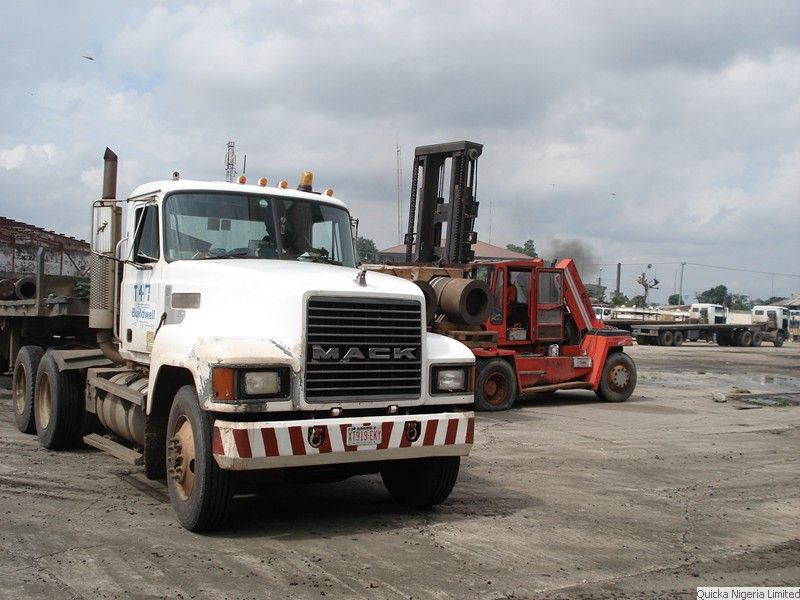
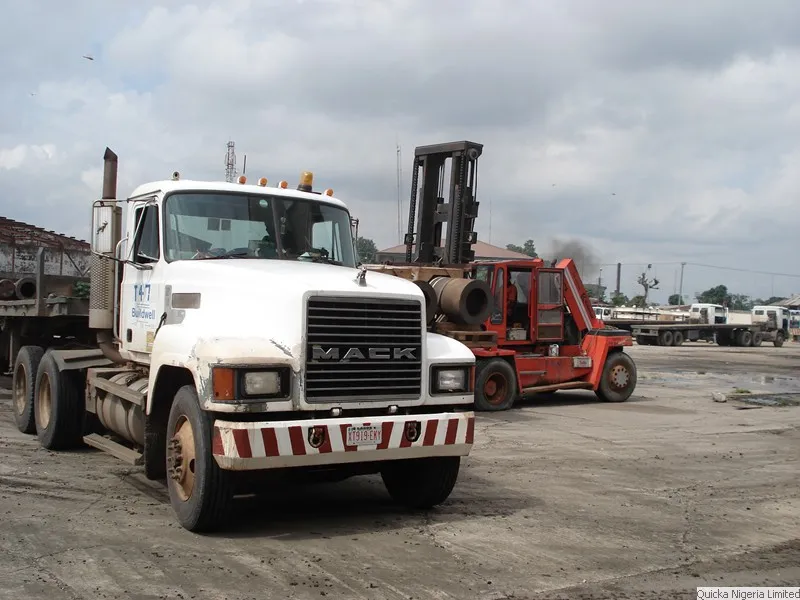
Tractor units staged at the terminal. -
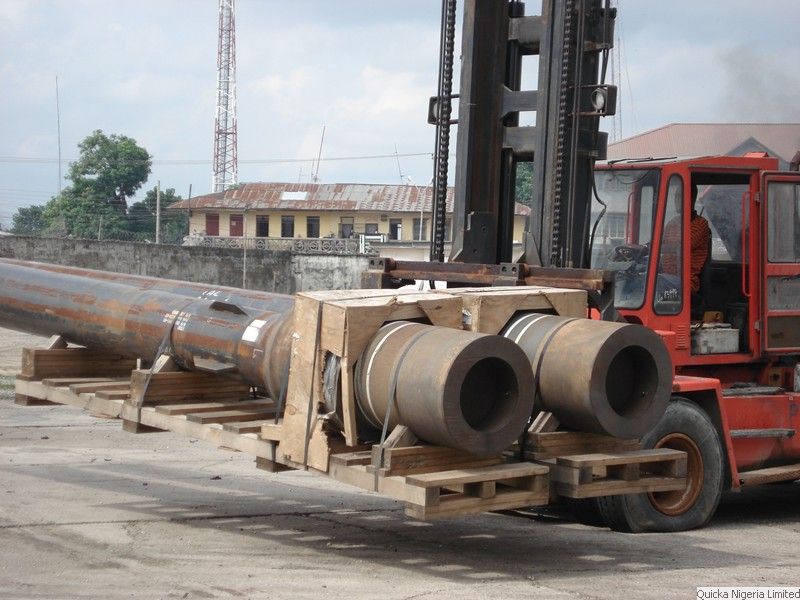
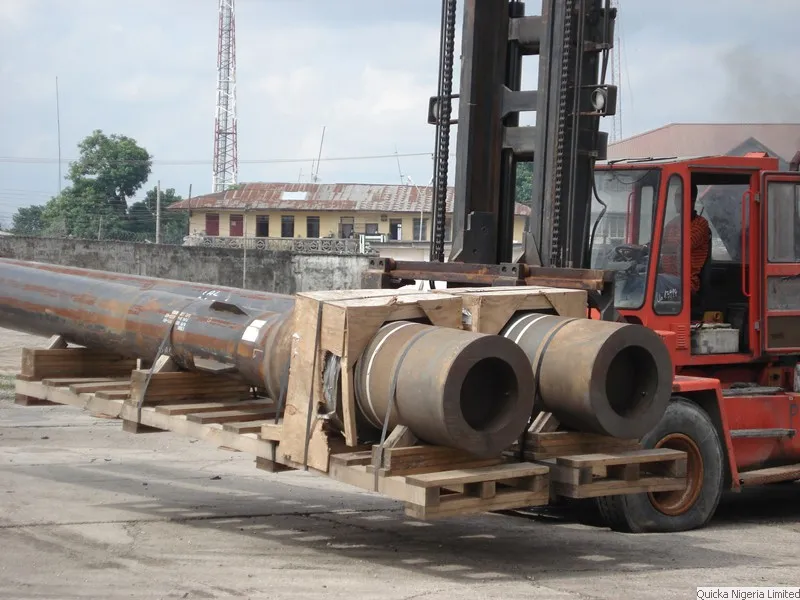
Pipe handling with heavy forklifts. -
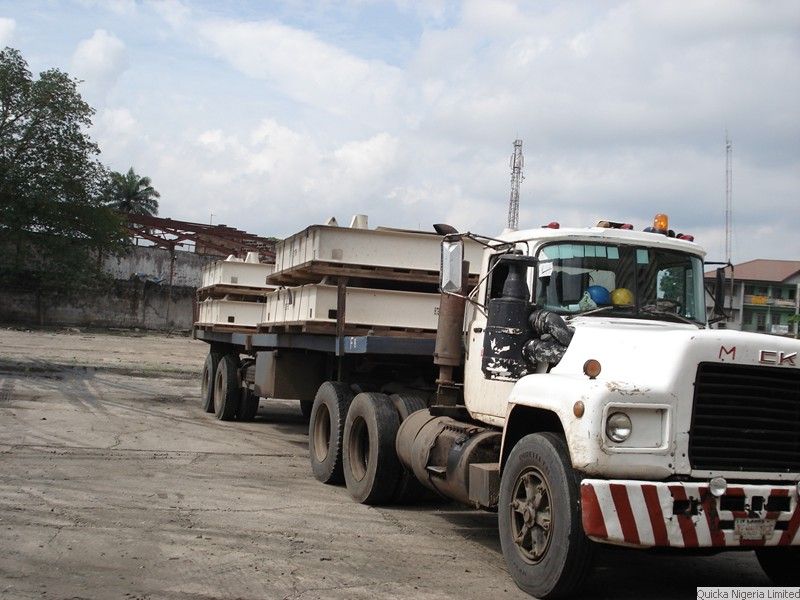
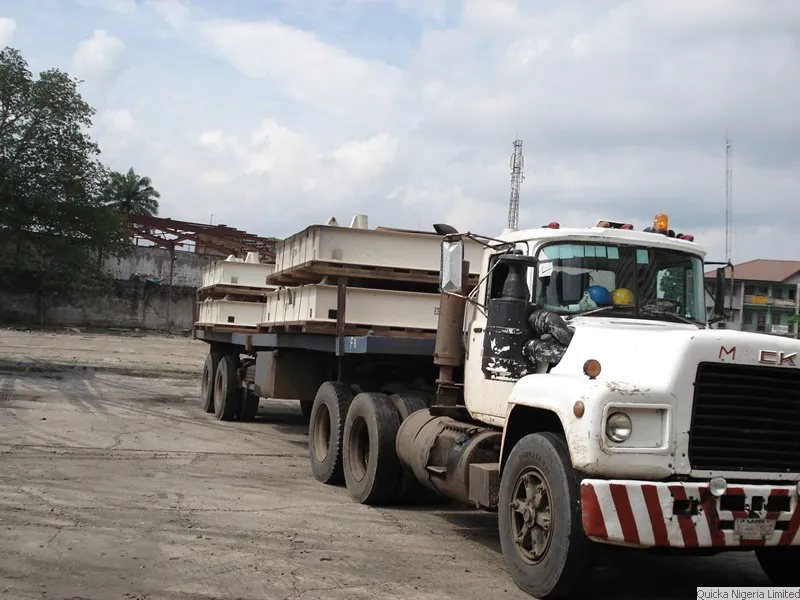
Loaded and ready to leave the terminal. -
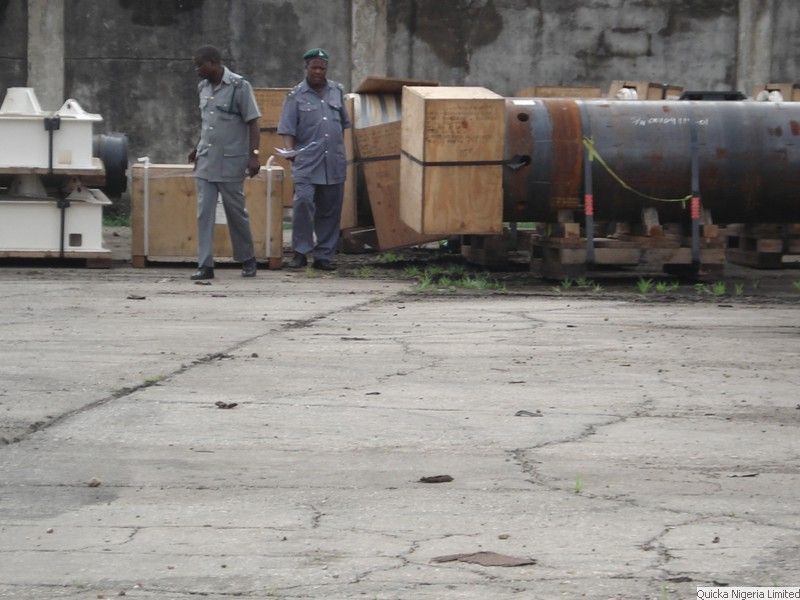
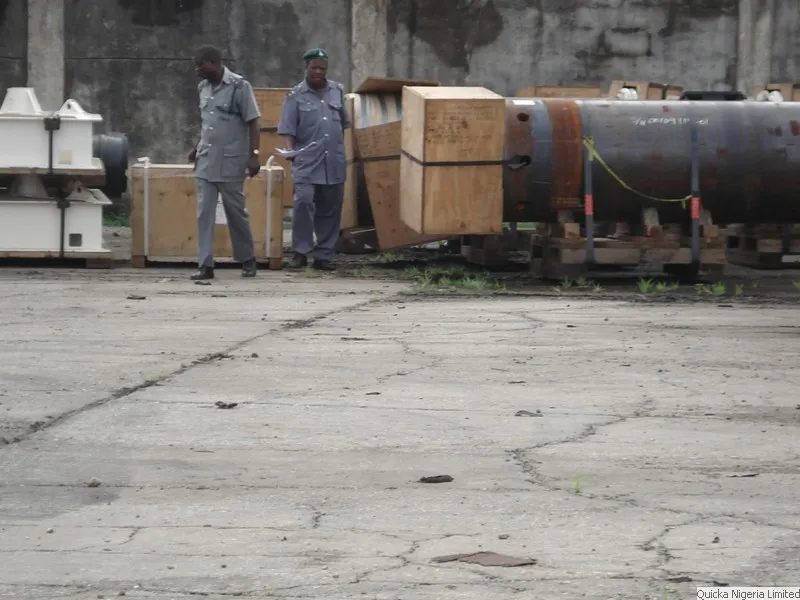
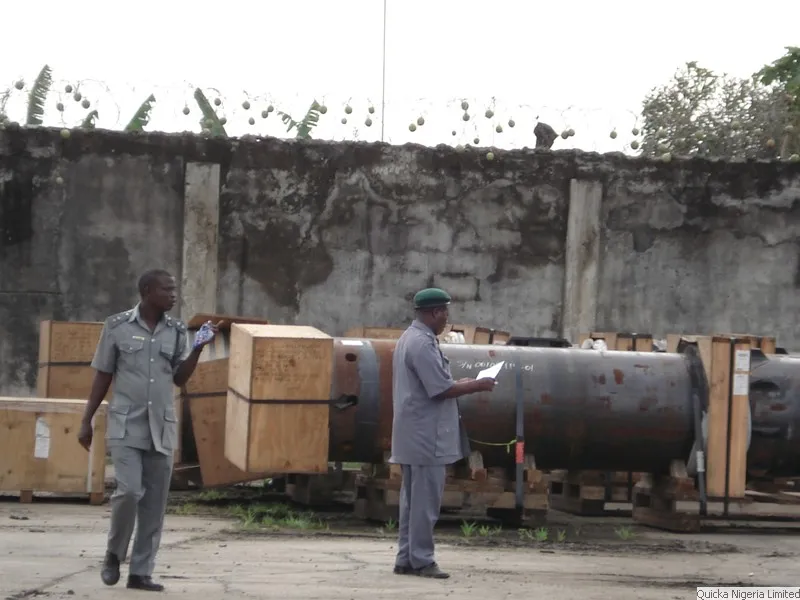
Customs examination. Clearing is a physical process before it is a paper one. -
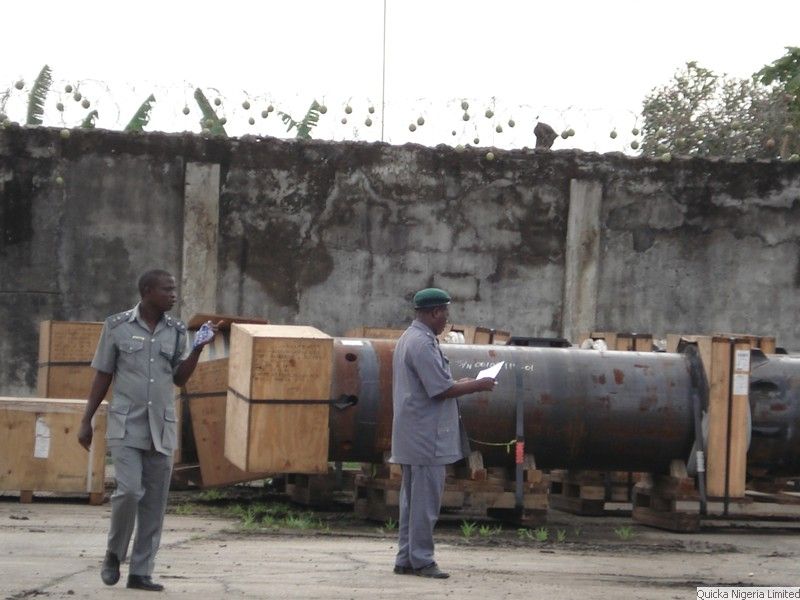
Declaration checked against the cargo in front of them. -
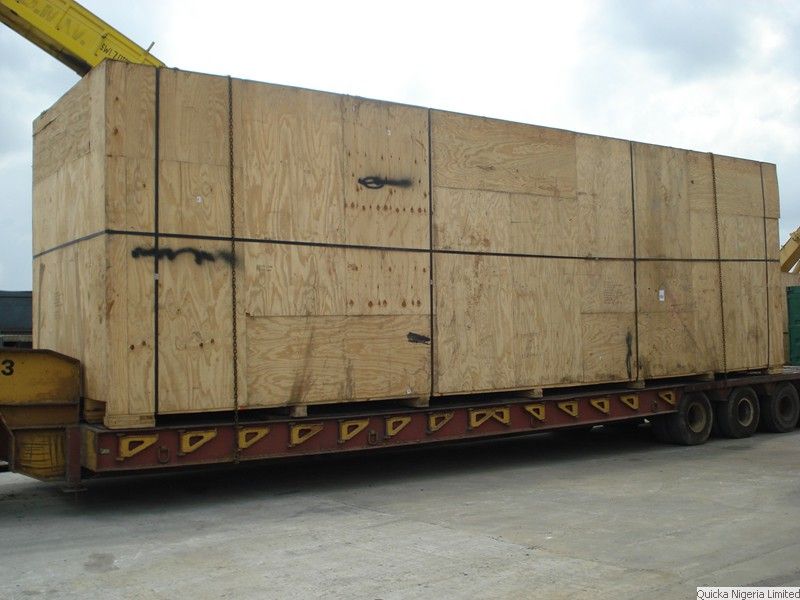
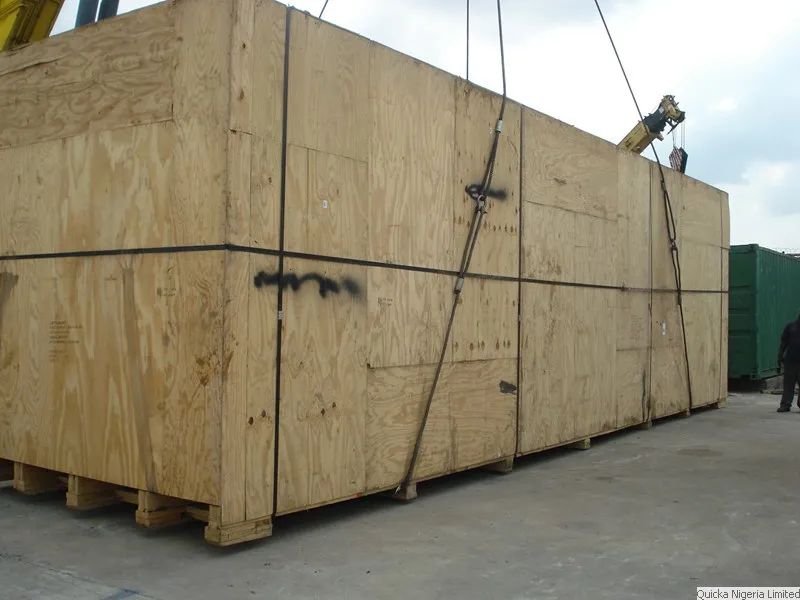
Cased cargo secured for the road. -
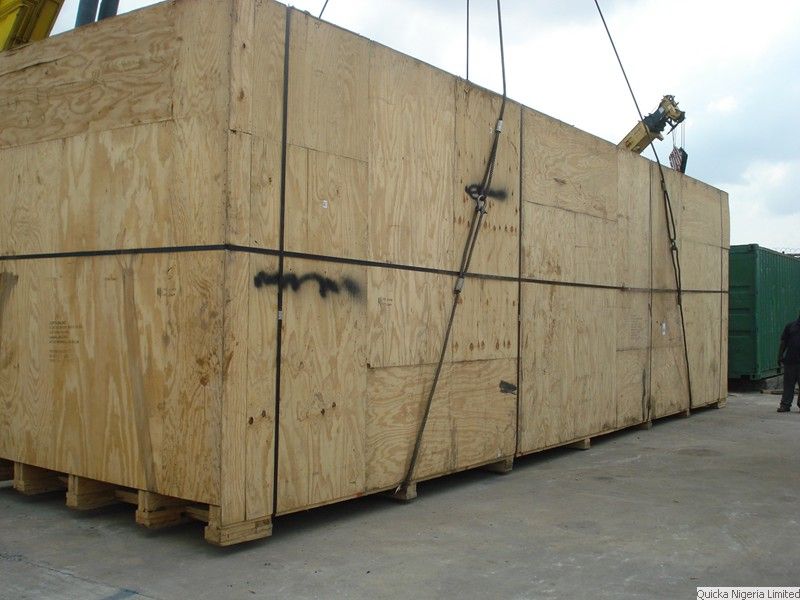
Rigged and ready to lift. -
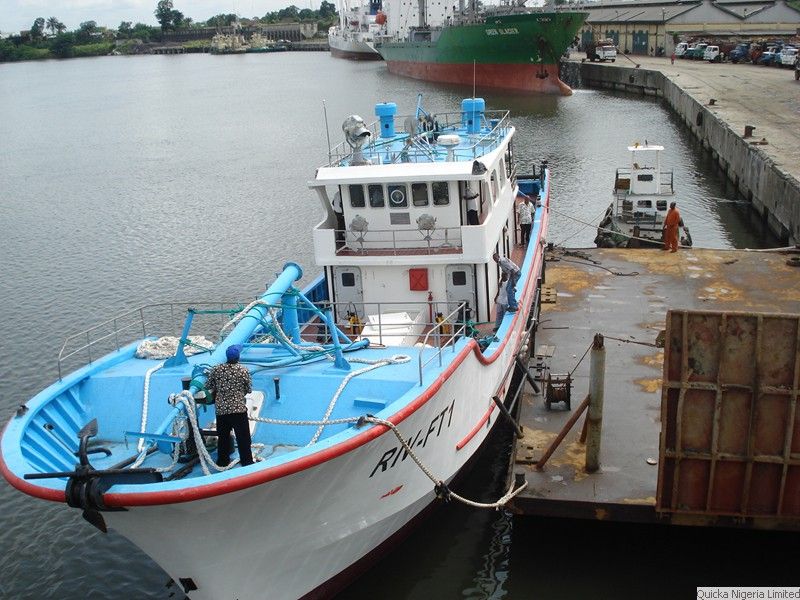
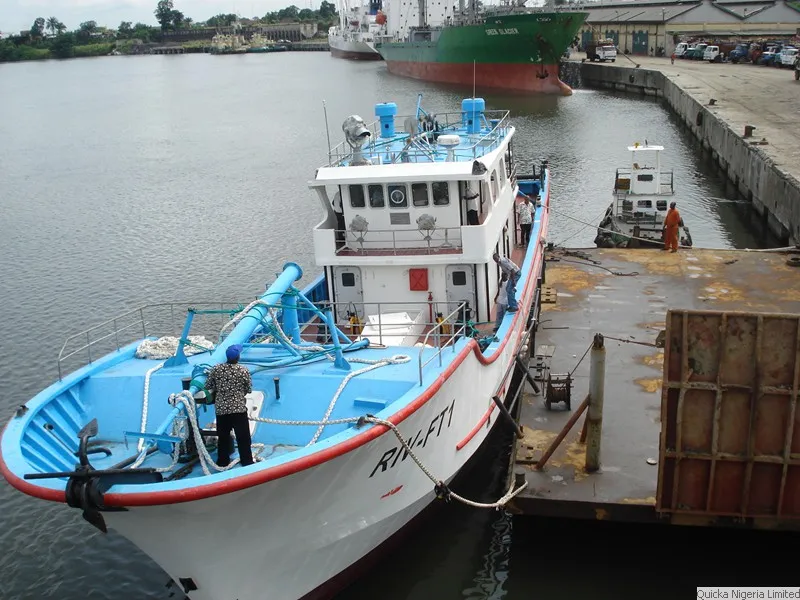
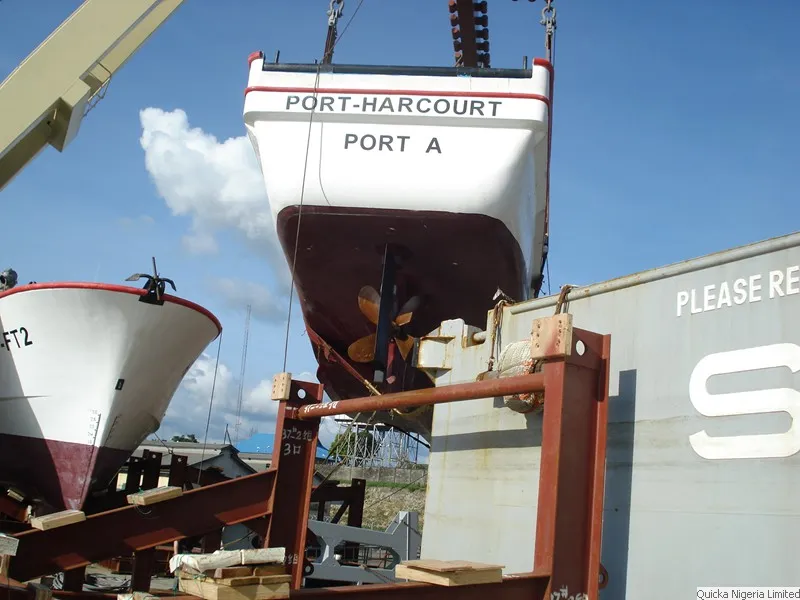
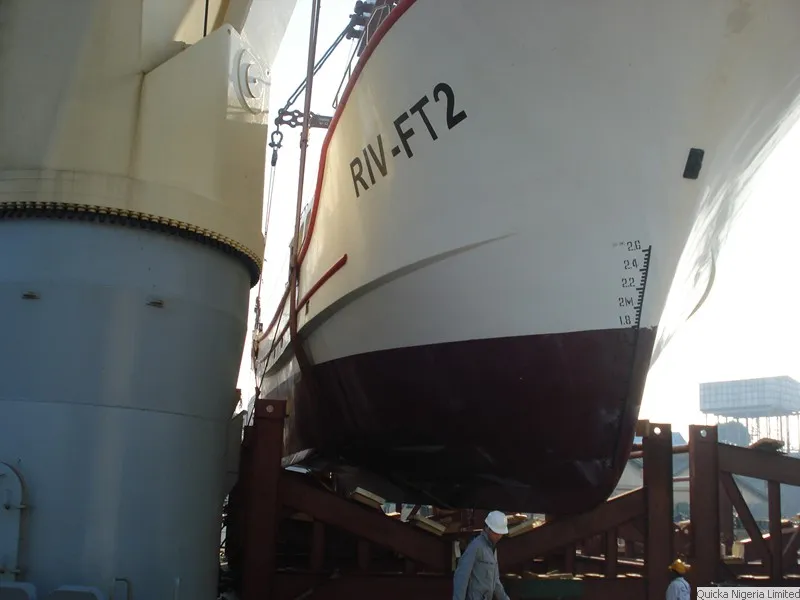
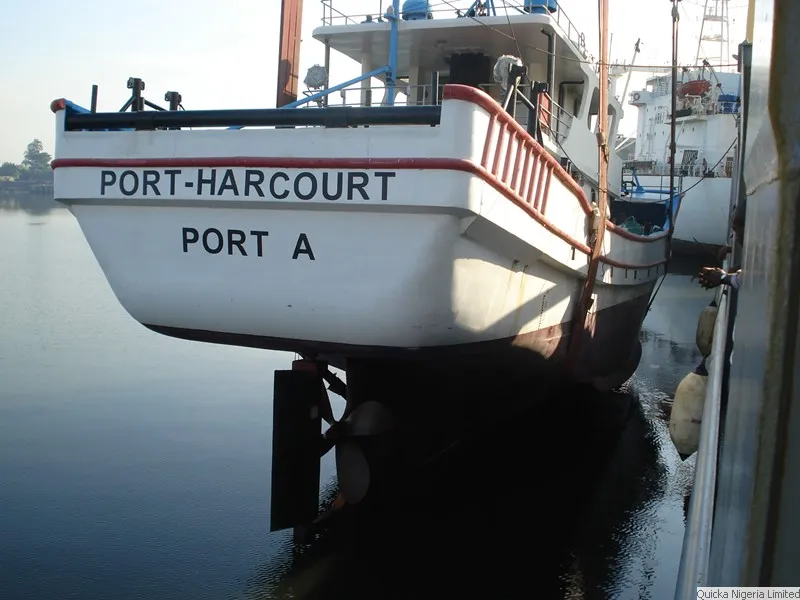
Marine support alongside at Port Harcourt. -
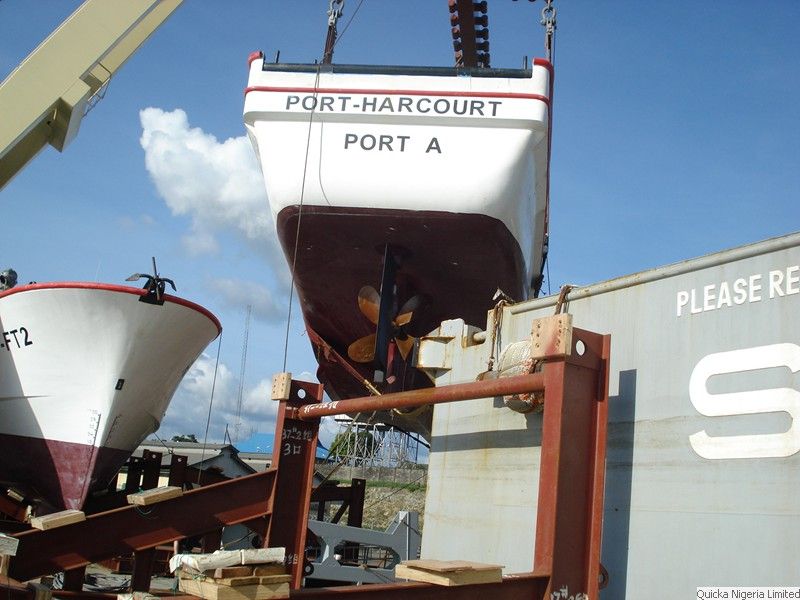
A workboat under the hook. -
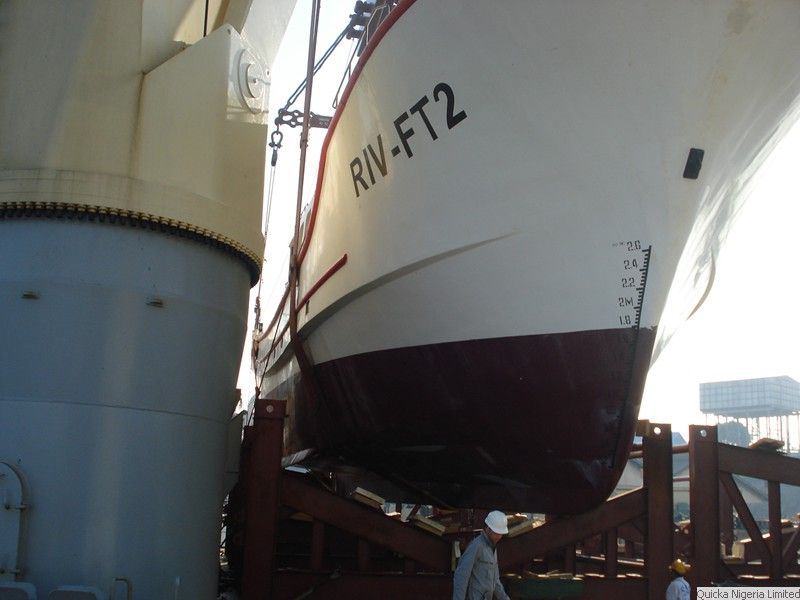
On the cradle, draught marks visible. -
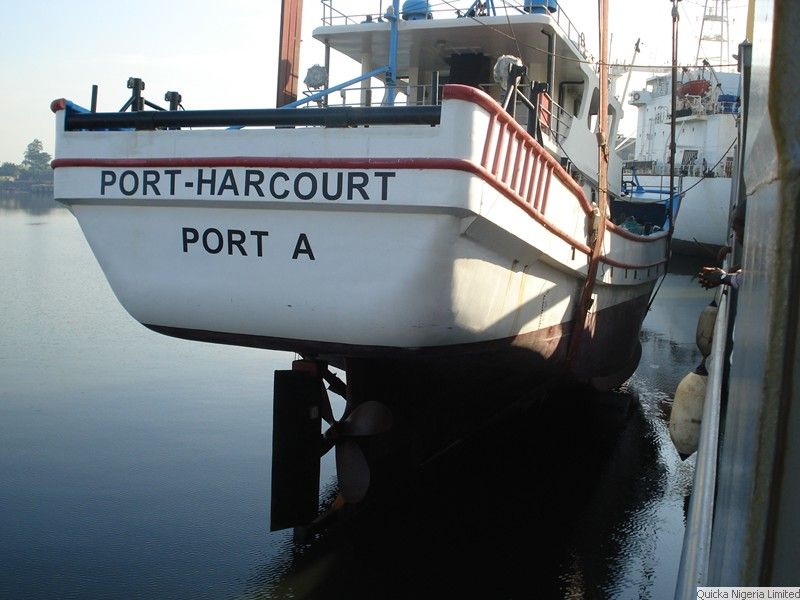
Afloat and back in service.
Road transport and haulage
Heavy and outsized loads on Nigerian roads, port gate to site gate. The last miles are rarely tarmac.
-
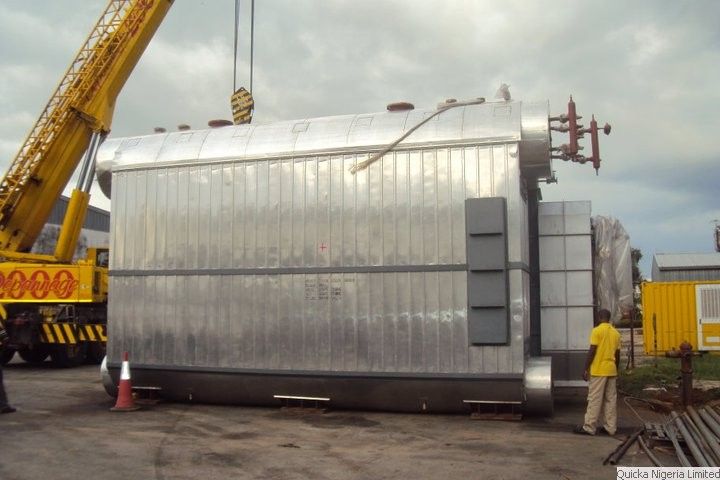
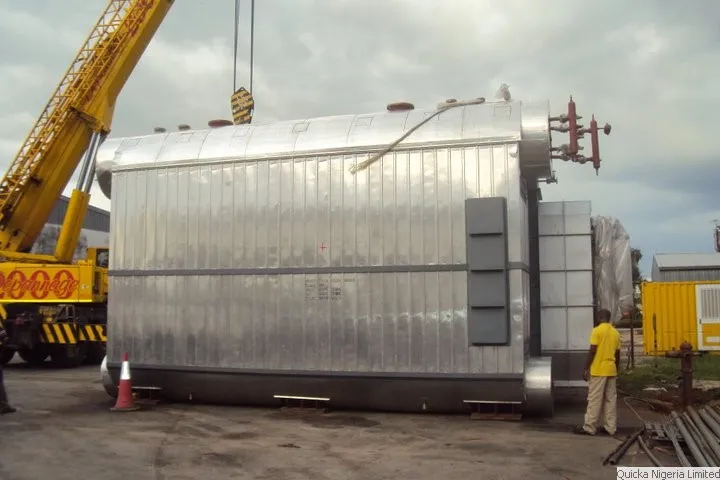
A boiler rigged for loading. -
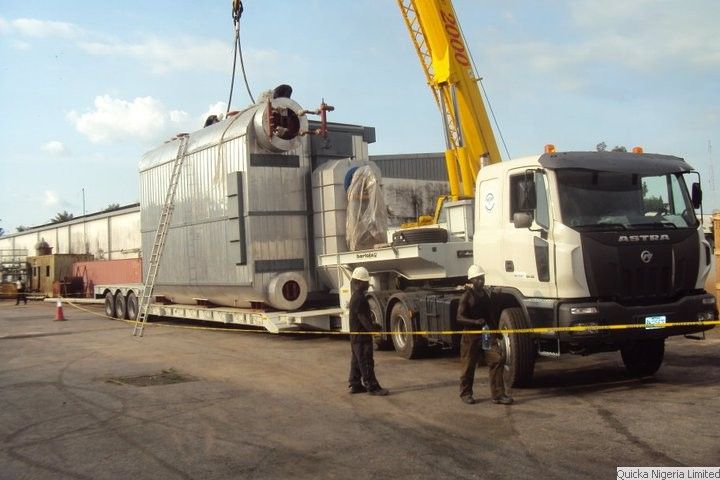
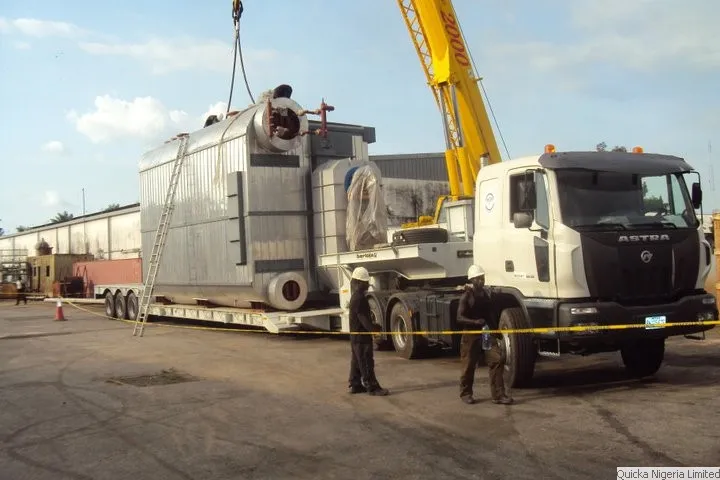
Loaded on the lowbed. -
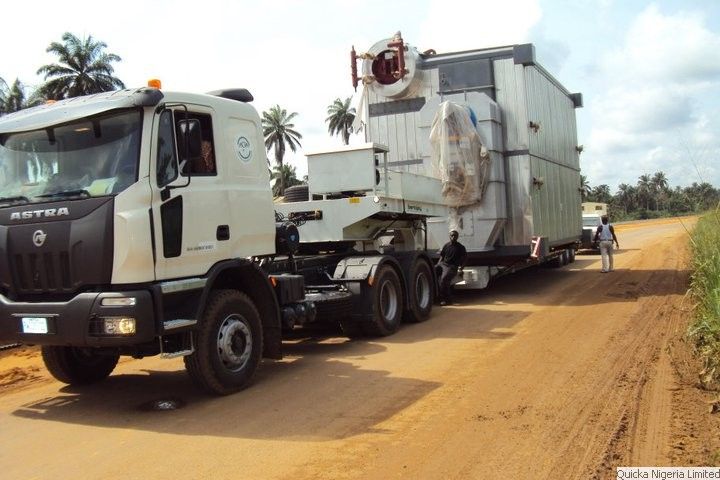
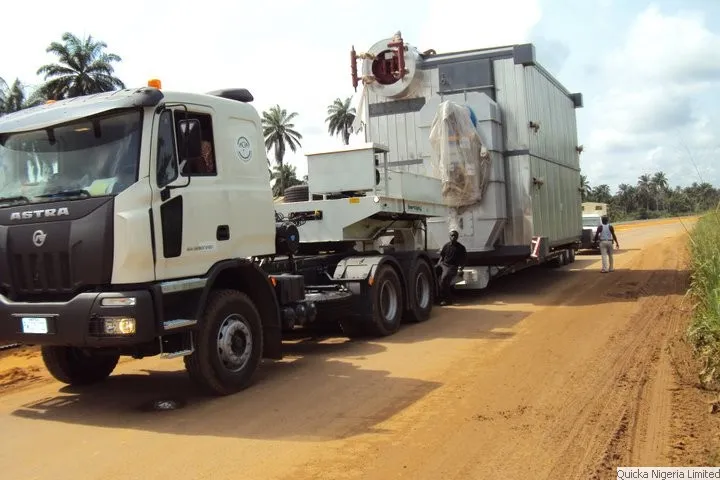
The last miles are rarely tarmac. Route survey is not a formality.